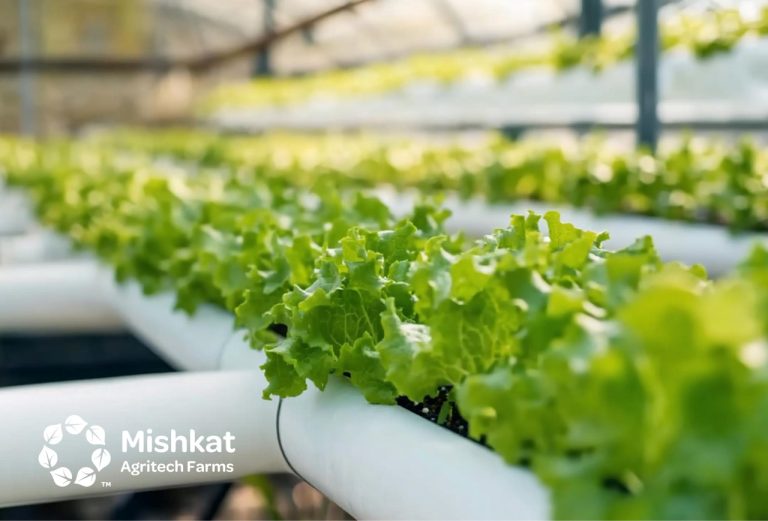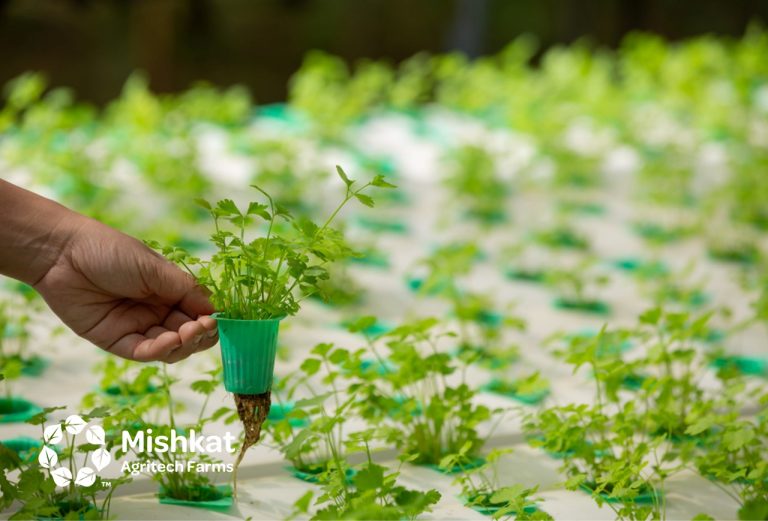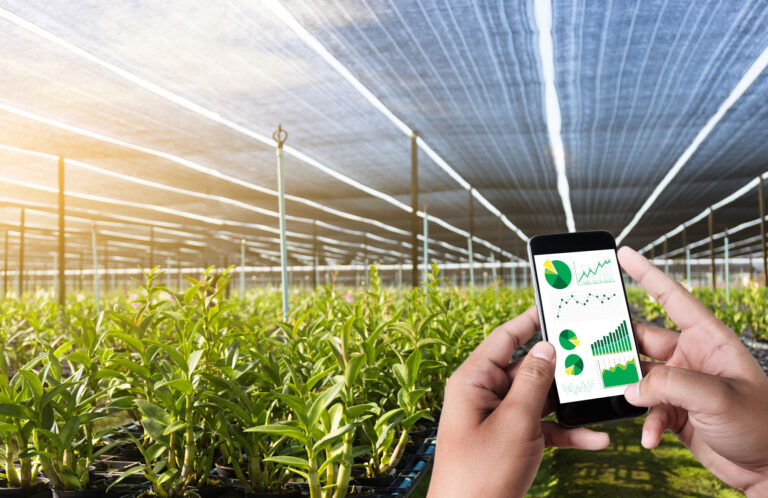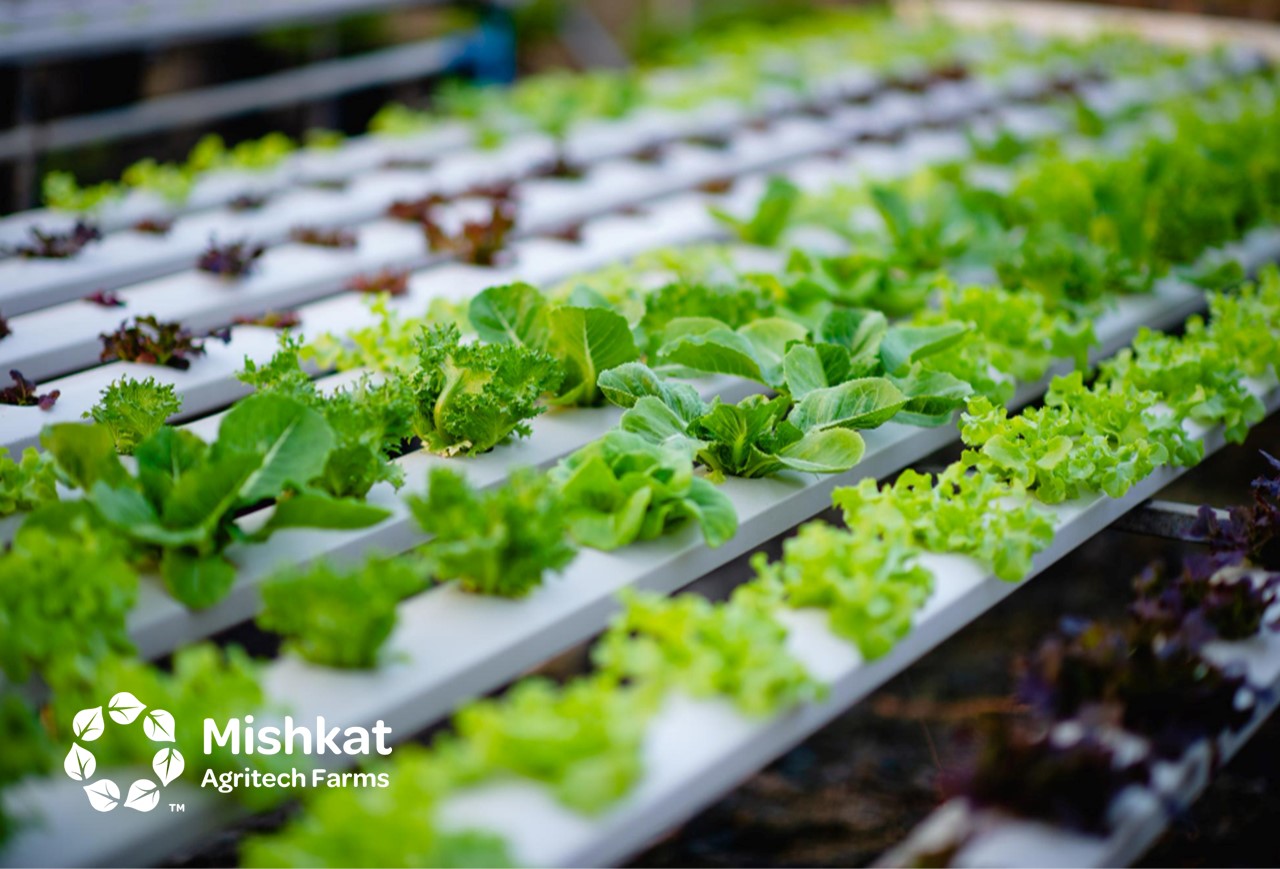
Aquaponics in Saudi Arabia is no longer a “cool experiment.” It is a serious way to grow fresh greens while producing fish, using recirculating water in controlled environments that fit local climate realities. This guide is written for greenhouse owners, investors, and hospitality operators who want a bankable plan, not hype. You will learn what works, what breaks, how to size a system, and how to sell the output with confidence.
Article Contents
Introduction About Aquaponics in Saudi Arabia
Heat, water constraints, and demanding buyers make farming in arid regions a sport with no mercy. So why are more operators looking at Aquaponics in Saudi Arabia right now, and why are some projects still failing? The answer is not in the concept, it is in the execution details.
This article breaks down the real constraints, the economics, and the operational playbook. You will get a simple framework for feasibility, a sizing method, a risk checklist, and one quick-win mini case you can adapt. We will move from “should we do this?” to “what do we build, and how do we run it?”
Aquaponics in Saudi Arabia: why the stakes are high
Aquaponics in Saudi Arabia sits at the intersection of water management, fresh food demand, and local production goals. It is often discussed as “saving water,” but the more useful framing is this: it is a production system that turns water into sellable output twice, once through plants and once through fish, inside a controlled envelope.
Problem and stakes
In 2023, agricultural consumption of non-renewable groundwater was 9,356 million cubic meters.
In 2023, capture fisheries production was 69,055 metric tons.
Those two numbers tell a story without any drama. Water is precious, and fish supply is meaningful but not infinite. Aquaponics becomes interesting when it helps a farm or a hospitality property produce consistent, premium freshness with a predictable water footprint, while also reducing exposure to imports and supply disruptions.
Aquaponics in Saudi Arabia also changes the conversation with buyers. Instead of selling “greens,” you can sell a narrative that includes freshness, traceability, and on-site production that people can see.
What Aquaponics in Saudi Arabia really is (and what it is not)
Aquaponics in Saudi Arabia is a coupled system:
- Fish are fed.
- Fish produce waste.
- Microbes convert waste into plant-available nutrients.
- Plants absorb nutrients and help clean the water.
- Water recirculates back to fish.
It is not “hydroponics with fish sprinkled in.” It is also not “free fertilizer.” The fish feed bill is real, oxygen is non-negotiable, and biology punishes laziness.
Aquaponics in Saudi Arabia works best when you treat it like two businesses sharing one water loop: a small aquaculture business and a high-value horticulture business. The goal is stability, not maximum fish density.
The three loops you must design
Aquaponics in Saudi Arabia succeeds when these loops are engineered and managed deliberately:
- Water loop: filtration, recirculation rate, backup water, and salinity control.
- Oxygen loop: aeration, degassing, and redundancy for power failures.
- Nitrogen loop: ammonia to nitrite to nitrate conversion, balanced against plant uptake.
If any loop is undersized, the system does not “struggle,” it crashes. Fish deaths are fast, plant problems are slower but equally expensive.
Turn your vision into a data-backed plan with Mishkat
Book a quick, free assessment session with the Mishkat Services team: we define your goals and align them with the market and your budget, and deliver a one-page roadmap with expected returns, operating options, and linking to a purchase agreement when needed, with no obligation.
Fish and plant choices that match Saudi conditions
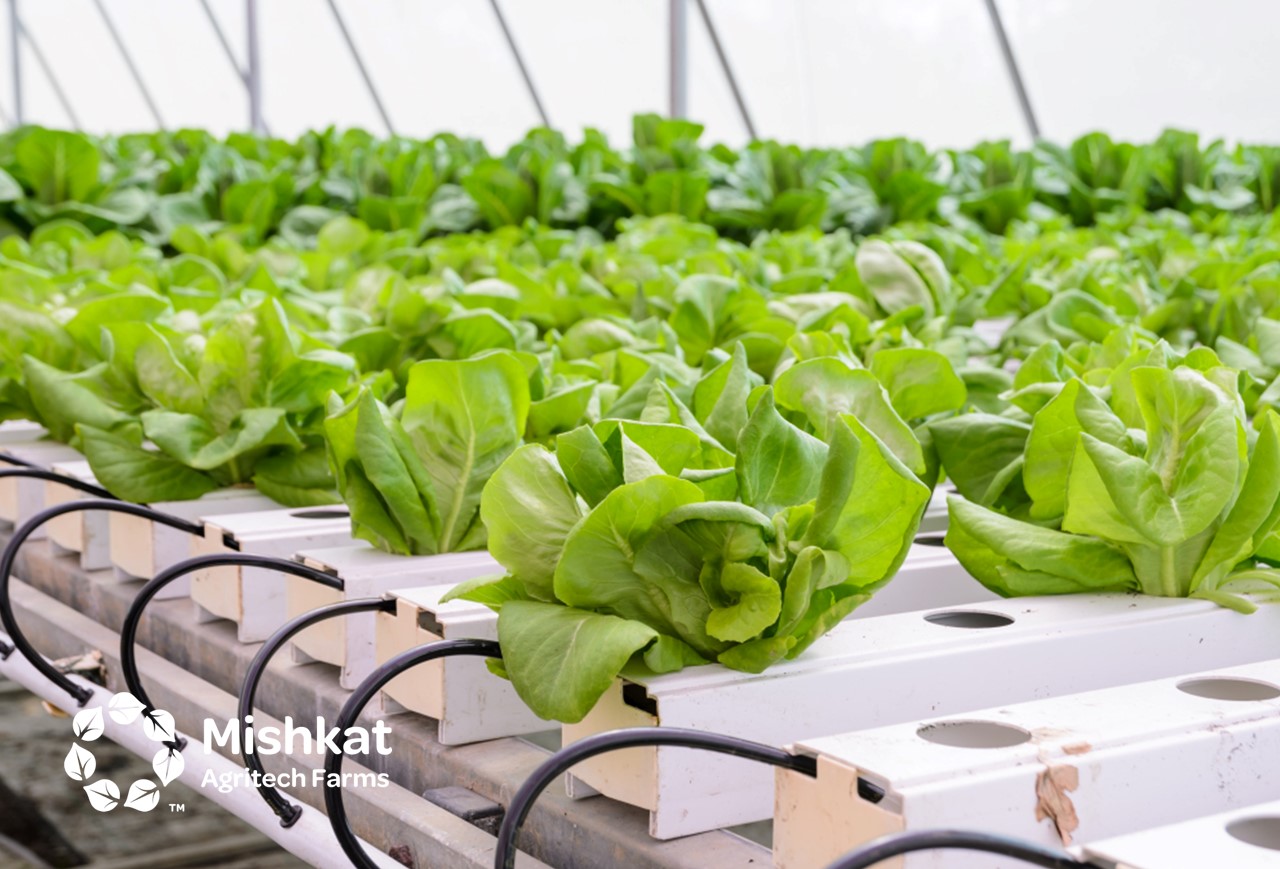
Aquaponics in Saudi Arabia often starts with hardy fish like tilapia because they tolerate wider temperature swings and water quality variation. For plants, leafy greens and herbs tend to be the first win because they turn over quickly and sell at a premium when quality is consistent.
Avoid starting with “hard mode crops” that demand tight nutrient targets until you have stable biology and a trained team. The fastest way to hate aquaponics is to start with fragile species, weak operators, and a system with no instrumentation.
Aquaponics in Saudi Arabia: picking the right project model
Aquaponics in Saudi Arabia is not one format. The best model depends on your buyer, your site, and your tolerance for operational complexity.
A practical segmentation
Think of Aquaponics in Saudi Arabia in three common project shapes:
- Commercial farm selling to market: consistency, volume planning, and logistics matter most.
- Hospitality farm-to-table site: experience and brand value can outweigh pure yield.
- Hybrid: a showcase unit plus a production unit, common when you want both marketing and revenue.
Mishkat Company often sees projects fail because owners choose the “wrong shape,” not because the concept is flawed. A resort that wants a guest experience should not design itself like a commodity farm, and a commodity farm should not spend like a resort.
Model comparison table
| Model | Best for | Strengths | Watch-outs |
|---|---|---|---|
| Greenhouse aquaponics | Most commercial operators | Proven structures, scalable plant area | Cooling cost, summer stress management |
| Indoor vertical aquaponics | High-end local sales, tight biosecurity | Stable climate, higher quality consistency | High energy and HVAC load |
| Containerized or modular unit | Pilot projects, hospitality showcases | Fast deployment, neat footprint | Often expensive per kg, limited expansion |
| Hybrid: greenhouse + indoor nursery | Year-round quality plus scale | Strong crop start, flexible production | Requires more staff discipline |
Aquaponics in Saudi Arabia becomes more investable when you can say, clearly, which model you are building and why it fits your route to market.
Feasibility framework for Aquaponics in Saudi Arabia
Aquaponics in Saudi Arabia needs a feasibility approach that respects biology and unit economics. A simple framework that works well is BOME:
- Buyer: who pays, how often, and for what grade.
- Operations: who runs the biology daily, and how redundancy is handled.
- Mechanics: filtration, oxygen, cooling, power backup, and sensors.
- Economics: margin per square meter and cash conversion cycle.
If any one of these is vague, the project is still a concept, not a plan.
The unit economics formula you can actually use
A practical profitability view for Aquaponics in Saudi Arabia is:
Gross margin per month = (Plant revenue + Fish revenue) − (Feed + Energy + Labor + Consumables + Losses)
Turn your vision into a data-backed plan with Mishkat
Book a quick, free assessment session with the Mishkat Services team: we define your goals and align them with the market and your budget, and deliver a one-page roadmap with expected returns, operating options, and linking to a purchase agreement when needed, with no obligation.
Then translate it into something investors understand:
Gross margin per square meter = Gross margin per month ÷ Plant growing area (m²)
This forces clarity. If the project only works on paper because you assumed “near-zero labor” or “no losses,” it does not work.
What the aquaponics market really rewards
The aquaponics market rarely rewards “average.” It rewards one of two things:
- Consistent premium quality (taste, shelf life, clean presentation).
- Reliable weekly supply (buyers hate surprises more than they hate price).
Aquaponics in Saudi Arabia wins when it produces predictably, even in tough months, and when the brand story matches the buyer’s needs.
Design essentials for Aquaponics in Saudi Arabia
Aquaponics in Saudi Arabia is a design problem first and a farming problem second. The design must assume harsh conditions and human error.
Core design rules
- Design for summer worst-case, not spring best-case.
- Build redundancy for oxygen and circulation, because fish cannot wait for repairs.
- Separate “dirty” and “clean” work zones, because biosecurity is not optional.
- Instrument the basics: temperature, dissolved oxygen, pH, and electrical conductivity.
Mishkat Company Services typically starts design with a failure-mode review: “What breaks first, and what happens next?” This is more valuable than adding another grow bed.
Water strategy that survives the real world
Aquaponics in Saudi Arabia demands a water strategy that includes:
- Makeup water plan (how you top up and how often)
- Salinity management (especially if you have brackish sources)
- Solids handling (where waste goes, and how it is stored or treated)
- Reuse logic (how you handle backwash and sludge responsibly)
This is where many projects silently bleed money. If sludge handling is improvised, labor rises, hygiene slips, and pests become a chronic cost.
Cooling and climate control, the hidden profit killer
Cooling is the biggest operational lever for Aquaponics in Saudi Arabia. High temperatures reduce oxygen in water and stress fish, while also changing plant performance and pest pressure.
A practical approach is staged cooling:
Turn your vision into a data-backed plan with Mishkat
Book a quick, free assessment session with the Mishkat Services team: we define your goals and align them with the market and your budget, and deliver a one-page roadmap with expected returns, operating options, and linking to a purchase agreement when needed, with no obligation.
- Passive shading and thermal screens
- Evaporative cooling where feasible
- Targeted cooling for fish tanks, not the entire building, when budget is tight
- Tight airflow management to reduce humidity spikes
If you can avoid “cool everything all the time,” you protect your margin.
Operations playbook for Aquaponics in Saudi Arabia
Aquaponics in Saudi Arabia is won in daily routines. Most problems are not mysterious, they are neglected basics.
The 10-step startup sequence (do not skip steps)
- Commission plumbing and leaks under pressure.
- Verify circulation rates and backup pump readiness.
- Start aeration and confirm dissolved oxygen stability.
- Seed biofilters and run without fish first.
- Stabilize pH and temperature ranges.
- Introduce fish gradually, not at full density.
- Start planting with fast crops to “pull” nutrients.
- Increase feeding slowly while tracking water quality.
- Add plant area as nitrates rise and stabilize.
- Lock a monitoring schedule and escalation process.
Aquaponics in Saudi Arabia should not be “turned on.” It should be brought to life carefully.
Daily checklist (operator-grade)
Use this every day before anything else:
- Temperature logged for fish and grow zone
- Dissolved oxygen checked and trending stable
- Fish behavior observed (feeding response, surface gasping, clustering)
- Solids removal routine completed and recorded
- pH recorded and corrected within safe range
- Pumps, blowers, and backup power checked
- Plant health walk-through (tip burn, pests, leaf color, root smell)
- Harvest and packing hygiene verified
Mishkat Company Team training often focuses on “seeing the early warning signs.” In aquaponics, early action is cheap, late action is expensive.
Weekly checklist (business-grade)
- Feed conversion and mortality tracked
- Plant yield and rejection rate tracked
- Water additions measured and explained
- Energy use reviewed against cooling plan
- Buyer forecasts confirmed for next two weeks
- Consumables inventory checked (nets, filters, test reagents)
- Biosecurity practices audited
Aquaponics in Saudi Arabia becomes predictable when you treat it like manufacturing with biology, not like a hobby.
Quick-win mini case: a hospitality pilot that pays for itself
A hospitality operator wants a visible “living farm” that supplies a restaurant with greens and some fish, without betting the whole property on a new team.
Setup
A compact greenhouse unit with separate fish and plant zones, designed to be toured safely. The project targets herbs and leafy greens with limited fish production at first.
Steps
- Build a small, stable fish loop and over-size oxygen redundancy.
- Start with a narrow crop list that the kitchen will actually use every week.
- Train chefs to plan menus around harvest windows.
- Use signage, scheduled tours, and a tasting moment to convert the farm into a guest experience.
Expected outcome
The farm becomes a marketing asset and a supply asset. Even if the fish volume stays modest, the plants can deliver daily freshness and a strong story that supports premium pricing.
Turn your vision into a data-backed plan with Mishkat
Book a quick, free assessment session with the Mishkat Services team: we define your goals and align them with the market and your budget, and deliver a one-page roadmap with expected returns, operating options, and linking to a purchase agreement when needed, with no obligation.
This is often a sensible entry point for Aquaponics in Saudi Arabia because it reduces market risk. The buyer is “in-house,” and the value includes experience, not only kilograms.
Selling strategy for Aquaponics in Saudi Arabia
Aquaponics in Saudi Arabia needs a sales plan built around reliability and freshness, not only “organic vibes.” Buyers want consistency, packaging discipline, and a supplier who answers the phone.
Three routes to market that work
- Hospitality and chefs: strong margins, story value, frequent orders.
- Premium retail: predictable volume, strict specs, tough penalties for inconsistency.
- Direct subscriptions: higher engagement, more customer service load, great for storytelling.
Mishkat Company sees the best outcomes when farms commit to one main route early, then add a second route after operations stabilize.
Packaging and freshness control
Aquaponics in Saudi Arabia often wins on shelf life if harvest and cold-chain discipline are strong. That requires:
- Harvest timing aligned with delivery windows
- Rapid cooling post-harvest
- Clean packing area with simple hygiene rules
- Standard grades (A, B, rejected) with honest labeling
If you cannot grade consistently, you cannot scale.
Compliance and permitting for Aquaponics in Saudi Arabia
Aquaponics in Saudi Arabia touches agriculture, aquaculture, water use, and food handling. The exact approvals depend on your site, scale, and whether you process fish on-site.
A safe approach is to plan compliance in layers:
- Business licensing and site approval
- Water sourcing and discharge handling
- Animal welfare and aquaculture practices
- Food handling requirements for harvest, storage, and delivery
- Worker safety and chemical storage rules (even if you use few chemicals)
Treat “the ministry and municipality requirements” as part of design, not paperwork after the build. Retrofitting compliance is expensive.
Objections and edge cases
Aquaponics in Saudi Arabia attracts two kinds of skepticism. Both are healthy.
Objection: “Cooling costs will eat everything.”
This can be true if you cool the entire space aggressively. It becomes manageable when you design climate strategy in stages, choose crops that tolerate local ranges, and protect fish tanks with targeted thermal and oxygen resilience.
Objection: “Fish are complicated, we only understand plants.”
Also true. Fish force discipline. The fix is training, clear SOPs, and modest starting densities. Many farms should start plant-heavy with low fish load, then scale fish as the team matures.
Turn your vision into a data-backed plan with Mishkat
Book a quick, free assessment session with the Mishkat Services team: we define your goals and align them with the market and your budget, and deliver a one-page roadmap with expected returns, operating options, and linking to a purchase agreement when needed, with no obligation.
Edge case: brackish or variable source water
Aquaponics in Saudi Arabia can still work, but you must plan salinity and makeup water carefully. Some operators choose partial decoupling, where plant loops and fish loops are connected but not fully dependent.
Edge case: labor turnover
If your system depends on one “hero operator,” it is fragile. The solution is documented routines, alarms, and cross-training. Mishkat Company Team projects typically insist on at least two trained operators for every critical shift pattern.
Edge case: selling fish profitably
In many aquaponics projects, fish revenue is secondary at first. That is acceptable if plant economics stand alone. If your spreadsheet needs fish revenue to survive, treat that as a warning sign.
Next Steps with Aquaponics in Saudi Arabia
If you are considering Aquaponics in Saudi Arabia, the next best step is a short feasibility sprint that clarifies your buyer, your sizing, and your operational readiness before you spend heavily on equipment. Mishkat Company can support farm design, aquaponics and hydroponics planning, team training, and hospitality farm-to-table integration, with an emphasis on realistic unit economics and operational stability.
FAQs About Aquaponics in Saudi Arabia
How long does it take to stabilize biology in Aquaponics in Saudi Arabia?
Most systems need weeks to establish stable nitrification and predictable water behavior. The timeline depends on temperature control, biofilter sizing, and how gradually fish and feed are introduced.
Can Aquaponics in Saudi Arabia run year-round in peak summer?
Yes, but only with a deliberate cooling and oxygen strategy. Summer is when dissolved oxygen drops and stress rises, so redundancy and monitoring must be strongest then.
Which crops are the safest starting point?
Leafy greens and herbs are common starters because they turn quickly and tolerate a range of nutrient conditions. Start with a narrow list and expand after stability.
Which fish species is most common for beginners?
Hardy species that tolerate wider conditions are often chosen. The best choice depends on temperature ranges, buyer demand, and your ability to manage water quality consistently.
Is Aquaponics in Saudi Arabia always more water-efficient than soil farming?
It can be, especially when recirculation is well managed and losses are controlled. But efficiency disappears if leaks, poor solids management, and excessive dumping become routine.
Do I need an indoor vertical farm, or is a greenhouse enough?
A greenhouse is often enough for many business models. Indoor vertical setups can improve control and biosecurity but usually carry higher energy and capital costs.
How do I price produce from Aquaponics in Saudi Arabia?
Price based on grade, shelf life, delivery reliability, and packaging discipline. Many buyers will pay more for consistent weekly supply than for a generic “grown locally” claim.
What is the most common cause of failure?
Underestimating operations. The system needs daily discipline, clear procedures, and backup plans for power, oxygen, and staffing. Most failures are preventable.
How can hospitality projects maximize value?
Make the farm visible and usable: scheduled tours, chef integration, harvest rituals, and a menu that celebrates freshness. The experience can be as valuable as the kilograms.
Conclusion About Aquaponics in Saudi Arabia
- Aquaponics works when you manage it as two linked businesses, plants and fish, with engineered redundancy.
- The best projects start with a clear buyer, then design the system around reliability and grade.
- Cooling and oxygen are the main cost and risk levers in hot climates.
- Unit economics must stand on realistic labor, energy, and loss assumptions.
- Start narrow, stabilize biology, then scale area and feeding gradually.
- Hospitality pilots can deliver strong value because the buyer and the story are built in.
Aquaponics in Saudi Arabia can be a serious, investable production model, but only when it is designed for harsh months, operated with discipline, and sold through a route to market that rewards consistency.
Proof and credibility About Aquaponics in Saudi Arabia
A credible Aquaponics in Saudi Arabia plan should include: a clear sizing logic, equipment redundancy mapped to failure modes, a staffing and training plan, and a buyer-backed sales forecast. Ask for documented procedures, not just diagrams.
Mishkat Company Services typically strengthens projects by aligning farm design with operations, training, and commercial planning, so the system is not only buildable, but also runnable by a real team. Mishkat Company Team involvement is most valuable early, when choices about layout, filtration, cooling, and workflow still cost little to change.
Sources About Aquaponics in Saudi Arabia
- General Authority for Statistics, 2025, https://www.stats.gov.sa/en/w/news/8
- World Bank DataBank (World Development Indicators report), 2026, https://databank.worldbank.org/reports.aspx?country=SAU%2CEGY&series=ER.FSH.CAPT.MT&source=2
- IPCC (AR6 WG2 Chapter 5), 2022, https://www.ipcc.ch/report/ar6/wg2/chapter/chapter-5/
- FAO (The State of World Fisheries and Aquaculture), 2022, https://www.fao.org/publications/sofia/en/
- World Bank Data (Aquaculture production indicator), 2026, https://data.worldbank.org/indicator/ER.FSH.AQUA.MT?locations=SA
Turn your vision into a data-backed plan with Mishkat
Book a quick, free assessment session with the Mishkat Services team: we define your goals and align them with the market and your budget, and deliver a one-page roadmap with expected returns, operating options, and linking to a purchase agreement when needed, with no obligation.