
Freshness you deserve

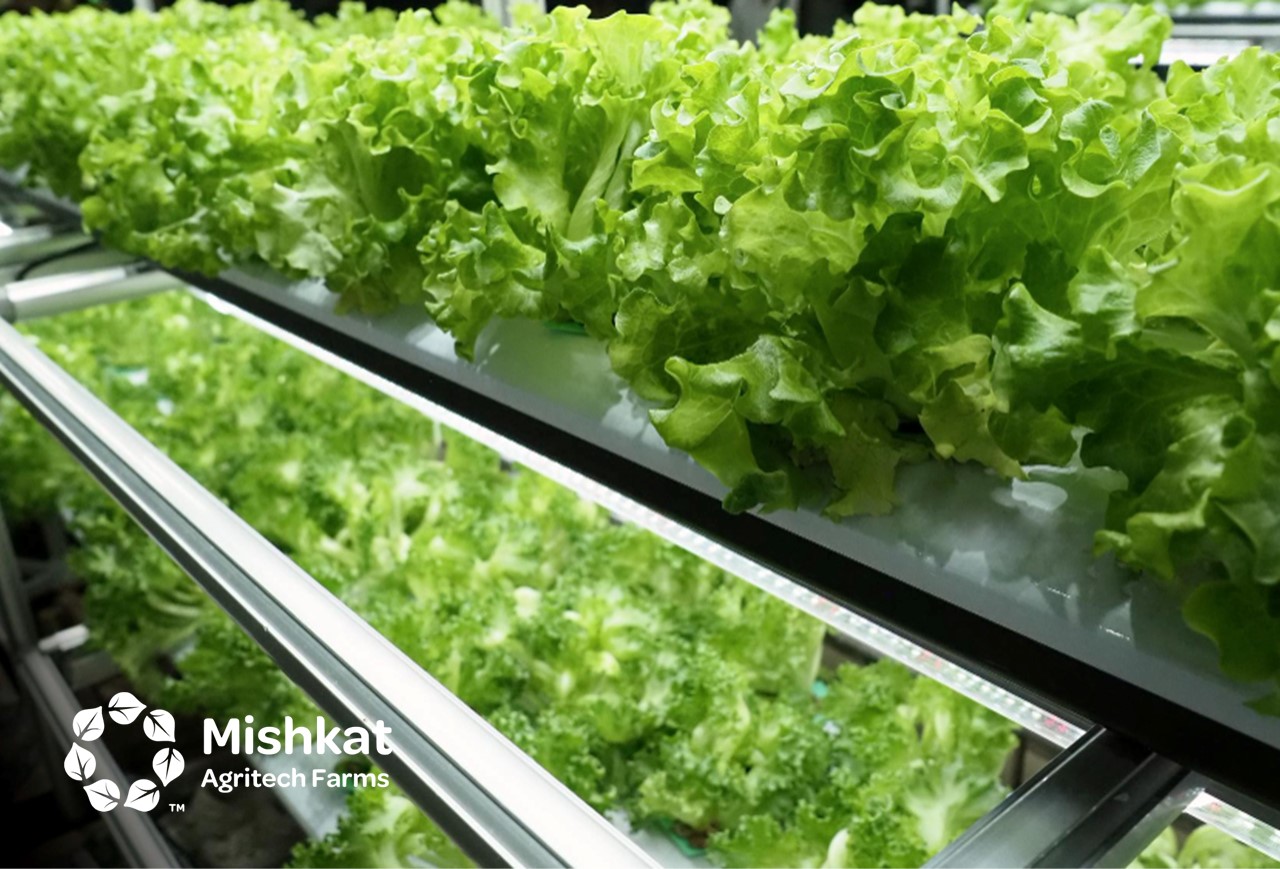
An Aquaponics business plan is not just a funding document in Saudi Arabia. It connects water efficiency, crop and fish selection, hospitality demand, staffing, and capital discipline before money is locked into the wrong site or system.
Table of Contents
Why an Aquaponics business plan matters now
What makes one farm model bankable while another stalls after build-out? An Aquaponics business plan answers that before construction starts. In Saudi Arabia, water, energy, labor, licensing, hospitality demand, and product positioning all shape profitability in a very local way.
A good Aquaponics business plan turns a technical concept into a commercial decision. It helps owners test scale, investors compare scenarios, and operators decide whether the right entry point is a pilot, a commercial aquaponics unit, or a hospitality-linked farm concept. This article shows what to include, how to size the model, what numbers matter most, and where projects usually go wrong. Where relevant, it also reflects the project design and farm management perspective that Mishkat Company and Mishkat Company Services often apply in Saudi soilless farming work.
Problem and stakes
In Q1 2025, hotel room occupancy in Saudi Arabia reached about 63%, up from 60.9% a year earlier, while total employment in tourism activities rose to 983,253 from 944,299. At the same time, 2024 food security data showed strong local self-sufficiency in selected products, including 101% for cucumbers, 100% for zucchini, and an 8.2% year-on-year increase in fish self-sufficiency. For an Aquaponics business plan, that combination matters: hospitality demand is growing, and local fresh production is increasingly strategic.
The water side is just as important. In the national water strategy baseline, agriculture accounted for 84% of total water requirements, and 90% of water supplied to agriculture came from non-renewable resources. That is exactly why an Aquaponics business plan in Saudi Arabia cannot be written like a generic greenhouse memo. It must prove that the production model, water loop, and crop mix work under local resource constraints.
Aquaponics itself is the cultivation of plants and aquatic animals in one recirculating environment, which is why it attracts attention in water-stressed markets. But technical elegance alone does not create returns. A commercial model still rises or falls on pricing, operating discipline, demand consistency, and system fit.

What an Aquaponics business plan must cover
An Aquaponics business plan should read like an investor memo and an operating manual at the same time. It must explain what you will produce, who will buy it, how the farm will run, what it will cost, and what risks could break the model.
For Saudi projects, the strongest Aquaponics business plan usually covers six linked decisions:
| Section | What you must decide | Saudi-specific question | Output |
|---|---|---|---|
| Demand | Who buys first | Are you selling to retailers, hotels, compounds, chefs, or direct consumers | Revenue model |
| Product mix | Which crops and fish fit | Can the market absorb premium herbs, leafy greens, or specialty fish consistently | Sales basket |
| System design | What the farm will look like | Does the site support temperature control, biosecurity, water treatment, and staff flow | Capex scope |
| Operations | How daily work will happen | Can the team handle fish health, plant health, water chemistry, harvest rhythm, and food safety | Opex model |
| Compliance | What approvals are needed | What licenses, utility conditions, and food handling controls apply | Risk register |
| Finance | When money goes out and returns come in | Does the payback still work under lower yields or lower prices | Investment case |
A weak draft often treats the farm as a production story only. A strong plan connects production to sales, and sales to cash flow. That is the difference between a concept that sounds modern and a venture that can actually survive the first 24 months.
A useful way to frame the document is this: every page of the Aquaponics business plan should answer one of three questions. Can we sell it? Can we run it? Can we earn from it? Mishkat Company Team often works from that same logic when reviewing hydroponics & aquaponics concepts, because it keeps technical enthusiasm from hiding commercial gaps.
How to build an Aquaponics business plan step by step
The simplest method is to build the plan in layers, not all at once. Each layer removes uncertainty and sharpens the next decision.
- Define the business model firstDecide whether the venture is wholesale supply, a branded premium farm, a hospitality-linked production asset, an education-driven urban farm business, or a mixed model. An Aquaponics business plan built for chefs looks very different from one built for mainstream retail.
- Choose the first market before the full crop listMany teams start with what they want to grow. Start with who will buy. If your first buyers are hotels, the plan should focus on freshness, consistency, menu integration, and delivery rhythm. If your first buyers are retailers, packaging, shelf life, and margin pressure matter more.
- Select a realistic product basketMost projects need a narrow starting basket. Leafy greens, herbs, and a carefully selected fish line are easier to control than an overly broad list. Your Aquaponics business plan should show why each item is included, how often it is harvested, and what role it plays in margin.
- Match the system to the businessDo not choose system design by trend. Choose it by economics and operations. If the team is small, complexity must stay low. If the site is inside an urban or hospitality setting, aesthetics and visitor movement may matter as much as yield. If the project is remote, maintenance simplicity matters more than visual appeal.
- Build the operating rhythmA farm is not only equipment. It is a daily sequence. Feeding, testing, cleaning, transplanting, harvesting, packing, dispatching, and recording all need clear ownership. An Aquaponics business plan should show the weekly rhythm, the staffing model, and the points where failure is most likely.
- Map capex and startup cash clearlySplit one-time spend into site preparation, greenhouse or enclosed structure, tanks, filtration, grow area, climate support, packing, sensors, backup systems, training, and contingency. Then separate pre-revenue cash needs from long-term assets. This makes funding conversations much easier.
- Stress-test the numbersThe plan should still make sense if yield is lower, pricing is softer, or ramp-up takes longer. A credible Aquaponics business plan always includes a base case, a cautious case, and a downside case.
A practical planning rule is to write the document in this order: market, product basket, system logic, staffing, capex, operating cost, revenue assumptions, risk controls, then implementation schedule.
Financial model for an Aquaponics business plan
The financial core of an Aquaponics business plan should be simple enough to explain in two minutes and detailed enough to survive diligence. Start with unit economics, then move to full project economics.
A simple planning formula is:
Monthly operating profit = monthly revenue – monthly operating costs
And a useful expansion is:
Monthly revenue = sum of crop sales + fish sales + experience revenue + training revenue + service revenue
For some projects, especially hospitality or premium urban projects, the non-produce lines matter a lot. A chef table, educational tours, branded workshops, or supply contracts can materially improve resilience. That does not mean every project needs those lines, but an Aquaponics business plan should at least test them.

The second formula is the payback lens:
Payback period = total startup investment / annual cash generated after operating costs
This is not enough for full investment approval, but it gives owners a fast way to compare scenarios. The better plan also tracks three thresholds:
- Minimum monthly sales to cover payroll, utilities, feed, inputs, and packaging
- Gross margin by product line
- Cash buffer needed before the farm reaches stable yield and stable sales
Research on commercial aquaponics points in the same direction: viability depends on revenues, costs, investments, operations, market conditions, and the surrounding environment being evaluated together, not as separate workstreams. (MDPI)
Financial checklist for first-pass planning
Use this checklist before finalizing the numbers in your Aquaponics business plan:
- Have you separated build cost from startup working capital?
- Have you priced backup power, water treatment, and replacement parts?
- Have you included labor for monitoring, harvesting, washing, packing, and delivery?
- Have you estimated realistic losses during the ramp-up phase?
- Have you tested a lower selling price scenario?
- Have you included feed, fingerlings, seeds, growing media if used, packaging, cleaning supplies, and transport?
- Have you assumed payment delays from business customers?
- Have you defined when the project becomes cash neutral?
- Have you set a contingency amount instead of pretending the startup will be smooth?
This is also where Mishkat Company Services can add value in real projects, because design decisions, agronomist training, and farm management all change the numbers.
Aquaponics business plan models for Saudi investors
Not every Aquaponics business plan should target the same scale or customer. In Saudi Arabia, three models tend to make the most sense.
Model 1: Production-first supply farm
This is a focused aquaponics farm selling fresh produce and selected fish into hospitality, specialty retail, and premium direct accounts. It works best when the site is optimized for production, labor routines are disciplined, and the sales team can secure recurring demand early.
Model 2: Hospitality-linked farm-to-table asset
This model connects the farm to a hotel, resort, residential compound, or mixed-use development. The financial return is not only from produce. It can also come from guest experience, brand story, menu freshness, culinary differentiation, and educational visits. In this model, the Aquaponics business plan must include both direct income and indirect asset value.
Model 3: Compact urban demonstration plus revenue mix
This version is smaller, visually strong, and often placed in a city context. It may combine produce sales, workshops, school visits, subscription baskets, and event hosting. It is useful when the goal is brand visibility, community presence, or phased market entry rather than immediate large-scale output.
Quick-win mini case: Aquaponics business plan for a hotel pilot
Imagine a hospitality developer in Jeddah with a mid-size upscale property. Instead of starting with a large standalone farm, the team starts with a compact pilot tied to the kitchen and guest experience.
The Aquaponics business plan for this pilot does four things. First, it limits the crop list to high-turn herbs and leafy greens that chefs actually reorder. Second, it keeps fish selection conservative so the operating team is not overloaded. Third, it builds a visitor-friendly layout that supports storytelling without interrupting food safety. Fourth, it treats the pilot as a proof stage with clear expansion gates.
The expected outcome is not instant scale. The quick win is better menu storytelling, tighter freshness for selected items, visible sustainability messaging, and real operating data. After six to nine months, the owner can decide whether to expand, replicate, or stop. Mishkat Company Services often recommends this phased logic because it gives investors a live test instead of a theoretical promise.
Common mistakes that weaken an Aquaponics business plan
The fastest way to damage the plan is to write it backwards. Here are the most common errors:
- Starting with equipment choice before customer demand
- Planning too many crops and fish types at launch
- Using optimistic selling prices without buyer validation
- Underestimating labor intensity
- Ignoring downtime, mortality, spoilage, and ramp-up losses
- Copying a foreign plan template without adapting it to Saudi utilities, climate, and labor structure
- Treating sustainability language as a substitute for margins
- Assuming the fish side will automatically be profitable
- Forgetting packaging, cold chain, and delivery routines
- Writing a beautiful document without a monthly management dashboard
A professional plan does not need to look complicated. It needs to show disciplined thinking. That is why Mishkat Company keeps pushing clients toward fewer assumptions and clearer operating controls.
Objections and edge cases for an Aquaponics business plan
Some projects should slow down before they spend more. A realistic Aquaponics business plan must be willing to say no, not only yes.
Objection 1: “Aquaponics is too complex for our team.”
That can be true. If the business has no technical operator, no training budget, and no appetite for disciplined monitoring, a simpler hydroponics entry phase may be the better start. An Aquaponics business plan should compare both paths honestly.
Objection 2: “We want a big launch to impress the market.”
That is usually a risk, not a strategy. Large projects amplify every mistake. If the concept is new to the ownership group, a staged rollout is often stronger than a full commercial aquaponics launch.
Objection 3: “We will sell everything at premium pricing.”
Premium is earned, not assumed. You need buyer proof, repeat order logic, handling quality, and a brand position that survives comparison. An Aquaponics business plan should show where premium is realistic and where it is not.
Objection 4: “The fish will carry the economics.”
Sometimes it helps, sometimes it does not. In many cases the fish line adds complexity before it adds margin. The plan must show the real role of fish in revenue, brand value, and nutrient balance.
Objection 5: “We only need a plan template.”
A plan template can help structure thinking, but it cannot replace local judgment. For Saudi projects, site conditions, utility design, food service demand, and staffing capability all need custom decisions. That is why Mishkat Company Team usually treats any generic template as a starting point, not an answer.
Turn your Aquaponics business plan into an executable project
The next step is a practical review of market fit, farm design, operating model, and phased economics. If you want to turn an Aquaponics business plan into a real Saudi project, start with a concept note, a buyer map, and a first-pass financial model, then pressure-test each assumption before build-out. For owners who want expert support across hydroponics & aquaponics, farm design, hospitality design, agronomist training, and farm management, a soft next step can be a structured review with Mishkat Company Services.
Aquaponics business plan FAQs
What is the first page of an Aquaponics business plan supposed to achieve?
It should explain what the venture sells, who it serves, why the model fits Saudi Arabia, how much investment is needed, and what the next milestone is.
How detailed should an Aquaponics business plan be for investors?
Detailed enough to show demand, system logic, cost structure, ramp-up timing, downside scenarios, and management capability.
Can an Aquaponics business plan work without fish sales?
Yes. In some cases, the fish line supports the system technically while produce and experience revenue do more of the commercial work.
Does every Aquaponics business plan need a hospitality angle in Saudi Arabia?
No. But the hospitality angle can improve freshness, storytelling, and route-to-market stability.
What makes an Aquaponics business plan different from a hydroponic one?
The fish side changes operations, risk, staffing, biosecurity, and production balance.
Should I use an Aquaponics business plan template from another country?
Only as a draft structure. Labor, utilities, pricing, logistics, and climate assumptions must be rebuilt for Saudi conditions.
How long should the plan be?
Long enough to support a decision, short enough to stay readable. Many strong versions are between 15 and 30 core pages plus appendices.
When is an Aquaponics business plan ready for bank or partner review?
When the market assumptions are validated, the system concept is defined, startup costs are itemized, ramp-up timing is realistic, and downside scenarios are included.
Can an Aquaponics business plan support a phased launch?
Yes. A pilot-first approach can reduce capex risk and improve credibility before a larger expansion decision.
Conclusion
- Start with buyers, not equipment.
- Keep the first product basket narrow and controllable.
- Build the numbers from unit economics upward.
- Stress-test price, yield, and timing before construction.
- Use phased execution when the model is new to the team.
- Treat the plan as a management tool, not a brochure.
A strong Aquaponics business plan does not guarantee success, but it sharply improves decision quality. In the Saudi context, the best plans stay practical, measurable, and honest from day one.
Proof and credibility
This article is built around current Saudi food security and tourism data, the national water strategy baseline, and established aquaponics planning literature. The commercial guidance also reflects practical project logic used in greenhouse design, hydroponics & aquaponics planning, hospitality-linked farm concepts, and farm management reviews, which is the same kind of cross-functional lens often used by Mishkat Company when assessing new opportunities. The central point is simple: an Aquaponics business plan becomes credible when market demand, operating reality, and investment discipline are tested together, not separately.
Sources
- General Authority for Statistics, 2025, https://www.stats.gov.sa/documents/d/guest/tourism-establishments-statistics-q1-of-2025-en-pdf
- General Authority for Statistics, 2025, https://www.stats.gov.sa/en/w/news/135
- Ministry of Environment, Water and Agriculture, 2025, https://www.mewa.gov.sa/en/Ministry/Agencies/TheWaterAgency/Topics/Pages/Strategy.aspx
- Food and Agriculture Organization of the United Nations, 2014, https://openknowledge.fao.org/handle/20.500.14283/i4021e
- Water, 2021, https://doi.org/10.3390/w13212978


