Choosing between aquaponics vs hydroponics can shape the future of your greenhouse, your budget, and your long-term farming strategy. This guide breaks down the differences, similarities, costs, and risks in clear language, with a special focus on water-scarce regions and controlled environment agriculture. You will learn how each method works, what it demands from you, and how to align it with your investment goals, hospitality projects, and the kind of fresh produce you want to showcase.
Table of Contents
Introduction about aquaponics vs hydroponics
You have limited water, limited space, and high expectations from your farm. At the same time, customers and guests are asking for fresher, more local and more sustainable produce. In this context, the choice between aquaponics vs hydroponics is not a technical side question. It is a strategic decision that affects capital costs, risk, crop planning, and brand positioning.
In recent years, soilless systems have moved from experimental projects into serious business. A 2023 market study estimated the global hydroponics market at more than 38 billion US dollars and projected it to more than triple by 2032. A 2025 forecast for controlled environment agriculture suggested that this wider sector could grow from about 92.6 billion US dollars in 2025 to nearly 200 billion US dollars by 2030. For greenhouse owners and hospitality developers in Saudi Arabia, this is a signal that aquaponics and hydroponics are no longer niche. They are becoming core tools of serious agriculture.
At the same time, water scarcity is pushing growers to think carefully about efficiency. Recent technical reviews show that modern hydroponic systems can reduce water use by up to 90 percent compared with conventional soil farming, while maintaining or even increasing yields. Aquaponic approaches also recycle water in loops that combine fish and plants, aiming for a richer ecological balance.
In this article, you will:
- Learn the basics of aquaponics and hydroponics in simple terms.
- Understand the key differences and similarities between aquaponics and hydroponics systems.
- Compare costs, complexity, and risks, especially for arid climates.
- Use a clear checklist to choose the right method for your own goals.
- See how a company like Mishkat Company can help design, build, and manage these systems in Saudi conditions.
Problem and stakes: why aquaponics vs hydroponics matters now
The core problem is simple: traditional soil agriculture depends on large volumes of water and land, both of which are under pressure. Many growers in Saudi Arabia and the wider Gulf are watching wells drop and input prices rise, while food imports remain high.
A 2025 scientific review found that well-managed hydroponics can use up to 90 percent less water than conventional soil-based irrigation, thanks to closed loops and recirculation of nutrient solutions. In parallel, multiple studies have reported that leafy crops in hydroponic systems often show faster growth and more consistent quality than the same plants in open fields under similar climates.
From a business angle, the hydroponics market alone was valued at about 38.14 billion US dollars in 2023 and is expected to reach more than 120 billion US dollars by 2032, with annual growth above 12 percent. This is part of a broader controlled environment agriculture movement that, by 2030, could approach 200 billion US dollars in value worldwide. For investors and greenhouse owners, aquaponics and hydroponics are no longer experimental hobbies. They are key pillars of modern soilless agriculture.
In Saudi Arabia, where water is expensive and heat is intense, choosing smart systems is crucial. A poorly planned project can lock you into high energy costs, unstable yields, and operational headaches. A well-designed aquaponic or hydroponic greenhouse, on the other hand, can turn limited land into reliable, high-value production that supports farm-to-table menus, retail contracts, or long-term off-take agreements. Mishkat Services and similar technical partners exist precisely to help close this gap between theory and execution.
Aquaponics vs hydroponics in simple terms
To understand aquaponics vs hydroponics, start with the core idea they share: both are soilless methods. In each method, plants grow with their roots in a nutrient solution rather than in soil. The difference is how that nutrient solution is created and managed.
- In hydroponics, you dissolve mineral nutrients in water, then deliver that nutrient solution directly to the roots of the plants. You control exactly what goes into the water, in what concentration and at what time.
- In aquaponics, the nutrient solution comes mostly from fish waste. Fish live in tanks, produce waste, and bacteria convert that waste into nutrients that plants can absorb. The plants clean the water, which then returns to the fish.
So, aquaponics combines aquaculture and plant production in a single loop, while hydroponics focuses only on plants. When you compare aquaponics vs hydroponics at this basic level, you can already see a difference in complexity, management, and biological risk.
People often search phrases such as aquaponics and hydroponics, hydroponics and aquaponics, or aquaponics vs hydroponics when they first hear about soilless growing. They want to see differences between aquaponics systems, similarities between aquaponics setups, and clear explanations of differences between aquaponics and hydroponics in one place. This article aims to answer those needs in a practical way, especially for Saudi greenhouse owners and hospitality projects.
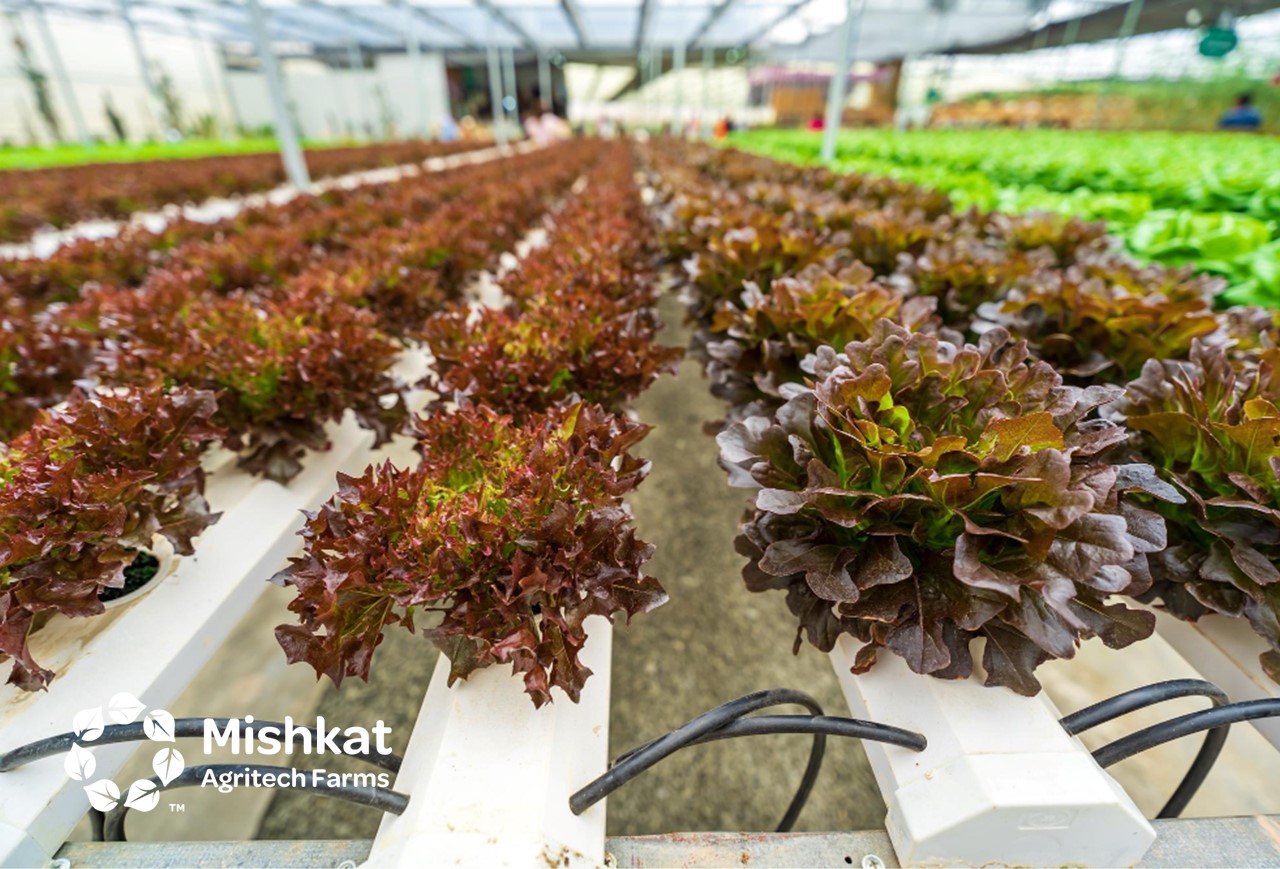
Key differences between aquaponics and hydroponics systems
Turn your vision into a data-backed plan with Mishkat
Book a quick, free assessment session with the Mishkat Services team: we define your goals and align them with the market and your budget, and deliver a one-page roadmap with expected returns, operating options, and linking to a purchase agreement when needed, with no obligation.
Biology and components
In hydroponics, the key components are relatively simple:
- A reservoir for nutrient solution.
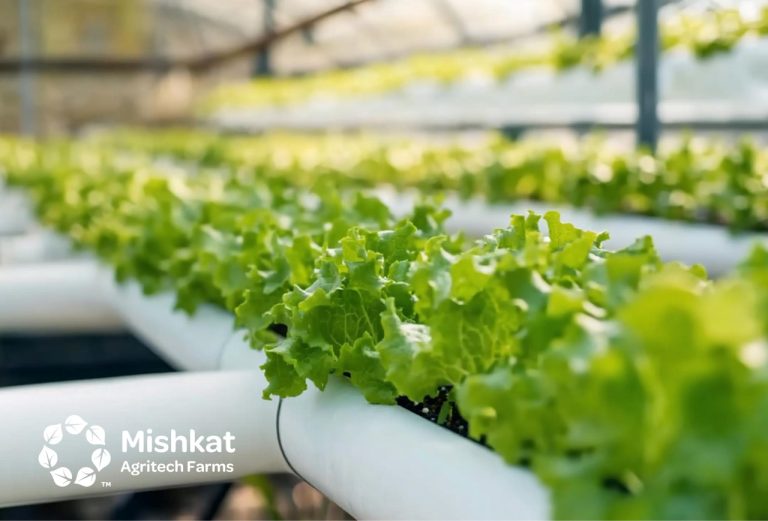
- A distribution system such as drippers, nutrient film technique channels, or deep water culture.
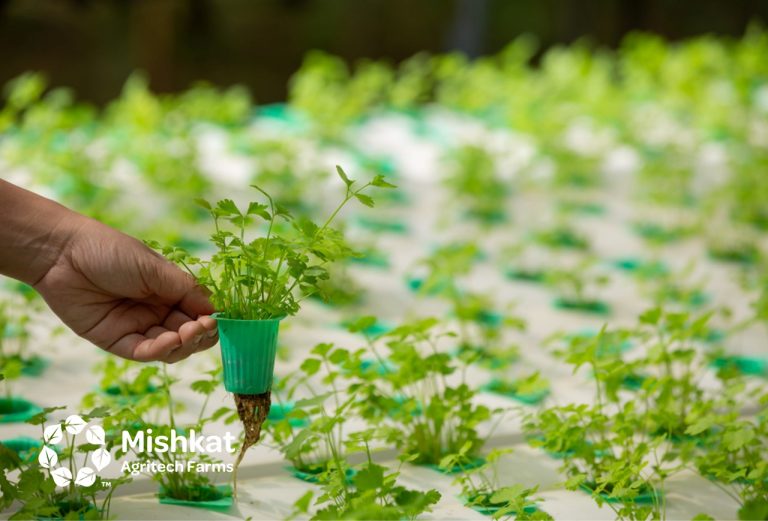
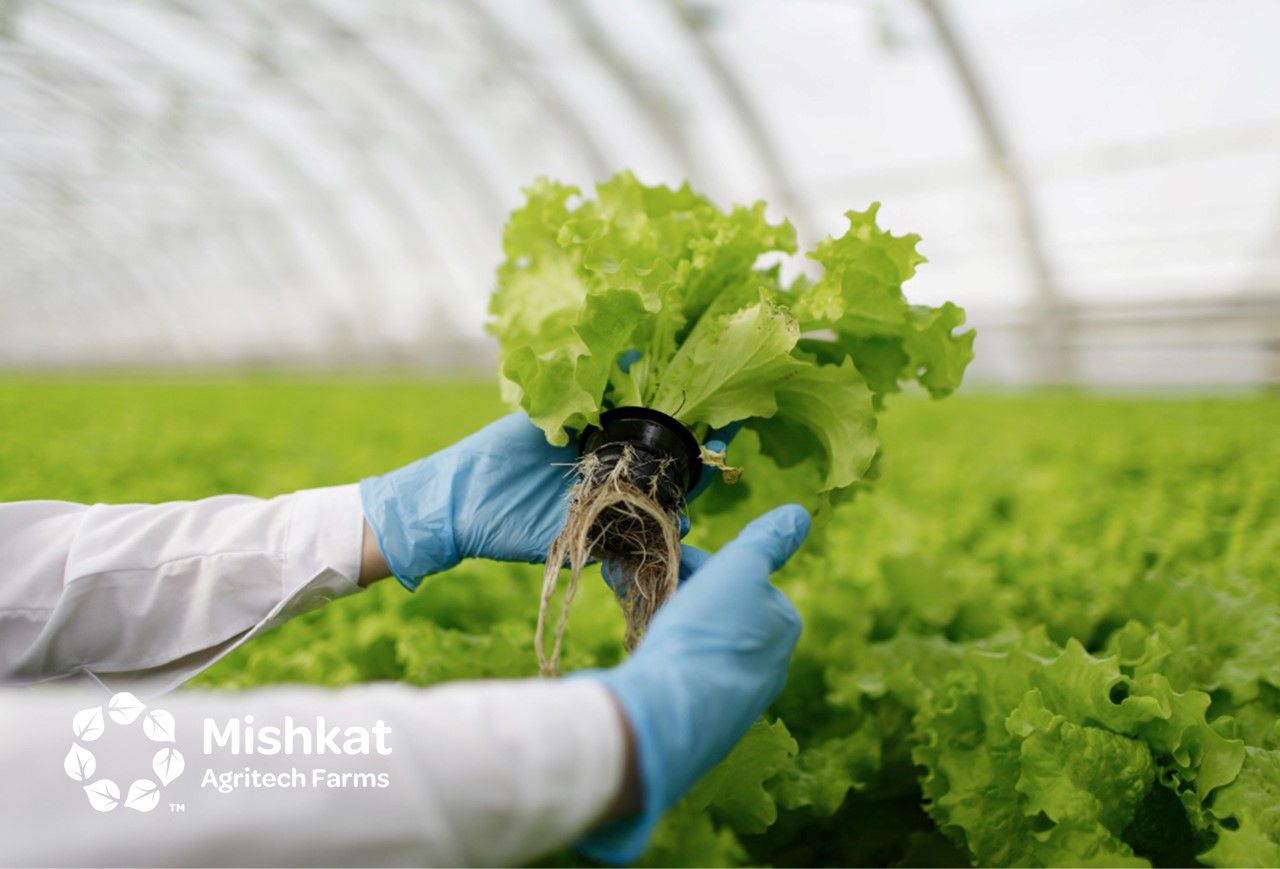
- Root zones filled with inert media or exposed to flowing water.
- Tanks or lines for returning solution and adjusting it.
The core components in aquaponic systems are more complex:
- Fish tanks, often with mechanical filtration.
- Biofilters where bacteria convert fish waste into plant-ready nutrients.
- Plant beds or channels similar to hydroponic systems.
- Pumps and pipes to move water between fish and plants.
Aquaponics combines biological systems in a symbiotic relationship between fish, bacteria, and plants. In that sense, aquaponics combines aquaculture with controlled plant production in one integrated design. Many guides that compare aquaponics vs hydroponics point out that aquaponic water chemistry must satisfy both fish and plants at the same time, while hydroponic water is optimized only for plant needs.
Micro takeaway: Hydroponics is a nutrient engineering problem, while aquaponics is a whole-ecosystem management problem.
Aquaponics vs Hydroponics
Time to start and operational complexity
Hydroponic systems can often be started quickly. Once the nutrient recipe is ready and the systems are tested, you can plant seedlings almost immediately and fine-tune nutrient levels and pH as you go.
In contrast, aquaponic operations need time for the biological cycle to stabilize. Fish biomass must be built up gradually, and the bacterial community in biofilters needs weeks to mature. During this period, nutrient levels may fluctuate and plant growth may be uneven. Farmers who want to compare aquaponics timelines with hydroponic ones should account for this start-up phase in their financial models.
Questions about the difference between aquaponics time frames and hydroponic ramp-up are very common in planning workshops. Understanding this difference between aquaponics and hydroponics at the schedule level is crucial for investors who need predictable cash flow and harvest dates.
Micro takeaway: Hydroponics generally reaches stable production faster, while aquaponics requires more patience during system cycling.
What you can grow and harvest
Both aquaponics and hydroponics can grow a wide range of plants: leafy greens, herbs, some fruiting vegetables, and even specialty crops. Yet there are subtle differences.
- Hydroponics allows very fine control of nutrients, so it can push crops toward faster growth and higher yields, especially for leafy plants that respond well to precise nutrient management.
- Aquaponic nutrient profiles depend on feed type, fish stocking density, and biofilter performance. This often suits leafy greens and herbs very well, while heavy-feeding fruit crops may need supplemental nutrients or careful system design.
Growers sometimes talk about plants aquaponics systems love, such as lettuces, basil, mint, and certain Asian greens. In practice, plants aquaponics combines best with species that tolerate slightly lower nutrient levels and appreciate stable, rich but gentle water. In hydroponic designs, on the other hand, you can push nutrient levels higher and tailor them tightly to specific crops.
Micro takeaway: Both methods can support diverse plants, but hydroponics offers more precise nutrient tuning, while aquaponics favors crops that thrive in slightly softer, biologically buffered water.
Similarities between aquaponics and hydroponics that matter for design
Aquaponics vs Hydroponics
Turn your vision into a data-backed plan with Mishkat
Book a quick, free assessment session with the Mishkat Services team: we define your goals and align them with the market and your budget, and deliver a one-page roadmap with expected returns, operating options, and linking to a purchase agreement when needed, with no obligation.
There are also important similarities between aquaponics and hydroponics that influence greenhouse design and management. When investors ask about the differences and similarities between aquaponics and hydroponics, these shared points often surprise them.
- Both are soilless growing methods that remove soil as a variable.
- Both rely on delivering balanced nutrients directly to plant roots.
- Both require pumps, tanks, plumbing, and monitoring equipment.
- Both benefit from protected structures such as greenhouses or indoor farms.
- Both can be integrated with vertical systems to use space more efficiently.
When you explore similarities between aquaponics design and hydroponic layout, you also notice shared challenges: managing power outages, keeping water temperature in range, and maintaining backup systems. A useful way to compare aquaponics vs hydroponics at design level is to ask how each handles failure. For example, what happens to your plants if a pump stops for four hours in summer, and how does each system recover afterwards?
Micro takeaway: Similar engineering challenges exist in both methods, so robust design and backup planning are essential for either choice.
Costs, risks, and returns: comparing real-world numbers
From an investment perspective, many owners want to compare aquaponics vs hydroponics on three axes: startup cost, operational complexity, and expected returns.
A simplified comparison between Aquaponics vs Hydroponics looks like this:
| Aspect | Aquaponics | Hydroponics |
|---|---|---|
| Core living systems | Fish, bacteria, plants | Plants only |
| Startup equipment cost | Medium to high | Low to medium |
| Biological risk | Higher (fish health plus plants) | Lower (plants only) |
| Water use | Very low | Very low |
| Nutrient source | Fish feed and waste | Purchased nutrient salts |
| Time to stable production | Longer (cycling) | Faster |
| Management skill requirement | Higher, more complex | Moderate |
| Brand storytelling potential | Very high (fish plus plants) | High (clean, efficient farming) |
For many investors, farming and hydroponics feel more familiar because they look closer to standard greenhouse vegetable production, just without soil. They can budget nutrients as a predictable cost line and focus on efficiency and market access. Aquaponic projects may have higher marketing value because they highlight closed loops and integrated ecosystems, but they also carry more moving parts.
In risk workshops, we sometimes see people write short notes such as “compare aquaponics vs hydroponics for first farm” or “exploring aquaponics later after hydroponic phase one.” That reflects a common strategy: start with a simpler hydroponic model, then add a pilot aquaponic module once the team is comfortable with core systems.
Micro takeaway: Hydroponics usually offers clearer numbers and lower biological risk, while aquaponics offers richer sustainability stories and additional complexity.

How to choose the right system for your goals
The best way to compare aquaponics vs hydroponics is to start from your goals, not from the technology. Here is a practical decision checklist that many Mishkat Company clients in Saudi Arabia find useful.
Quick decision checklist
- Clarify your main goal
- Fresh leafy greens for local retail or off-take contracts.
- High-impact farm-to-table experience for a resort or restaurant.
- Mixed production that balances vegetables and possibly fish sales.
- Define your water and energy constraints
- How expensive and limited is water on your site?
- What is your power situation, backup generators, and solar options?
- Map your management capacity
- Do you already have people experienced in aquaculture or only in greenhouse crops?
- How much training time can you invest before launch?
- Set your risk tolerance
- Are you comfortable managing fish health, biofilters, and more complex troubleshooting?
- Or do you prefer a simpler, more standardized system?
- Clarify your brand story
- Do you want to highlight clean, efficient hydroponic production?
- Or is a circular story about fish, plants, and waste recycling central to your concept?
- Choose scale and phasing
- Start small and expand, or build a full-scale project at once?
- Many growers decide to difference between aquaponics pilot modules and main hydroponic blocks, so they can test without risking core production.
When people discuss differences and similarities between aquaponics options, they often mix system types such as media beds, nutrient film systems, and vertical towers. It is helpful to answer questions about differences between aquaponics and hydroponics separately from questions about internal aquaponic designs.
Micro takeaway: The right answer depends on your goals, team, and risk tolerance, not on which method looks more fashionable online.
Examples of how search phrases reflect real decisions
In real projects, we see planners use notes or search queries like:
Turn your vision into a data-backed plan with Mishkat
Book a quick, free assessment session with the Mishkat Services team: we define your goals and align them with the market and your budget, and deliver a one-page roadmap with expected returns, operating options, and linking to a purchase agreement when needed, with no obligation.
- “compare aquaponics vs hydroponics for rooftop greenhouse”
- “difference between aquaponics market and simple hydroponics pilot”
- “exploring aquaponics for phase two of resort farm”
You may even see clumsy phrases in online forums, such as hydroponics two soilless, hydroponics two soilless growing, or hydroponics two soilless growing techniques. People are trying to sort out multiple soilless growing techniques in their minds and want simple language. Tools like this guide are designed to turn that confusion into a clear, step-by-step decision.
Micro takeaway: Even imperfect search phrases hide serious business questions, so use them as prompts to clarify what you really need from your farm.
Saudi and Gulf context: practical notes and a mini case
In Saudi Arabia and similar climates, the environmental impact of conventional irrigation is high. Temperatures stress plants, evaporation wastes water, and importing vegetables can feel safer than growing them. Soilless agriculture offers an alternative. Both aquaponic and hydroponic systems keep roots in controlled water, not hot soil, and can be built inside cooled greenhouses.
A 2023 review on hydroponics and related methods highlighted that these systems can significantly increase water use efficiency while maintaining high yields in regions with limited arable land. For investors, this translates into an opportunity to build productive assets even on marginal land, near hotels, resorts, or logistics hubs.
Mishkat Services often starts with a simple site assessment for clients who are exploring aquaponics or straightforward hydroponic solutions. A typical mini case might look like this:
- A 500 square meter greenhouse near a hospitality project wants to supply leafy greens and herbs for a farm-to-table menu.
- Water is available but expensive; energy is moderate; management experience is limited.
- After a feasibility study, Mishkat Company recommends a hydroponic deep water culture system for the first phase and a smaller aquaponic module for education and guest engagement.
Steps in this kind of mini case:
- Design a hydroponic layout for consistent production of lettuce, basil, and other herbs.
- Allocate a smaller section for an aquaponic loop with fish tanks and media beds, mainly for guest tours and storytelling.
- Train staff in soilless gardening basics, nutrient management, and simple fish care.
- Monitor yields, water use, and energy consumption over the first 12 months.
Expected outcome: reliable vegetable supply for the hospitality operation, strong sustainability story for marketing, and practical experience that prepares the team for larger future systems. In short, compare aquaponics opportunities with hydroponic stability, then build in phased layers instead of a single big gamble.
Micro takeaway: In hot, dry climates, combining hydroponic core production with selective aquaponic showcases can balance risk, returns, and brand value.
Objections when comparing Aquaponics vs Hydroponics
Some common objections appear whenever aquaponics and hydroponics are discussed.
- “These systems are too expensive.”
Startup costs are higher than basic soil beds, but water savings, yield per square meter, and premium prices can offset this. Over time, well-run soilless agriculture projects become competitive assets, especially where water is scarce. - “Fish are too risky.”
In aquaponic designs, fish health is indeed a crucial factor. This is why many investors treat aquaponics as a second phase after they have mastered hydroponic operation. Clear standard operating procedures and backup power reduce risk. - “Nutrients and water chemistry are too complicated.”
Both methods depend on nutrient and water management. However, standardized nutrient mixes, basic testing kits, and remote monitoring tools make hydroponic nutrient control much easier than it was a decade ago. Aquaponic nutrient management is more complex, but still manageable with proper training. - “Soilless systems are not organic.”
Organic rules vary by country, and not all regulators accept hydroponic or aquaponic products as organic. However, many consumers respond more to freshness, traceability, and low pesticide use than to the official label. Aquaponic loops can sometimes support more biologically rich and organic-leaning stories than purely mineral-based hydroponics, especially when feed and management are chosen carefully.
Edge cases, such as very remote sites with unstable power or extremely low budgets, may favor improved soil-based systems or hybrid approaches instead of full aquaponic or hydroponic farms. The key is to match technology with context rather than assume a single answer.
Micro takeaway: Real objections highlight real constraints, but careful design and realistic phasing can address most of them.
Aquaponics vs Hydroponics
If you are serious about building a soilless farm, reading an article is not enough. The next step is to translate your goals, site constraints, and budget into a clear, phased roadmap. Mishkat Company can help you move from ideas about aquaponics vs hydroponics to detailed layouts, cost models, and operating procedures tailored to Saudi conditions and your specific hospitality or retail strategy. Start by defining your goals and gathering your site data, then sit with an experienced partner to shape a realistic plan.
Turn your vision into a data-backed plan with Mishkat
Book a quick, free assessment session with the Mishkat Services team: we define your goals and align them with the market and your budget, and deliver a one-page roadmap with expected returns, operating options, and linking to a purchase agreement when needed, with no obligation.
FAQs About Aquaponics vs Hydroponics
What is the simplest way to understand aquaponics vs hydroponics?
Hydroponics is plant growing in water enriched with mineral nutrients. Aquaponics is a combined system where fish live in tanks, their waste is converted into plant nutrients by bacteria, and plants clean the water. Hydroponics deals with plants and nutrients only, while aquaponics manages fish, bacteria, and plants together.
Which system saves more water in arid climates?
Aquaponics vs Hydroponics
Both aquaponics and hydroponics use far less water than open-field farming, often up to 90 percent less water per kilogram of produce, because water is recirculated instead of lost through deep drainage or uncontrolled evaporation. The exact percentage depends on design, crop type, and climate control, but both methods are considered highly water-efficient options for Saudi Arabia and similar regions.
Are aquaponics systems always more sustainable than hydroponic ones?
Not always. Aquaponics combines fish and plants, so it can recycle waste and create a richer ecological story. However, if fish feed is imported or poorly chosen, or if energy use is high, sustainability gains can shrink. A well-designed hydroponic farm with efficient energy systems can be highly sustainable too. The real question is how the system is designed, managed, and integrated into local supply chains.
What are the main similarities between aquaponics and hydroponics?
Similarities between aquaponics and hydroponics include soilless production, reliance on nutrient solutions, use of controlled environments, and the need for careful monitoring of pH, temperature, and oxygen in water. Both systems can be combined with vertical structures and precision controls to maximize space and efficiency.
How do I evaluate costs for a soilless project?
Start by listing land, structure, equipment, and setup costs, then estimate ongoing costs for energy, labor, nutrients or feed, water, and maintenance. It can help to break these into monthly and yearly figures. Many investors work with partners such as Mishkat Services to build realistic financial models that compare aquaponic scenarios with pure hydroponic models and traditional soil-based options.
Is aquaponics better than hydroponics for hospitality projects?
For some hospitality developers, aquaponics offers a unique guest experience: seeing fish tanks, plant beds, and a complete loop can be very engaging. This supports storytelling about closed loops and waste reduction. However, for reliable kitchen supply, hydroponics often provides more predictable yields and simpler management. A hybrid approach, with hydroponic production and a smaller aquaponic showcase, is often effective.
Can I switch from hydroponics to aquaponics later?
Yes. Many growers start with hydroponics because it is simpler, then add aquaponic modules later. When exploring aquaponics as a second phase, make sure your original design leaves space, plumbing capacity, and management bandwidth for future integration. It is easier to expand a system that was designed with that in mind from the beginning.
What crops are best for beginners in soilless systems?
For new growers, quick and forgiving crops are ideal. Lettuce, leafy greens, basil, mint, and some herbs perform well in both aquaponic and hydroponic systems. They tolerate small management mistakes and provide frequent harvests. Fruit crops such as tomatoes and cucumbers can be added once the team is comfortable with daily operations.
Do I need advanced degrees to run aquaponic or hydroponic farms?
No. You need discipline, willingness to learn, and simple daily procedures. Short training programs, clear checklists, and gradual scaling can help teams without formal agricultural degrees. Partners such as Mishkat Company focus their training on practical management rather than complex theory, which is usually enough for successful operation.
How does soilless agriculture fit with national food security goals?
Soilless agriculture, including aquaponics and hydroponics, allows production of fresh vegetables close to cities and hospitality hubs, even on non-arable land. This supports national goals around food security, reduced import dependence, and smarter water use. When combined with renewable energy or efficient cooling, these systems can become important long-term components of a resilient food system.
Conclusion About Aquaponics vs Hydroponics
Key takeaways:
- Aquaponics vs hydroponics is mainly a question of complexity, biology, and brand story, not just technology.
- Both methods are soilless and highly water-efficient, often using up to 90 percent less water than traditional fields.
- Hydroponics generally offers faster start-up, simpler nutrient management, and lower biological risk.
- Aquaponics offers rich sustainability stories and integrated fish production, but requires more skill and patience.
- For many Saudi growers, the best path is to start with solid hydroponic production, then add selected aquaponic modules.
- Careful planning, realistic financial modelling, and skilled partners such as Mishkat Services are crucial for success.
In the end, the right choice is the one that fits your site, your team, and your market. Use the frameworks in this guide, ask clear questions, and treat aquaponics and hydroponics as tools for building resilient, high-value farms that match your long-term vision.
Proofs About Aquaponics vs Hydroponics
Recent scientific reviews and field studies show that hydroponic and related soilless systems can reduce water consumption by up to 90 percent compared with conventional soil agriculture, while maintaining high yields and stable quality. Market analyses from 2023 and 2025 report that global hydroponics and controlled environment agriculture markets already stand in the tens of billions of US dollars and are expected to at least double by 2030, with annual growth rates above 10 percent in many segments. These data points confirm that aquaponics and hydroponics are not experimental trends but central parts of modern agriculture, especially in water-limited regions.
Sources About Aquaponics vs Hydroponics
Rajaseger G, 2023, https://pmc.ncbi.nlm.nih.gov/articles/PMC10625363/
Sagar K, 2020, https://www.agriculturejournal.org/volume13number2/soil-free-harvest-unlocking-the-future-of-food-with-hydroponics/
Sargentis G F, 2025, https://www.mdpi.com/2673-4834/6/3/95
Mordor Intelligence, 2025, https://www.mordorintelligence.com/industry-reports/controlled-environment-agriculture-market
Turn your vision into a data-backed plan with Mishkat
Book a quick, free assessment session with the Mishkat Services team: we define your goals and align them with the market and your budget, and deliver a one-page roadmap with expected returns, operating options, and linking to a purchase agreement when needed, with no obligation.