Sustainable farming in Saudi Arabia is no longer a niche idea, it is the difference between a farm that survives heat, water constraints, and market volatility, and one that quietly bleeds cash. This guide translates sustainable farming into measurable design choices for greenhouses, hydroponics, aquaponics, vertical farming, and farm-to-table hospitality models. You will learn what to measure, what to change first, how to de-risk your transition to sustainable agriculture, and how to build an operation that is resilient, credible, and investable.
Article Contents
Introduction about sustainable farming
Sustainable farming sounds simple until you try to run it in Saudi conditions, where water, energy, labor, and quality consistency all fight you at once. What does sustainable farming mean when you are building a greenhouse, a hydroponics facility, or a farm-to-table supply chain for a hotel? And how do you prove that sustainable farming is not just marketing, but a system that protects resources, meets demand, and still makes money?
This article breaks sustainable farming into practical decisions. We will start with the stakes, define measurable outcomes, walk through farming methods that work in controlled environments, and end with a clear transition to sustainable agriculture plan, a mini case, and a due-diligence checklist.
Sustainable farming in Saudi Arabia: what changes in a dry, hot market?
Sustainable farming is always local. In Saudi Arabia, sustainable farming is shaped by extreme heat, limited freshwater, and the need for predictable year-round production. Sustainable farming here is less about ideology and more about systems that can keep producing without compromising water resources, soil health (where soil exists), or long-term economic viability.
Greenhouses and soilless systems are not automatically sustainable farming. They can become resource-heavy if designed poorly. But when designed well, controlled environments are one of the strongest ways to make sustainable farming real in arid regions, because they let you control water losses, nutrient leaks, and pest pressure.
Problem and stakes
In 2023, water consumption for agricultural purposes in Saudi Arabia reached 12,298 million cubic meters.
In 2022, global agrifood systems emissions were 16.2 billion tonnes of carbon dioxide equivalent, representing 29.7 percent of total emissions.
Those two facts matter to every investor in sustainable farming. The first is local pressure on resources, the second is global pressure on food systems to reduce impact. Sustainable farming projects that can show water efficiency, lower waste, and stable production are better positioned for long-term growth, policy alignment, and customer trust.
Why sustainable farming looks different in greenhouses and soilless systems
Open-field farming methods often rely on soil buffering, seasonal weather windows, and large land footprints. Sustainable farming inside controlled environments flips the logic:
- Sustainable farming becomes a design problem (airflow, cooling, light, insulation, shading).
- Sustainable farming becomes a water and nutrient accounting problem (inputs, recirculation, discharge).
- Sustainable farming becomes an energy and reliability problem (cooling load, backup plans, operational discipline).
- Sustainable farming becomes a quality consistency problem (taste, texture, shelf life, food safety).
- Sustainable farming becomes a systems integration problem (production planning, packaging, cold chain, buyers).
If you are building for hospitality, sustainable farming is also an experience problem. Farm-to-table is not only supply, it is story, visibility, and trust.
A practical definition for investors and operators
Sustainable farming is the ability to produce food and fiber today while preserving the resources and environmental conditions that future generations need to produce tomorrow, without compromising economic and social viability.
That definition has three implications for Saudi projects:
- Sustainable farming must be measurable, not just described.
- Sustainable farming must be resilient to heat, water variability, and input shocks.
- Sustainable farming must be economically viable, or it will not scale and will not last.
Turn your vision into a data-backed plan with Mishkat
Book a quick, free assessment session with the Mishkat Services team: we define your goals and align them with the market and your budget, and deliver a one-page roadmap with expected returns, operating options, and linking to a purchase agreement when needed, with no obligation.
Sustainable farming goals you can measure, manage, and prove
Sustainable farming becomes investable when you turn it into metrics. Think of sustainable farming as a scorecard, not a slogan. For controlled environments, the core metrics fall into water, energy, nutrients, crop protection, waste, and economics.
A simple framework that works well for sustainable farming projects is the 6P scorecard:
- Product (quality, consistency, safety)
- Productivity (yield per square meter, cycle time)
- Planet (water use, emissions, waste)
- Profit (unit economics, payback, cash resilience)
- People (workforce safety, skills, turnover)
- Proof (metering, records, audits, traceability)
Sustainable farming improves when each P has a target, a measurement method, and a decision loop.
The key formulas for sustainable farming dashboards
You do not need a complex system to start measuring sustainable farming. You need consistent definitions.
Water productivity
- Water productivity = kilograms sold / cubic meters of water used
Energy intensity
- Energy intensity = kilowatt-hours / kilograms sold
Nutrient efficiency (for recirculating systems)
- Nutrient efficiency = kilograms sold / kilograms of fertilizer salts used
Waste rate
- Waste rate = kilograms discarded / kilograms harvested
On-time fill rate (farm-to-table reliability)
- Fill rate = orders delivered on time / total orders
These are not academic metrics. Sustainable farming teams use them weekly to see whether systems are improving or drifting.
A table of practical sustainable farming targets for Saudi controlled environments
Turn your vision into a data-backed plan with Mishkat
Book a quick, free assessment session with the Mishkat Services team: we define your goals and align them with the market and your budget, and deliver a one-page roadmap with expected returns, operating options, and linking to a purchase agreement when needed, with no obligation.
Below is a starting table. Your targets will vary by crop, region, and technology, but sustainable farming is easier when targets are visible and reviewed.
| Metric area | What to track | Why it matters for sustainable farming | Typical improvement levers |
|---|---|---|---|
| Water | Cubic meters used per month, water productivity | Water is the core constraint for sustainable farming | Recirculation, leak control, better irrigation strategy, condensation recovery |
| Energy | kWh per kg, peak load | Cooling and lighting can dominate costs and emissions | Shading, insulation, efficient cooling, scheduling, better controls |
| Nutrients | EC stability, discharge volume, nutrient efficiency | Nutrient leakage breaks sustainable farming claims | Recirculation, filtration, balanced recipes, better monitoring |
| Crop health | Pest pressure, pesticide records, losses | Sustainable farming reduces chemical risk and improves safety | IPM, screens, sanitation, beneficial insects, scouting routines |
| Waste | Grade-outs, shrink, returns | Waste is hidden cost and hidden impact | Harvest timing, handling, cold chain, packaging design |
| Economics | Unit cost, gross margin, cash buffer | Sustainable farming must be viable | Crop choice, automation, process discipline, contract structure |
Where sustainable farming fails most often (and how to avoid it)
Sustainable farming projects often fail for predictable reasons:
- Designing for yield but ignoring energy intensity.
- Buying technology without building operational discipline.
- Underestimating water chemistry issues (scaling, biofilm, pathogens).
- Choosing crops that do not match local demand or hospitality menus.
- Treating farm-to-table as marketing while supply is unreliable.
The cure is not bigger budgets, it is better farming practices and better systems thinking.
Sustainable farming methods that work in Saudi controlled environments
Sustainable farming does not mean one technology. It means choosing farming methods that fit your constraints, then operating them with discipline. For Saudi Arabia, controlled environments can be strong sustainable farming platforms if they are designed for heat management, water efficiency, and reliable quality.
Greenhouses as sustainable farming engines
Greenhouses can support sustainable farming by reducing evapotranspiration losses, extending seasons to year-round cycles, and improving pest exclusion. But in hot climates, sustainable farming in greenhouses depends on climate strategy.
Key greenhouse choices that influence sustainable farming:
- Orientation and ventilation strategy to reduce heat load.
- Shading strategy (fixed, retractable, external).
- Cooling approach (pad and fan, fogging, hybrid solutions).
- Insulation and sealing to reduce energy waste.
- Water recapture and condensate management.
- Crop layout and airflow to reduce disease pressure.
Sustainable farming starts with controlling what the plant experiences, because that determines yield, quality, and resource use.
Hydroponics and aquaponics as sustainable farming systems
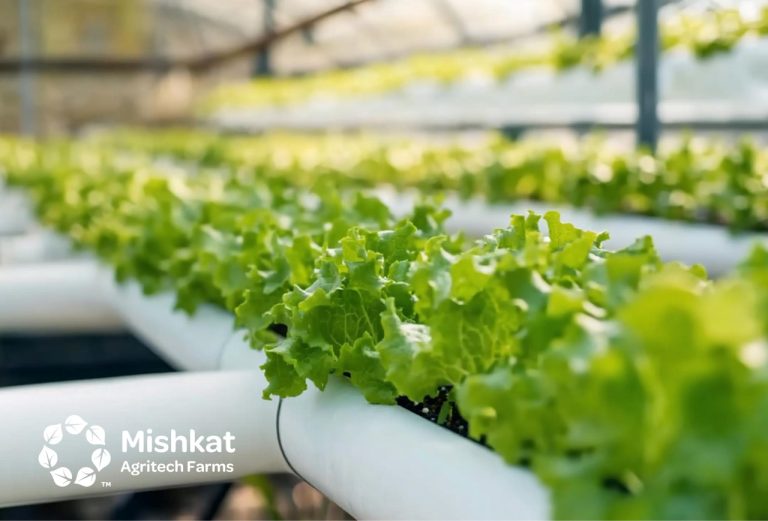
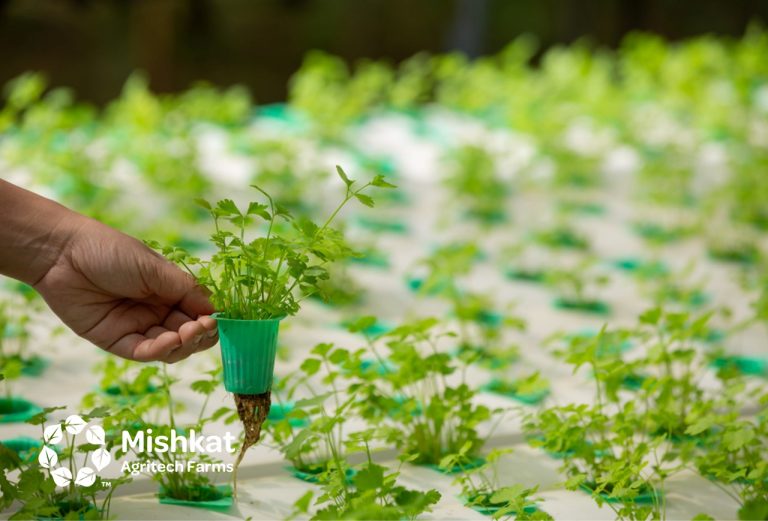
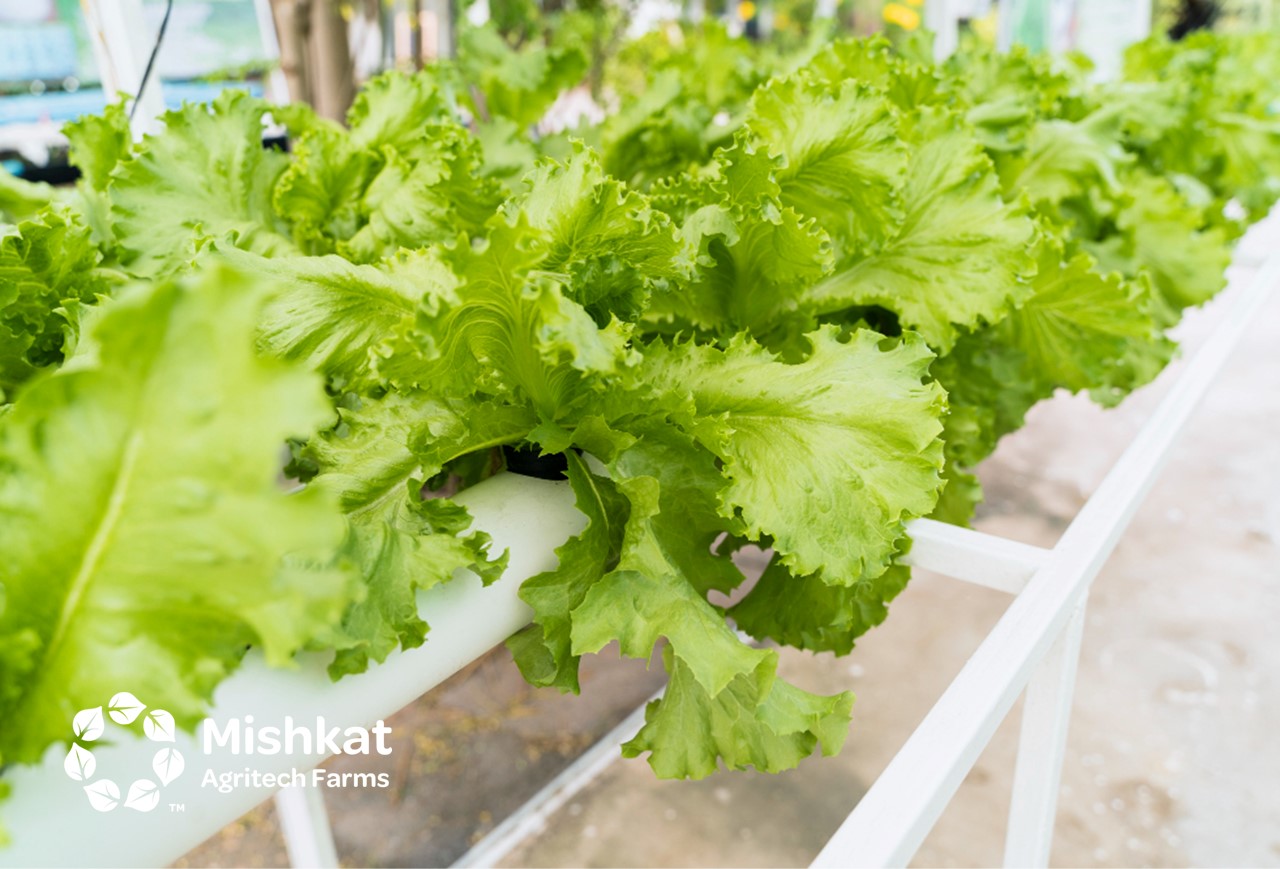
Hydroponics can be a powerful sustainable farming method when it is run as a closed or semi-closed system. The sustainable farming advantage comes from recirculation and precise nutrient delivery.
Aquaponics can support sustainable farming when fish and plant loops are balanced and when biosecurity is treated seriously. The sustainable farming benefit is nutrient reuse, but the operational complexity is higher.
For investors, sustainable farming due diligence should ask:
- Is the system designed to recirculate water and minimize discharge?
- Is water quality monitoring reliable and frequent?
- Is the farm team trained to manage nutrient stability?
- Is there a clear plan for disease prevention and sanitation?
Mishkat Company Services often start by aligning the chosen farming methods with local constraints and the operator’s skill level, because sustainable farming is as much about people as it is about hardware.
Vertical farming and indoor systems for high-value, high-control sustainable farming
Turn your vision into a data-backed plan with Mishkat
Book a quick, free assessment session with the Mishkat Services team: we define your goals and align them with the market and your budget, and deliver a one-page roadmap with expected returns, operating options, and linking to a purchase agreement when needed, with no obligation.
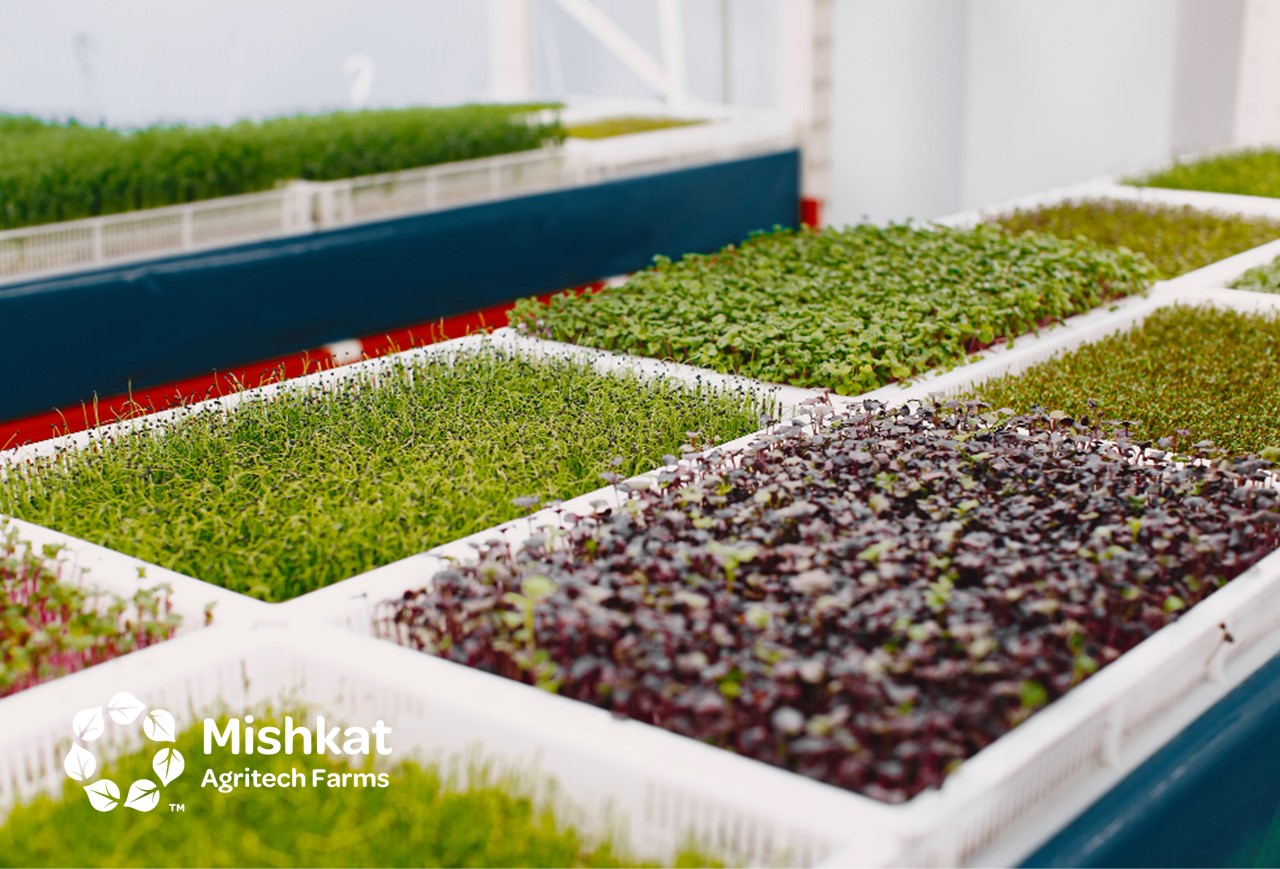
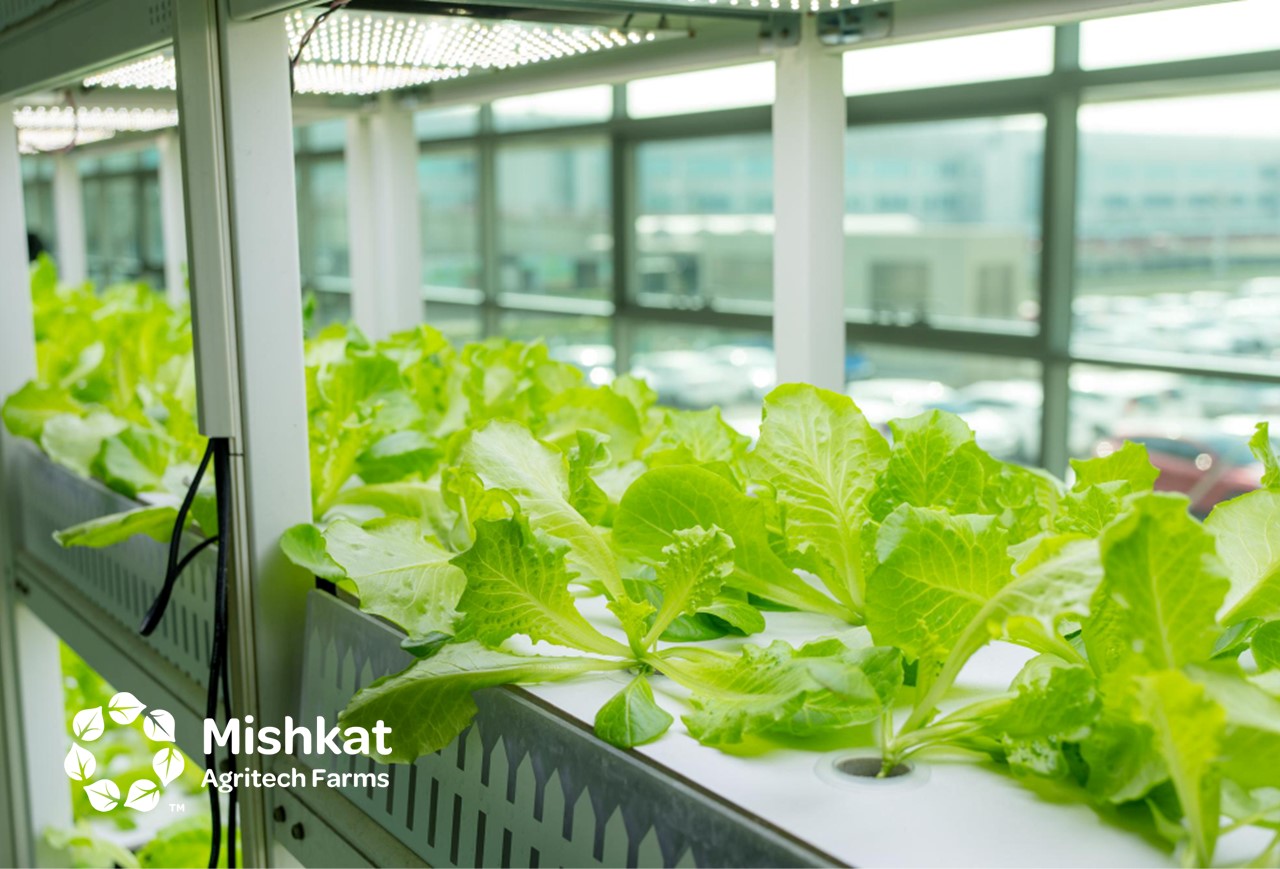
Indoor vertical farming can deliver consistent production and strong food safety control. Sustainable farming benefits can be real when energy is managed and when crops are chosen wisely. In Saudi conditions, indoor systems can be attractive for hospitality and premium retail, especially for leafy greens and herbs.
But sustainable farming indoors can become energy-heavy if cooling and lighting are not optimized. Sustainable farming investors should model:
- Cooling load across the year.
- Lighting schedule and efficiency.
- Plant density, cycle time, and realistic yields.
- Operational labor and maintenance needs.
Indoor systems can be sustainable farming tools, but only when energy intensity is controlled.
Organic farming in Saudi controlled environments: useful, but not automatic
Organic farming can align with sustainable practices, but organic farming is not the same as sustainable farming. Organic farming focuses on input restrictions. Sustainable farming focuses on outcomes, including water, waste, and economic viability.
Organic farming inside greenhouses often means:
- Stronger biological pest management.
- Strict sanitation and exclusion.
- More careful nutrient management and permitted inputs.
Organic farming can work well for hospitality branding, but organic farming must still hit the basics: stable production, reliable quality, and credible records.
Designing sustainable farming from the inside out: the levers that matter most
Sustainable farming becomes easier when you focus on a short list of levers that drive most outcomes. For Saudi greenhouses and soilless systems, the levers are water, energy, nutrients, biosecurity, and operating discipline.
Water: the core of sustainable farming in Saudi Arabia
Sustainable farming is fundamentally a water strategy. In controlled environments, you can treat water like money. Track every liter that enters, recirculates, and leaves.
High-impact sustainable farming water actions:
- Recirculate nutrient solution where feasible, and monitor stability.
- Stop leaks fast, even small leaks compound into large losses.
- Match irrigation to plant stage, avoid overwatering as a habit.
- Use filtration and disinfection to protect recirculating loops.
- Control salinity and scaling with consistent water chemistry management.
- Design drainage properly, so you can measure and reduce discharge.
Sustainable farming improves when water is metered at zones, not only at the farm gate.
Energy: the hidden sustainability and profitability driver
In Saudi Arabia, energy drives cooling, and cooling drives both costs and the environmental footprint. Sustainable farming requires energy strategy, not just energy payment.
Energy levers for sustainable farming:
- Shading and glazing choices that reduce heat gain.
- Climate zoning, avoid cooling empty volume.
- Efficient fans, pumps, and control logic.
- Preventive maintenance, dirty filters waste power.
- Smarter schedules for labor and operations to reduce peak load.
- Backup planning, because downtime destroys sustainable farming economics.
Turn your vision into a data-backed plan with Mishkat
Book a quick, free assessment session with the Mishkat Services team: we define your goals and align them with the market and your budget, and deliver a one-page roadmap with expected returns, operating options, and linking to a purchase agreement when needed, with no obligation.
If your sustainable farming model depends on stable cooling, treat reliability as part of sustainability.
Nutrients: sustainable farming is nutrient discipline, not nutrient abundance
In soilless systems, sustainable farming means nutrient precision. Nutrient waste is both cost and environmental risk.
Practical sustainable farming nutrient actions:
- Keep stable EC and pH ranges per crop stage.
- Use a consistent mixing process, avoid “hand tuning” that hides errors.
- Monitor key ions if discharge or recirculation is a concern.
- Train staff to detect drift early, before plants show stress.
- Plan for filter cleaning and biofilm control.
Sustainable agricultural practices are visible when nutrient discharge is low and crop quality is stable.
Pest and disease: sustainable farming favors prevention
Sustainable farming is easier when pest pressure is prevented, not fought. In greenhouses, prevention is a design and process choice.
Core sustainable farming biosecurity practices:
- Physical exclusion (screens, sealed doors, hygiene zones).
- Clear sanitation routines (tools, trays, walkways).
- Scouting schedules with documented findings.
- Beneficial insects and targeted biological control where appropriate.
- Climate management that reduces humidity spikes and disease windows.
These farming practices reduce chemical dependence and improve consumer trust.
Waste and circular thinking: sustainable farming must respect outputs too
Sustainable farming is not only what you put in, it is what you throw away. Waste often comes from poor harvest timing, handling, and cold chain design.
High-impact sustainable farming waste actions:
- Harvest at the right maturity stage for shelf life.
- Standardize handling, bruising becomes shrink.
- Use packaging that supports freshness, not only appearance.
- Build a short cold chain with clear temperature targets.
- Create a plan for plant residue, composting or controlled disposal.
Sustainable farming projects can add value by turning organic waste into soil amendments for landscaping or non-food crops, if regulations and safety allow.
A practical sustainable farming checklist for design and operations
Use this checklist before you finalize design, and again before you commission the farm. Sustainable farming improves when the checklist is used, not saved.
Sustainable farming checklist (core)
Turn your vision into a data-backed plan with Mishkat
Book a quick, free assessment session with the Mishkat Services team: we define your goals and align them with the market and your budget, and deliver a one-page roadmap with expected returns, operating options, and linking to a purchase agreement when needed, with no obligation.
- Water is metered at intake and key zones.
- Recirculation is designed with filtration and disinfection.
- Drainage is measurable, and discharge targets exist.
- Cooling strategy is modeled for peak months, not average days.
- Shading and insulation reduce cooling load.
- Energy intensity targets are defined per crop.
- Nutrient mixing is standardized, not improvised.
- Biosecurity zones and sanitation routines are documented.
- Scouting and pest logs are part of daily farming practices.
- Harvest, handling, and cold chain targets are defined.
- Waste tracking exists (grade-outs, shrink, returns).
- Food safety and traceability records are simple and consistent.
Mishkat Company Team often uses a checklist like this to align investors, designers, and operators, because sustainable farming fails when responsibilities are unclear.
Transition to sustainable agriculture: a step-by-step plan for Saudi investors
A transition to sustainable agriculture is easiest when you treat it as a staged build, not a leap. Sustainable farming projects can move from concept to operation with fewer surprises when the stages are explicit.
Below is a practical path you can adapt, whether you are building a greenhouse, hydroponics, aquaponics, or a farm-to-table hospitality supply.
Step-by-step transition to sustainable agriculture
- Define your sustainable farming product promise
Choose 3–5 crops that match demand, climate strategy, and margins. Sustainable farming starts with crop-market fit. - Choose the farming methods that match your operator capacity
Hydroponics, aquaponics, greenhouse soil, or indoor systems, each has a different skill curve. Sustainable farming needs the right complexity. - Build a baseline model
Estimate yield, water, energy, labor, and waste. Sustainable farming is a numbers game early. - Design the measurement plan first
Meters, sensors, logs, and sampling schedules. Sustainable farming without measurement is guesswork. - Engineer the climate strategy for the worst month
Size cooling and airflow for peak heat, not for mild seasons. Sustainable farming is resilience under pressure. - Lock the nutrient and water strategy
Decide recirculation level, filtration, disinfection, and discharge plan. Sustainable farming protects resources. - Design for operations
Walkways, hygiene zones, storage, mixing rooms, maintenance access. Sustainable farming is easier when the farm is easy to run. - Build procurement and service plans
Spare parts, consumables, maintenance schedules. Sustainable farming hates downtime. - Commission with a learning period
Run controlled trials, calibrate recipes, train staff. Sustainable farming improves through disciplined iteration. - Publish a simple sustainability dashboard
Water productivity, energy intensity, waste rate, and fill rate. Sustainable farming credibility is built through proof.
This transition to sustainable agriculture is not only for farms. Hospitality developers can use the same transition to sustainable agriculture logic to build a reliable farm-to-table operation that supports menus, guest experiences, and brand differentiation.
Mishkat Company Services can support this transition to sustainable agriculture through farm design, hydroponics and aquaponics system engineering, farm management setup, and agronomist training, especially when investors want predictable execution.
Sustainable farming for farm-to-table hospitality in Saudi Arabia
Hospitality changes sustainable farming because your “market” is a kitchen that needs reliability. Chefs do not want surprises. Guests do not want empty menu items. Sustainable farming for hospitality therefore prioritizes consistency, flavor, and delivery discipline.
How to align sustainable farming with hospitality demand
- Build a crop plan around menu staples, not only high-margin crops. Sustainable farming must meet real demand.
- Focus on herbs and leafy greens first, they are high value per kilogram and sensitive to handling.
- Set delivery cadence, for example, three deliveries per week, and design production planning around it.
- Train kitchen teams on storage and handling, waste in the kitchen breaks sustainable farming economics.
- Create a visible farm experience, but protect biosecurity. Sustainable farming needs hygiene even when guests visit.
A farm-to-table model becomes credible when it is operationally boring. Sustainable farming loves boring routines.
A quick-win mini case: sustainable farming supply for a mid-size hotel in 90 days
This mini case shows how sustainable farming can start small, prove value, and then scale.
Setup
A mid-size hotel wants reliable herbs and leafy greens, reduced waste, and a guest-facing farm story. The hotel has space for a small controlled environment unit and wants a fast transition to sustainable agriculture without long construction timelines.
Steps (90-day quick win)
- Define a 10-item crop list that matches weekly menu demand (basil, mint, parsley, arugula, lettuce mixes). Sustainable farming starts with demand clarity.
- Install a compact hydroponics system with recirculation, filtration, and basic disinfection. Sustainable farming depends on water discipline.
- Set a simple dashboard: water productivity, energy intensity, waste rate, and fill rate. Sustainable farming needs proof.
- Train staff on nutrient mixing, sanitation, and harvesting routines. Sustainable farming is built by people.
- Set delivery standards with the kitchen: harvest mornings, cold storage targets, and handling rules. Sustainable farming reduces shrink when handling improves.
- Add a guest-facing element (a guided viewing window or scheduled tours) without allowing uncontrolled access into production zones. Sustainable farming needs biosecurity.
Expected outcomes (what “better” looks like)
- More consistent weekly supply for priority herbs and greens. Sustainable farming supports menu stability.
- Lower kitchen shrink due to fresher product and better handling routines. Sustainable farming reduces waste.
- A credible farm-to-table story that guests can see, not only read. Sustainable farming strengthens hospitality branding.
- A clear data trail that supports scaling decisions, including whether to expand greenhouse production. Sustainable farming becomes investable when data supports it.
Mishkat Company Team can support similar quick wins by matching system design to kitchen demand, training routines, and scaling pathways, so sustainable farming becomes an operational asset, not a one-time project.
Sustainable farming economics in Saudi Arabia: what to model before you build
Sustainable farming must be economically viable. Controlled environments can deliver strong yields, but they can also hide costs if you do not model them early.
The unit economics that matter most for sustainable farming
Focus on unit economics per kilogram sold, not only per square meter.
Key cost buckets:
- Seeds or seedlings
- Nutrients and water treatment
- Energy (cooling, pumping, lighting where used)
- Labor (harvest, packing, cleaning, maintenance)
- Consumables (filters, packaging, sanitation)
- Losses (pest, disease, shrink, grade-outs)
- Logistics (cold chain, delivery routes)
Sustainable farming becomes attractive when you can show stable unit cost and stable quality.
A simple sustainable farming profitability framework
Use this simple framework to compare crop options:
- Gross margin per kilogram = selling price per kg − variable cost per kg
- Gross margin per square meter per year = gross margin per kg × kg per square meter per year
- Payback sensitivity = how payback changes if energy cost rises, yield drops, or selling price drops
Sustainable farming projects should be stress-tested. Assume at least one bad month, because reality always delivers one.
Risk management that supports sustainable farming resilience
Sustainable farming risk is not only agronomy, it is operations.
High-value risk controls:
- Redundancy for critical pumps and controls.
- Preventive maintenance schedule and spare parts stock.
- Water quality monitoring plan with clear thresholds.
- Pest exclusion and sanitation enforcement, not optional.
- Workforce training and clear roles.
Mishkat Company Services often focus on turning risk controls into operating routines, because sustainable farming is not proven in a spreadsheet, it is proven in week 40 of operations.
Objections and edge cases
Sustainable farming sounds expensive, is it only for big budgets?
Sustainable farming can start small. The most valuable early investments are measurement and process discipline. Many sustainable farming gains come from reducing leaks, stabilizing nutrients, improving harvest handling, and tightening climate strategy. Those changes often cost less than the technology people rush to buy.
What if energy intensity makes sustainable farming look weak?
Energy intensity is a real challenge in hot climates. Sustainable farming answers it by reducing load first (shading, insulation, airflow, sealing), then improving efficiency (controls, maintenance), and finally considering energy sourcing options. Sustainable farming is not about perfection, it is about continuous reduction without compromising production.
Can organic farming deliver the scale and reliability hospitality needs?
Organic farming can work, but only with strong biosecurity, trained staff, and realistic crop choices. Organic farming also needs consistent records. Sustainable farming can be compatible with organic farming, but hospitality should prioritize reliability and food safety first.
What about aquaponics complexity?
Aquaponics can be sustainable farming when balanced and managed well, but the learning curve is steeper. If the operator team is new, a staged transition to sustainable agriculture often works better: start with hydroponics discipline, then expand into aquaponics once routines are stable.
Does sustainable farming mean no chemicals at all?
Sustainable farming is about reducing risk and impact while preserving yield and quality. In some cases, targeted interventions may still be needed. Sustainable farming focuses on prevention and minimized exposure, with clear records and safety practices.
Call to action
If you want sustainable farming results you can defend to investors, partners, and hospitality buyers, start with measurement, climate strategy, and operating routines, then build technology around them. Mishkat Company Team can help you design, launch, and operate controlled-environment sustainable farming projects, including hydroponics and aquaponics, farm management setup, hospitality farm-to-table integration, and agronomist training that keeps performance stable over time.
FAQs about sustainable farming
What is the simplest way to start sustainable farming in a Saudi greenhouse?
Start with metering and records. Measure water use, energy use, yield, and waste weekly. Then tighten climate strategy (shading, airflow, maintenance). Sustainable farming improves fast when you can see losses and fix them.
How do I choose crops that fit sustainable farming and market demand?
Pick crops that match buyer pull and your system’s strengths. For many projects, leafy greens and herbs are strong first choices because they cycle quickly and benefit from controlled environments. Sustainable farming succeeds when crops fit both operations and demand.
Is hydroponics always better for sustainable farming than soil production?
Not always. Hydroponics can support sustainable farming through recirculation and precision, but it requires disciplined nutrient and water management. A well-designed greenhouse soil system can also be sustainable farming when water and pest management are strong. Choose the farming methods you can operate well.
How can hospitality operators make farm-to-table reliable?
Treat farm-to-table like supply chain engineering. Set delivery cadence, standardize harvest and handling, and design production planning around menu needs. Sustainable farming for hospitality is reliability first, story second, and the story becomes stronger because reliability exists.
What measurements prove sustainable farming credibility to investors?
Water productivity, energy intensity, waste rate, and on-time fill rate are a strong core set. Add food safety and traceability records for buyer confidence. Sustainable farming credibility is built through proof that repeats month after month.
How do I reduce pest problems without heavy chemical use?
Prevention is the base: exclusion screens, hygiene zones, sanitation routines, and scouting. Then use integrated methods like biological controls and targeted interventions. Sustainable farming reduces chemical dependence when prevention is taken seriously.
What does a transition to sustainable agriculture look like for an existing farm?
Start by baselining current water, energy, yield, and waste. Then prioritize the biggest losses: leaks, discharge, climate instability, and handling losses. Sustainable farming is often a sequence of operational upgrades before major capital upgrades.
How do I avoid greenwashing in sustainable farming claims?
Only claim what you can measure. Keep records, meters, and consistent definitions. If you say sustainable farming reduces water use, show water productivity and total water use trends across seasons. Proof beats slogans.
How long does it take to see sustainable farming improvements?
Some improvements are immediate, like leak reduction, better sanitation, and tighter harvest handling. Climate strategy upgrades and training programs often show results within a few crop cycles. Sustainable farming becomes clearer over 3–6 months when dashboards show stable trends.
Conclusion about sustainable farming
- Sustainable farming in Saudi Arabia is mostly a water and energy strategy, not a branding exercise.
- Sustainable farming becomes investable when you measure water productivity, energy intensity, waste, and fill rate.
- Sustainable farming in controlled environments depends on climate strategy sized for peak heat.
- Sustainable farming improves fastest through discipline: sanitation, scouting, nutrient stability, and maintenance.
- Sustainable farming for hospitality must prioritize reliability, consistent quality, and cold chain handling.
- Sustainable farming credibility comes from proof, logs, and repeatable results, not one-off claims.
Sustainable farming is a practical craft. The good news is that controlled environments give you levers that open-field systems do not. When you treat sustainable farming as a measurable operating system, it becomes easier to scale, easier to finance, and easier to trust.
Proof and credibility about sustainable farming
Sustainable farming claims should be auditable. If you are investing, partnering, or buying from a sustainable farming operation, ask for simple evidence:
- Water meter readings tied to production periods, not only monthly bills.
- Energy readings tied to climate periods, including peak months.
- Crop logs showing cycle time, yield, and loss reasons.
- Nutrient and water quality records (EC, pH, sanitation steps).
- Pest scouting logs and intervention records.
- Waste tracking from harvest through packing and delivery.
- Training records that show farming practices are standardized across shifts.
Mishkat Company Services emphasize these proof points because sustainable farming is strengthened when systems are transparent and repeatable, especially in Saudi markets where reliability and trust matter as much as yield.
Sources about sustainable farming
- General Authority for Statistics (Saudi Arabia), 2023, https://www.stats.gov.sa/documents/20117/2067030/Water%2BAccounts%2BPublication%2B2023%2BEN.pdf/11312e80-41b6-1eb0-a14f-177a790590e9
- Food and Agriculture Organization of the United Nations, 2024, https://www.fao.org/statistics/highlights-archive/highlights-detail/greenhouse-gas-emissions-from-agrifood-systems.-global–regional-and-country-trends–2000-2022/en
- General Authority for Statistics (Saudi Arabia), 2025, https://www.stats.gov.sa/en/w/news/127
- World Resources Institute, 2023, https://www.wri.org/data/aqueduct-40-country-rankings
- World Resources Institute, 2025, https://www.wri.org/applications/aqueduct/country-rankings/
Turn your vision into a data-backed plan with Mishkat
Book a quick, free assessment session with the Mishkat Services team: we define your goals and align them with the market and your budget, and deliver a one-page roadmap with expected returns, operating options, and linking to a purchase agreement when needed, with no obligation.