Vertical farming is moving from futuristic concept to real investment opportunity. This guide helps you understand what vertical farming is, why it matters in Saudi Arabia, and how to design, launch, and scale projects that actually work. You will learn how to reduce water consumption, choose the right systems, manage risks, and connect vertical farms with hospitality and farm-to-table concepts, with examples and checklists you can apply immediately.
Table of Contents
Introduction to vertical farming
Imagine growing fresh leafy crops in August in Riyadh, using a fraction of the water of a traditional farm, inside a clean, controlled environment a few minutes away from your best customers. That is what vertical farming promises: stacked layers of production, closer to cities, with more control and less exposure to harsh climate conditions.
In the last few years, global investment in vertical farming has accelerated. One recent market study estimated that the global vertical farming market reached around seven billion dollars in 2024 and could grow more than fivefold by the early 2030s. At the same time, scientific reviews show that controlled environment agriculture can use only a small fraction of the water used by traditional agriculture, offering a powerful response to rising water stress.
For Saudi owners and investors in greenhouses, hydroponics, and aquaponics, vertical farming is not a replacement for everything you already do. It is a method that can sit on top of your current agriculture strategy, especially for high-value crops and farm-to-table concepts. In this guide you will:
- Learn what vertical farming is in practical, non-technical language.
- Discover the main systems, technology, and techniques you can choose from.
- See the key advantages and challenges for Saudi climate and markets.
- Follow a step-by-step guide from idea to pilot vertical farm.
- Explore how to scale into serious vertical farming companies, with a support role for Mishkat Company
By the end, you will have a clear, evidence-based guide to decide where vertical farming fits in your portfolio and how to grow from first trial to a durable, sustainable business.
What vertical farming is and how it works
From flat fields to stacked layers
Traditional agriculture spreads crops across horizontal soil. Vertical farming grows crops in stacked layers, often indoors, using controlled light, temperature, humidity, and nutrient delivery. Instead of sun, rain, and open air doing most of the work, a vertical farm uses controlled environment systems to create the right conditions for plant growth all year.
In a typical vertical farming setup, you will see:
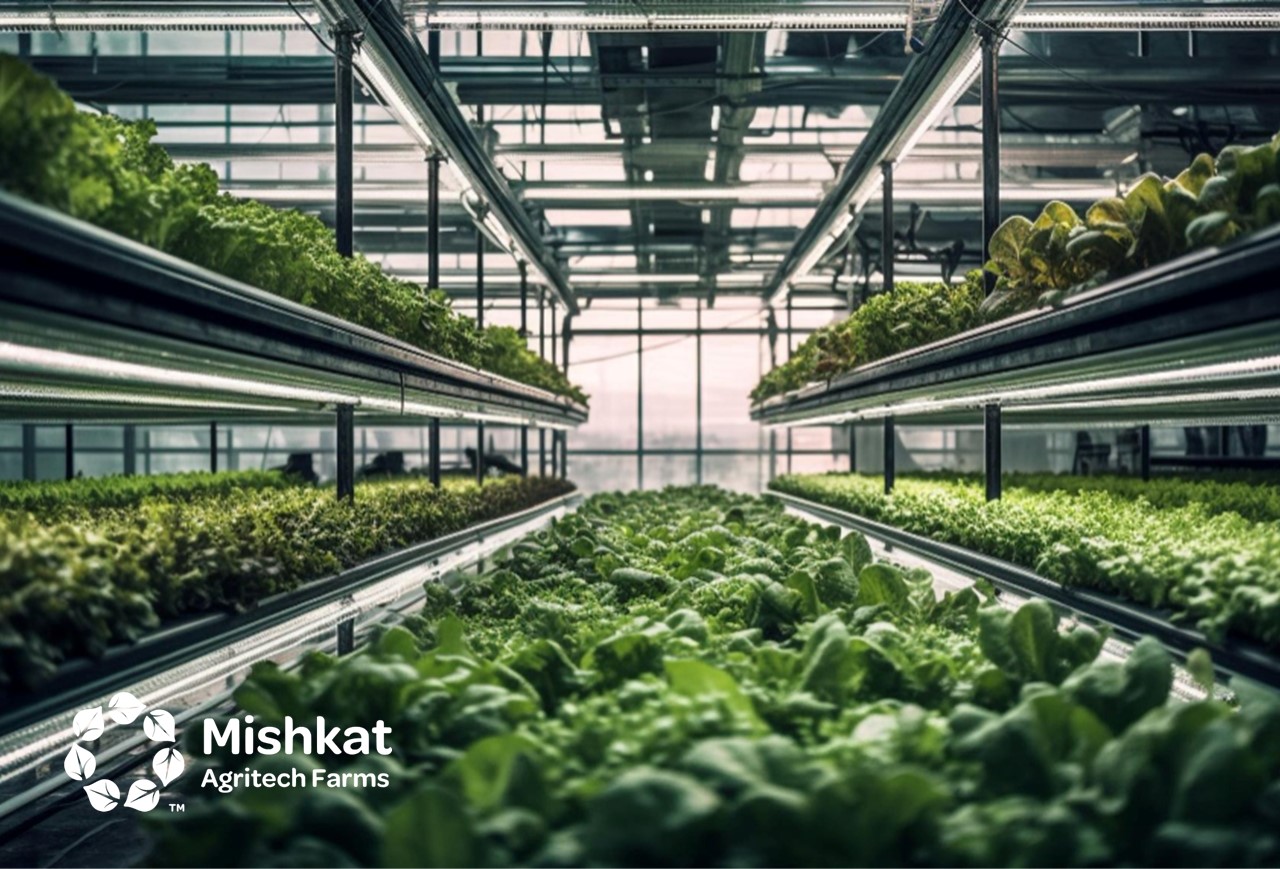
- Racks or towers that hold plants in multiple layers.
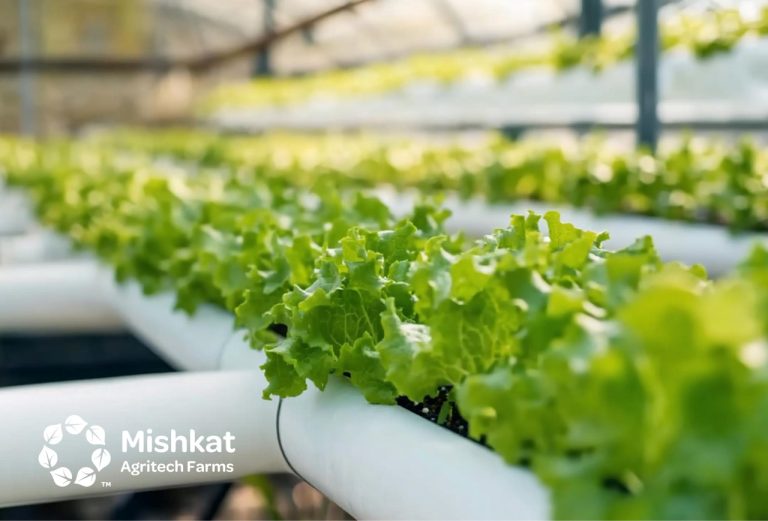
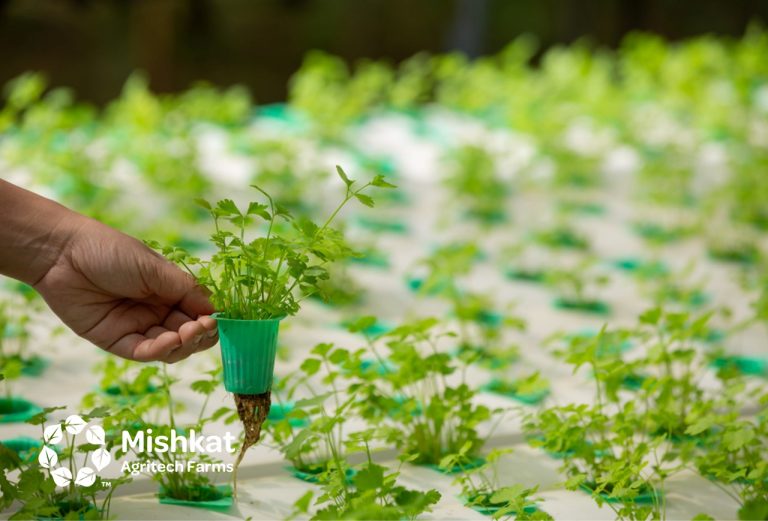
- A hydroponic or similar system delivering water and nutrients directly to the roots.
- Climate management systems controlling temperature, humidity, and air flow.
- Efficient lighting to support steady growing cycles indoors.
- Monitoring and automation that keep conditions stable and reduce manual work.
This stacked structure means you grow more crops per square meter by using height as well as floor area. For investors who live in cities where land is expensive but buildings are available, vertical farming is attractive because it transforms unused warehouses, basements, or even upper floors into productive agriculture sites.
Micro takeaway: Vertical farming turns empty cubic space into productive agriculture by growing crops in stacked layers inside controlled systems rather than on open soil.
Core elements of a vertical farm
Any serious vertical farm, from a small pilot to a large commercial system, combines four basic elements:
- Growing system
This can be hydroponic channels, nutrient film technique, deep-water culture, aeroponic mists, or other techniques. The goal is to supply water, nutrients, and oxygen directly to the roots while keeping the system stable and clean. - Structure and layers
Racks, shelves, towers, or containers hold plants in multiple levels. Design decisions include how many layers, how high you can build, how to move between layers, and how to keep maintenance simple and safe for workers. - Controlled environment
Vertical farming depends on control of environment variables: temperature, humidity, air movement, and carbon dioxide. These conditions must stay in a stable range for each crop and stage of growth. - Lighting and energy systems
Plants need the right spectrum and intensity of light. Modern systems use efficient lighting with careful planning to balance growth and power consumption. Energy supply, backup, and cooling loads are critical cost drivers and must be planned from day one.
Automation and sensors tie these elements together. In many designs, automated vertical farming solutions handle irrigation cycles, detect conditions, and adjust climate settings without constant human intervention. For investors, this can reduce ongoing labor cost but increases up-front capital for technology.
Micro takeaway: A vertical farm is a combination of structure, soilless growing systems, controlled environment, and energy-efficient lighting tied together by sensors and automation.
Turn your vision into a data-backed plan with Mishkat
Book a quick, free assessment session with the Mishkat Services team: we define your goals and align them with the market and your budget, and deliver a one-page roadmap with expected returns, operating options, and linking to a purchase agreement when needed, with no obligation.
How vertical farming fits with soilless agriculture
If you already work with hydroponics or aquaponics, vertical farming is a natural extension, not a completely new world. Most vertical farming systems are forms of soilless agriculture, using water or inert substrates instead of traditional soil.
Key relationships:
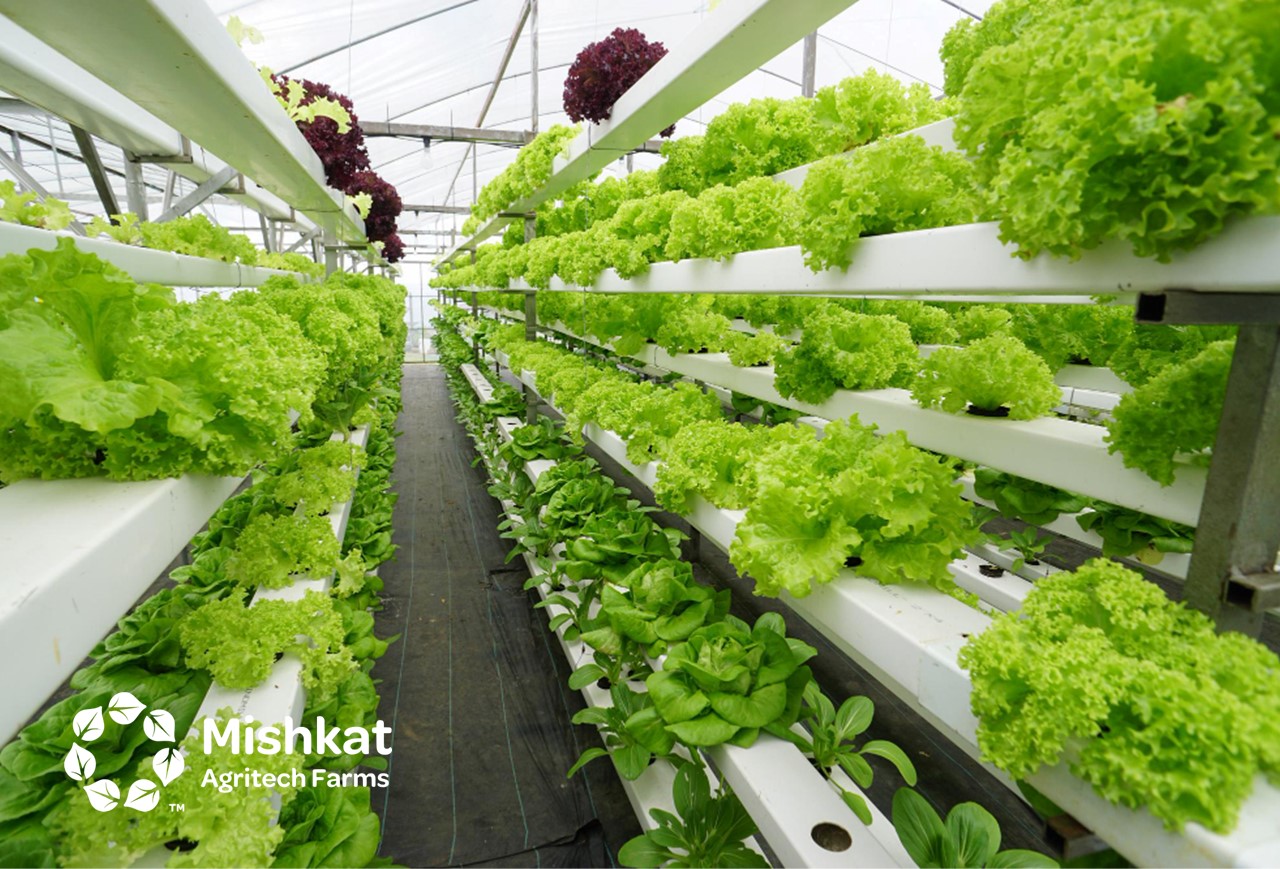
- Hydroponic vertical farming: Nutrient-rich water flows past roots in stacked channels or towers. Hydroponic techniques are the most common method in modern vertical farming.
- Aquaponic vertical setups: Fish tanks supply nutrients to plants, closing more loops but adding biological complexity.
- Greenhouse integration: Some projects combine greenhouses with vertical layers to balance natural light with controlled stacking.
Because vertical farming relies on controlled conditions rather than open soil, it reduces the impact of poor soil quality, pests, and some climate risks. However, it increases dependency on constant power, hardware reliability, and skilled operation.
Micro takeaway: Vertical farming uses the same core idea as hydroponics and aquaponics, yet extends it by stacking growing layers in controlled indoor environments for higher output per square meter.
The problem and stakes: food security, water, and climate in Saudi Arabia
As climate variability increases, open-field agriculture faces more frequent heat waves, unpredictable rainfall, and stress on groundwater. For a country with arid climate conditions and high dependence on food imports, this is not just an environmental challenge; it is a strategic risk.
Recent research on controlled environment agriculture found that some systems use only around 4.5 to 16 percent of the water required by conventional farms, per unit of harvested produce. Another set of studies in 2024 reported that hydroponic and similar techniques inside controlled systems can reduce water consumption by up to 70 to 95 percent compared with traditional soil cultivation. In a region where every liter counts, these differences are not small improvements; they are game changers.
On the economic side, a 2024 global market analysis estimated that vertical farming reached about 6.8 billion dollars in value and could reach more than 36 billion dollars by around 2033, driven by demand for local, fresh crops and by urban investors searching for sustainable agriculture models. At the same time, regional studies show that indoor farming in Saudi Arabia is projected to grow strongly, from roughly 190 million dollars in the middle of this decade to nearly 300 million by 2030, supported by national programs that fund high-tech greenhouses and controlled environment projects.
For owners and investors, this environment creates both pressure and opportunity:
- Pressure, because consumers expect stable supplies of fresh, safe crops, even during extreme climate events or supply chain disruptions.
- Opportunity, because vertical farming in Saudi Arabia can link controlled production with nearby supermarkets, hotels, restaurants, and farm-to-table experiences, shortening the chain between farm and plate.
Vertical farming does not replace all field agriculture. Many crops still grow best in open fields or conventional greenhouses. Yet for leafy greens, herbs, some fruiting crops, and specialty plants, indoor vertical farming offers a way to decouple production from external climate conditions and poor soil.
Micro takeaway: The stakes are high: water stress, climate risks, and import dependence meet new technology that can grow crops indoors with much lower water consumption and more predictable output.
Vertical farming systems and techniques you can use
Main vertical farming systems
When you evaluate vertical farming systems, focus less on buzzwords and more on how nutrients, water, and air reach the roots. Common systems include:
- Nutrient Film Technique (NFT)
Thin streams of nutrient solution flow through slightly inclined channels. Roots access water and nutrients while still receiving oxygen. NFT is popular in vertical farming systems for leafy greens because it is relatively simple and efficient. - Deep water culture and rafts
Plants sit in floating rafts on nutrient-rich water. Air stones or diffusers add oxygen. In vertical setups, rafts may be stacked in lower layers, with other systems above them. - Drip irrigation with substrates
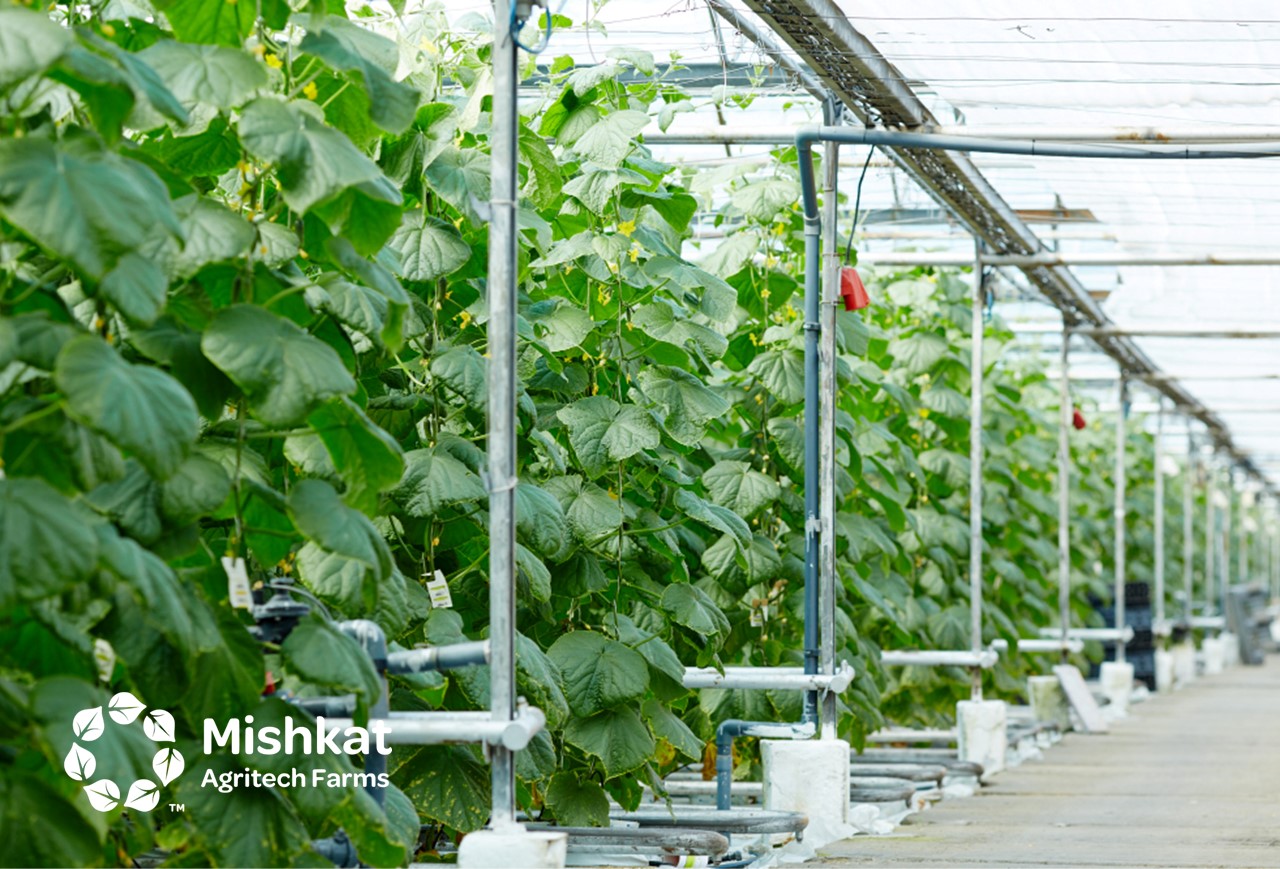
Plants grow in substrates instead of soil, and drip lines deliver nutrient solution at controlled intervals. This method works well for fruiting crops that need stronger support structures. - Aeroponic mists
Roots hang in the air and receive nutrient-rich mist in controlled pulses. Aeroponic techniques can deliver strong oxygen levels but need precise control and maintenance.
All these systems share common goals: stable conditions, efficient nutrient use, and reliable yields. The right choice depends on your target crops, local skills, energy prices, and your appetite for complexity.
Turn your vision into a data-backed plan with Mishkat
Book a quick, free assessment session with the Mishkat Services team: we define your goals and align them with the market and your budget, and deliver a one-page roadmap with expected returns, operating options, and linking to a purchase agreement when needed, with no obligation.
Micro takeaway: Different vertical farming systems exist, but the best choice balances crop needs with your ability to manage technology, energy, and maintenance.
Vertical Farming, Controlled environment, automation, and technology choices
One of the biggest advantages of vertical farming is its highly controlled environment. You decide temperature, humidity, airflow, and nutrient conditions rather than accepting whatever outdoor climate delivers. At the same time, this control comes at a cost in equipment, energy, and expertise.
Key technology blocks:
- Climate control systems to manage temperature, humidity, and air circulation.
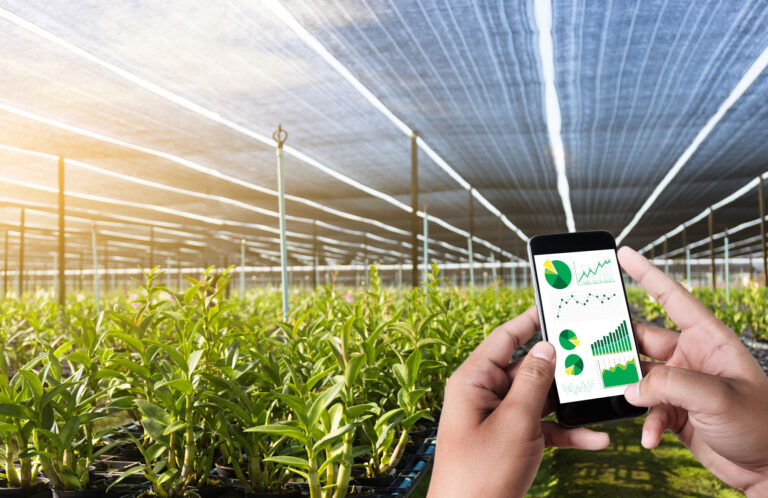
- Sensors for pH, electrical conductivity, temperature, and light to monitor conditions in real time.
- Automated control software that adjusts irrigation, climate, and lighting schedules.
- Energy management systems to optimize power usage and reduce consumption during peak tariff periods.
Automated vertical farming can reduce human error and make it easier to grow consistent crops indoors. However, over-automation without proper training can become a challenge when conditions deviate from expected patterns. For early projects, many investors choose semi-automated systems, then gradually introduce more advanced vertical farming technology as the team gains experience.
Micro takeaway: Controlled environment and automation are powerful tools in vertical farming, but they must be matched with realistic budgets, energy strategies, and trained operators.
Vertical Farming, Crop planning and techniques for stacked layers
Vertical farming works best when you plan crops around the realities of stacked production: limited height per layer, stable climate, and intensive growing cycles. Good planning considers:
- Crop selection: Short-cycle leafy greens, herbs, and microgreens often fit perfectly in stacked layers. Some fruiting crops can also work if you design taller layers.
- Layer zoning: You can dedicate lower layers to early growth and upper layers to finishing phases, or group plants by similar climate needs.
- Staggered planting: Regular planting schedules keep harvest volumes stable, which is vital for hospitality contracts and farm-to-table models.
- Sanitation techniques: Strong hygiene routines protect your controlled environment and keep systems free from diseases.
Many investors start with crops that have clear advantages indoors, such as lettuce, basil, and other leafy crops, then expand once they learn how plants respond to the method and local conditions.
Micro takeaway: Treat crop planning for vertical farming as a continuous production design problem, not just a list of plants; align crops with layers, climate zones, and market demand.
Starter setups and kits
To learn without risking large capital, some owners begin with a small indoor vertical farming corner or a dedicated room using a vertical farming kit. These kits package racks, lighting, hydroponic systems, and basic controls into a manageable unit.
For example, a simple vertical farm in a storage room or rooftop extension can:
- Use two or three racks with three to five layers each.
- Grow fast leafy crops on a six to eight week cycle.
- Supply a small restaurant, café, or villa compound with fresh produce.
This approach is especially useful for hospitality developers who want to test farm-to-table experiences before committing to huge facilities. For home users who enjoy gardening, vertical farming at home also works as an educational method to learn how plants grow indoors under controlled conditions, building skills transferable to larger projects later.
Micro takeaway: Starting with a small kit or compact vertical farm is a low-risk way to learn the techniques and understand real-world performance before scaling up.
Advantages and challenges of vertical farming in Saudi Arabia
Turn your vision into a data-backed plan with Mishkat
Book a quick, free assessment session with the Mishkat Services team: we define your goals and align them with the market and your budget, and deliver a one-page roadmap with expected returns, operating options, and linking to a purchase agreement when needed, with no obligation.
Vertical farming offers real advantages, but no method is perfect. Understanding both sides will help you design realistic business plans.
Key advantages of vertical farming
- Radical water efficiency
Controlled environment systems recirculate water, leading to very low water consumption per kilogram of produce compared with open-field agriculture. - Year-round production
Indoor vertical farming does not depend on external climate seasons. You can grow crops over many cycles in the same space, improving asset utilization. - Reduced land footprint
Stacked layers allow you to grow high volumes within a small floor area, valuable in cities where land and real estate are expensive. - Food safety and consistency
Controlled environment conditions reduce contamination risks, pesticide needs, and variability in product quality. - Proximity to markets
Urban vertical farming in Saudi Arabia can position production close to supermarkets, hotels, and restaurants, reducing logistics time and cold chain risks.
These advantages support national goals around food security, water conservation, and sustainable agriculture.
Micro takeaway: In the Saudi context, the main advantages of vertical farming are water savings, stable year-round supply, and the ability to grow near urban customers on limited land.
Main challenges and vertical farming disadvantages
The method also has serious challenges that investors must respect:
- High capital cost
Racks, lighting, climate systems, and controls require significant upfront spending compared with simple greenhouses or soil-based farms. - Energy consumption
Indoor lights, pumps, and cooling systems increase energy bills. Without a clear energy strategy, this can reduce margins and environmental benefits. - Complex operations
Vertical farming systems demand skills in horticulture, engineering, and data monitoring. Mistakes in controlled environment settings can damage entire layers of crops. - Crop selection limits
Not all crops are suitable for stacked indoor systems. Large field crops are difficult or uneconomic to grow in this method.
When people discuss vertical farming disadvantages, these are usually the main points: energy use, complexity, and high starting costs. They do not mean that the method is weak, but that projects must be carefully sized and designed, especially for early adopters.
Micro takeaway: Vertical farming is powerful but demanding; getting the advantages without being trapped by the challenges requires good design, realistic financial models, and strong teams.
Comparison: open-field, greenhouse, and vertical farming
A simple comparison helps clarify where vertical farming fits:
| Aspect | Open-field farming | Greenhouse | Vertical farming |
|---|---|---|---|
| Land use per unit output | High | Moderate | Very low due to stacked layers |
| Water use | Highest | Lower than open-field | Lowest with controlled recirculation |
| Climate exposure | Fully exposed | Partially protected | Fully controlled indoor environment |
| Capital cost per area | Low | Medium | High |
| Crop range | Very broad | Broad | Focused on suitable crops |
| Distance to markets | Often far from cities | Closer, but still variable | Can be directly inside or near cities |
Summary:
- Open-field agriculture still dominates bulk crops.
- Greenhouses are a flexible middle step in controlled agriculture.
- Vertical farming is a specialized method for high-value crops and space-limited urban projects.
Micro takeaway: Vertical farming complements rather than replaces other methods, filling a niche where land is scarce, water is limited, and urban demand is high.
Step-by-step guide: from idea to your first vertical farm
Step 1: Clarify your goals and constraints
Before you choose any system, be clear about the main job your vertical farm must do. Typical goals include:
- Supplying leafy crops to hotels and restaurants with consistent quality.
- Producing clean greens for a farm-to-table restaurant linked to a hospitality project.
- Building a showcase farm to demonstrate sustainable agriculture to investors or visitors.
Turn your vision into a data-backed plan with Mishkat
Book a quick, free assessment session with the Mishkat Services team: we define your goals and align them with the market and your budget, and deliver a one-page roadmap with expected returns, operating options, and linking to a purchase agreement when needed, with no obligation.
Map your constraints: available capital, building space, local climate conditions, and technical skills. Investors who skip this step often over-build on technology and under-plan for operations.
Micro takeaway: Clear goals and constraints guide every later decision, from layout to crop choice.
Step 2: Choose crops and market channels
Vertical farming is most profitable when crop selection matches real demand and high value. For Saudi Arabia, common choices include:
- Leafy greens: lettuce, kale, rocket, spinach.
- Herbs: basil, mint, coriander, chives.
- Microgreens: radish, sunflower, and specialty mixes.
Decide early how you will sell: directly to restaurants, through retailers, via subscription boxes, or for internal hospitality projects. Farm-to-table concepts can capture more value if you integrate vertical farms with restaurants and cafés.
Micro takeaway: Start with a narrow list of high-value crops that your buyers already want and grow them well before expanding.
Step 3: Select a starter scale and layout
Next, define your pilot scale. For many investors, a smart starting point is a compact vertical farm in a warehouse or attached to an existing greenhouse.
Example starter layout:
- Footprint: 50 to 150 square meters.
- Racks: three to five rows.
- Layers: four to six layers per row.
- Crop mix: mostly leafy greens with a small test area for herbs.
You can also design a tiny proof-of-concept for vertical farming at home or in a small commercial room to learn operational techniques without heavy risk. This teaches staff how to manage systems indoors and helps you discover practical challenges before committing to bigger projects.
Micro takeaway: Treat your first vertical farm as a pilot project with limited size, clear measures of success, and room to learn.
Step 4: Decide on growing systems and technology level
Now choose the main growing method and technology stack:
- For simple pilots, use hydroponic channels with semi-automated nutrient dosing and basic climate control.
- For more advanced projects, consider deeper automation with integrated sensors, automated dosing, and intelligent controls.
- Use energy-efficient lighting and look for options to reduce heat load to manage indoor climate and power costs.
Some suppliers offer integrated solutions as a vertical farming kit, bundling racks, lights, irrigation, and control software. These can be helpful during early stages, provided you validate after-sales support and spare parts availability.
Micro takeaway: Start with the simplest method that can meet your quality and volume targets, then add complexity only when needed.
Step 5: Build your operations and data habits
Even the most beautiful hardware will fail without strong operations. Build routines for:
Turn your vision into a data-backed plan with Mishkat
Book a quick, free assessment session with the Mishkat Services team: we define your goals and align them with the market and your budget, and deliver a one-page roadmap with expected returns, operating options, and linking to a purchase agreement when needed, with no obligation.
- Daily checks of climate, nutrient levels, and plant health.
- Weekly cleaning cycles for tanks, filters, and channels.
- Monthly performance reviews of yields, water use, and energy consumption.
- Training programs for staff to understand controlled environment techniques, not just basic tasks.
Use simple dashboards or spreadsheets to capture data from your vertical farm technology. Track yields per square meter, crop cycle times, water consumption, and energy use. These metrics show whether your method is sustainable and profitable.
Micro takeaway: Operations and data habits turn a vertical farm from a nice project into a predictable, scalable system.
Step 6: Quick-win mini case – a 50-square-meter leafy green vertical farm
To make this guide more concrete, imagine the following mini case for a pilot vertical farm:
Vertical Farming Setup
- Space: 50 square meters in a cooled warehouse inside a major Saudi city.
- System: hydroponic racks with four layers per rack.
- Crops: two types of lettuce and one herb.
- Target buyers: three nearby restaurants and one hotel with a farm-to-table concept.
Vertical Farming Steps
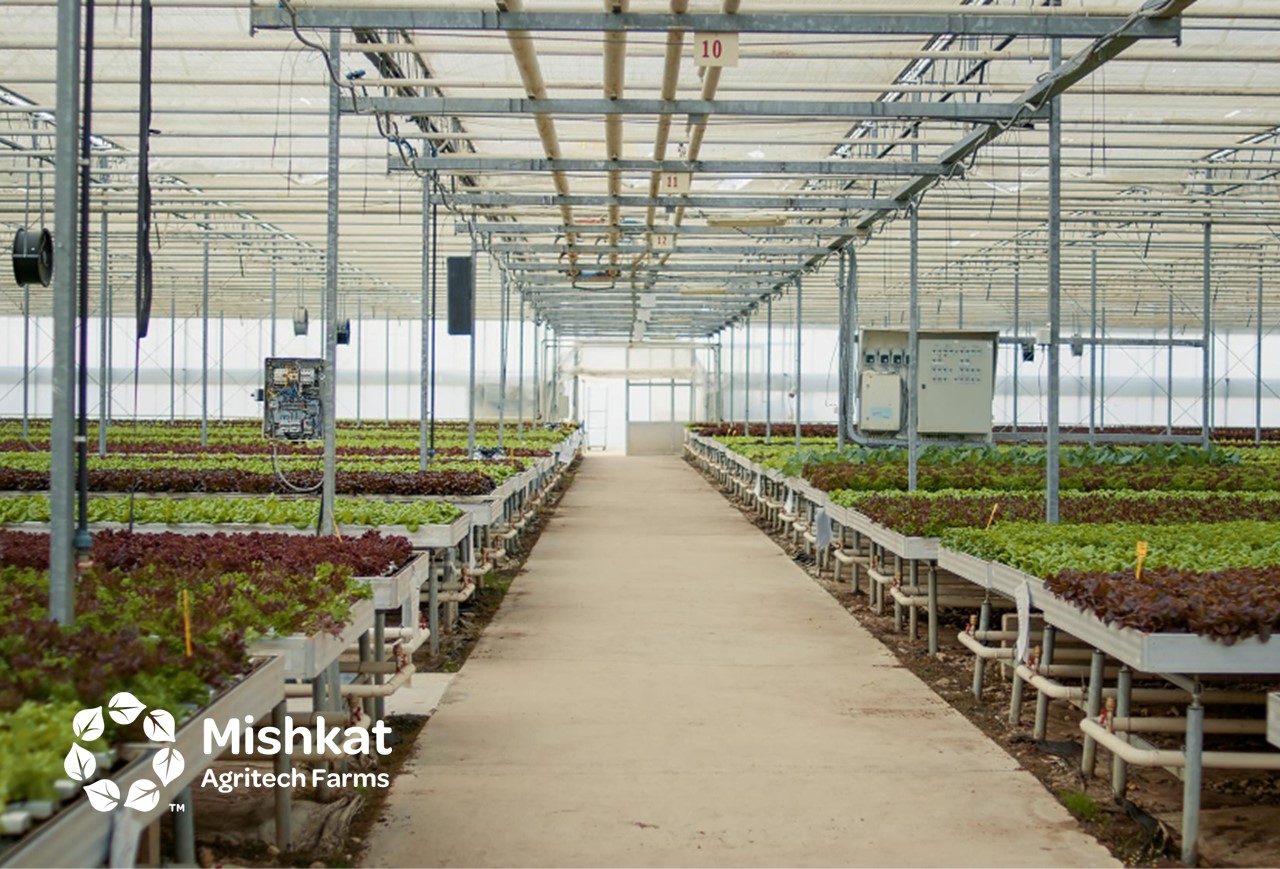
- Install racks, lighting, and a simple hydroponic system with nutrient tanks and pumps.
- Set climate to suitable temperature and humidity for leafy crops.
- Plant small batches every week to create a steady flow of harvests.
- Track yields, water use, and energy consumption across several crop cycles.
- Adjust planting density, nutrient strength, and lighting schedules based on observed growth.
- Review feedback from chefs and guests, then fine-tune varieties and harvest size.
Expected outcome
Within several crop cycles, you gain real data on yields, quality, water consumption, and energy cost. If results are positive, you can extend the vertical farm, add more layers, or move to a larger building. If challenges appear, your losses stay manageable and you learn which method and design changes to prioritize.
Micro takeaway: A focused, small pilot can validate the method, refine your techniques, and build buyer relationships before you invest in large-scale vertical farming companies.
Scaling vertical farming companies and projects with Mishkat
Once your pilot vertical farm is stable, you can explore scaling options that combine your own strengths with specialized partners such as Mishkat Company
. Scaling does not only mean building bigger systems; it means increasing sophistication in business models, technology, and risk management.
Designing scalable business models
Scaling is easier when your business model is clear:
- Contract production: Grow specific crops under long-term agreements with retailers, hotels, or hospitality groups.
- Integrated farm-to-table projects: Combine vertical farming with restaurants, cafés, or food halls within the same development.
- White-label production: Supply fresh crops to partners who use their own brand names on shelves.
Mishkat Company can support strategy and concept design for these models, helping you align vertical farming projects with existing greenhouse or soilless agriculture assets.
Micro takeaway: A scalable vertical farming business rests on strong contracts, integrated concepts, and clear roles between you and your buyers.
Strengthening technology and operations with partners
As you grow, technology and operations become more complex: more layers, more systems, and more staff. Mishkat Services can help you with:
- Technical audits of existing vertical farm technology and layouts.
- Optimization of water and nutrient systems to reduce consumption and waste.
- Training programs for technicians and supervisors in controlled environment agriculture.
- Ongoing support for new crops, growing techniques, and system upgrades.
This partnership approach allows you to benefit from specialized experience while still owning your assets and brand.
Micro takeaway: Partnering with specialists such as Mishkat Services can reduce risk and speed up learning when you move from a single vertical farm to a portfolio of sites.
Integrating vertical farms with hospitality and experiences
For developers of hotels, resorts, and mixed-use projects, vertical farming can be both a production facility and a guest experience. Options include:
- A glass-walled vertical farm visible from a restaurant, highlighting local sustainable agriculture.
- Guided tours explaining how stacked layers and controlled environment systems reduce water consumption and protect crops.
- Cooking classes where guests harvest herbs directly from the vertical farm.
Mishkat Company can co-design these experiences so that the vertical farm is both a working production site and a storytelling tool, linking environmental benefits with high-end hospitality.
Micro takeaway: When integrated thoughtfully, vertical farming becomes part of the guest journey, not just an invisible back-of-house system.
Objections about vertical farming
Even with all these advantages, investors often raise serious questions. Addressing them early makes your guide more realistic.
“Energy consumption is too high.”
Energy use is a real concern. Lighting, cooling, and pumps increase consumption compared with many open-field systems. To reduce this challenge:
- Use high-efficiency lighting matched to crop needs.
- Plan insulation and cooling carefully to reduce heat load.
- Consider using waste heat recovery or smarter climate control strategies.
- Schedule the most energy-intensive cycles in off-peak tariff periods when possible.
Micro takeaway: Energy consumption is a challenge, but careful design and management can reduce its impact on costs and environmental performance.
“Vertical farming cannot grow all the crops we need.”
It is true that vertical farming is not ideal for every crop. Large grains, root crops, and many field staples remain better suited to other methods. However, vertical farming excels for specific crop categories that are high value, sensitive to climate, and consumed fresh.
You do not need to grow every crop indoors. Instead, use vertical farming to cover critical segments where indoor control brings clear advantages in quality, food safety, or reliability.
Micro takeaway: Treat vertical farming as a specialized method for selected crops, not a universal replacement for all agriculture.
“The method is too complex for local teams.”
Controlled environment systems can appear intimidating, with many knobs and screens. Complexity becomes manageable when you:
- Start small, with a limited set of crops and systems.
- Implement clear standard operating procedures for daily tasks.
- Train staff gradually, using simple guides and checklists.
- Bring in external expertise from groups like Mishkat Services when needed.
Micro takeaway: With phased training and strong procedures, local teams can successfully operate vertical farming systems.
“What about unusual concepts like vertical crab farming?”
From time to time, experimental ideas such as vertical crab farming or stacked aquaculture appear in discussions. These concepts might make sense in highly specialized contexts, but they are not core to most practical vertical farming investment decisions today. For most owners and investors, focus should stay on proven crops and methods that already match local demand.
Micro takeaway: Creative projects are interesting, but early investments should concentrate on technologies and crops with clear, tested commercial value.
Vertical farming from idea to implementation
You now understand what vertical farming is, where it fits in modern agriculture, and how it can serve Saudi markets. The next step is to translate this knowledge into a concrete plan.
Start by mapping your existing assets in greenhouses, hydroponics, or hospitality. Then identify one strategic location where a pilot vertical farm could support your business: a warehouse near a logistics hub, a space behind a hotel kitchen, or a building beside an existing soilless agriculture site. From there, you can work with partners such as Mishkat Company for concept and design, and Mishkat Services for technical and operational support. Together, you can turn the idea of vertical farming into a practical, sustainable asset in your portfolio.
FAQs about vertical farming
What is vertical farming in simple terms?
Vertical farming is a method of growing crops in stacked layers, usually indoors, using controlled environment systems and soilless techniques such as hydroponics. Instead of relying on open soil and natural climate, you create the conditions plants need inside a building, which allows you to grow more in less floor area and protect crops from harsh weather.
Which crops are best suited to vertical farming?
The crops that perform best in vertical farming systems are typically leafy greens, herbs, microgreens, and some small fruiting plants. These crops grow well under controlled light, temperature, and humidity, and they can complete many cycles per year. They also have high value per kilogram and benefit from being grown close to markets.
How much water can vertical farming save compared with traditional farming?
Controlled environment agriculture, including vertical farming, can reduce water consumption dramatically. Scientific reviews in recent years suggest that some systems use only a small fraction of the water needed by open-field farming for the same amount of produce. This is achieved by recirculating water, reducing evaporation, and delivering moisture directly to plant roots.
Is vertical farming profitable in Saudi Arabia?
Profitability depends on many factors: crop choice, energy prices, scale, technology costs, and market access. The positive news is that indoor farming markets in the kingdom are already growing, supported by national strategies for food security and efficient water use. With careful financial planning, realistic yield assumptions, and strong buyer relationships, vertical farming can be a profitable part of a wider agriculture portfolio.
What is the difference between vertical farming and a standard greenhouse?
A standard greenhouse uses natural light with some climate control and often still relies on soil or simple substrates. Vertical farming uses stacked layers indoors, advanced lighting, and tighter control of environment and nutrients. Greenhouses are more flexible and often cheaper to build per square meter, while vertical farming can produce more crops per floor area and operate fully independent of outside weather.
Can I start with a small vertical farm at home?
Yes. Many people begin with a small indoor system or a compact vertical farming kit at home. This is a good way to learn about nutrient management, lighting, and plant responses to controlled conditions. While such home systems will not replace commercial farms, the knowledge they provide is valuable if you later invest in larger projects.
How does vertical farming interact with hydroponics and aquaponics?
Vertical farming often uses hydroponics as its main growing method, delivering nutrients through water rather than soil. Some designs also combine aquaponic techniques, where fish provide nutrients for plants. In both cases, the vertical farm adds a stacked, indoor structure and more precise climate control to the core concept of soilless agriculture.
What are the main risks to manage in a vertical farm?
Key risks include energy cost volatility, equipment failures, crop diseases in enclosed spaces, and market changes. You can reduce these risks by designing redundancy into critical systems, training staff in hygiene and monitoring, diversifying crops within your vertical farm, and securing long-term purchase agreements with buyers.
Does vertical farming have environmental benefits beyond water savings?
Yes. By placing production close to urban consumers, vertical farming can cut transport distance for fresh crops and reduce post-harvest losses. It can also reduce pesticide use and limit environmental contamination because the system is sealed and controlled. However, these benefits must be balanced against energy consumption; the overall environmental performance depends on your energy mix and efficiency.
How can Mishkat support my vertical farming plans?
Mishkat Company can help you evaluate where vertical farming fits within your existing agriculture and hospitality projects, then design concepts that link production with clear markets. Mishkat Services can support engineering, system selection, commissioning, and ongoing operations, helping your teams learn the techniques needed for reliable controlled environment agriculture.
Conclusion about vertical farming
Key takeaways:
- Vertical farming grows crops in stacked layers inside controlled environments, using soilless methods to produce more in less space.
- Global and regional data show strong growth in vertical farming and indoor agriculture markets, supported by increasing awareness of water stress and climate risks.
- In Saudi Arabia, vertical farming complements existing greenhouses and hydroponics by delivering fresh, high-value crops close to urban markets.
- The method offers major advantages in water consumption, land efficiency, and food safety, balanced by challenges in energy use, capital costs, and operational complexity.
- A practical path begins with small pilots, clear goals, and strong data habits, then scales through partnerships, refined systems, and integrated farm-to-table models.
Vertical farming is not magic, but it is a powerful method when used in the right way, for the right crops, in the right locations. For owners and investors who treat it as a disciplined, data-driven part of their agriculture and hospitality strategies, it can become a resilient, sustainable pillar of future food systems in the kingdom.
Proof and credibility about vertical farming
Recent years have seen rapid expansion of vertical farming worldwide, with global market analyses in 2024 and 2025 projecting multi-fold growth by the early 2030s. IMARC Group+2Mordor Intelligence+2 Scientific reviews in 2022 and 2025 indicate that controlled environment agriculture systems, including hydroponic vertical farms, can reduce water use significantly, in some cases to less than one fifth of the consumption of conventional soil-based agriculture. MDPI+2Nature+2 Studies on indoor and vertical farming in Saudi Arabia highlight strong projected growth in market value between the middle of this decade and 2030, supported by national funding and policy priorities around water-efficient agriculture. Research and Markets+2Knowledge Sourcing+2 Together, these findings support the core message of this guide: vertical farming is a credible, data-backed method that can help address water, climate, and food security challenges when designed and operated with care.
Sources about vertical farming
IMARC Group, 2024, https://www.imarcgroup.com/vertical-farming-market
Mordor Intelligence, 2025, https://www.mordorintelligence.com/industry-reports/vertical-farming-market
MDPI (Vatistas et al.), 2022, https://www.mdpi.com/2073-4433/13/8/1258
Nature Portfolio (Wang et al.), 2025, https://www.nature.com/articles/s44383-025-00006-4
Knowledge Sourcing Intelligence, 2025, https://www.knowledge-sourcing.com/report/saudi-arabia-indoor-farming-market
Turn your vision into a data-backed plan with Mishkat
Book a quick, free assessment session with the Mishkat Services team: we define your goals and align them with the market and your budget, and deliver a one-page roadmap with expected returns, operating options, and linking to a purchase agreement when needed, with no obligation.