Hydroponics is moving from experimental hobby to serious infrastructure for food and hospitality in Saudi Arabia. As water grows more expensive and guests expect fresher, healthier food, greenhouse owners, investors and hospitality operators are asking a simple question: how can hydroponics become a reliable, profitable part of my business? This guide walks you from basics to boardroom, explaining how hydroponic systems work, how to compare them with soil and aeroponics, and how to design a commercial project that fits your site, budget and growth plans with support from partners like Mishkat Company.
Table of Contents
Introduction to Hydroponics
You already know that traditional farming struggles with Saudi heat, limited soil and high water bills. The real question is whether hydroponics can solve those problems in a way that makes financial sense for you.
Hydroponics replaces soil with carefully managed nutrient solutions, allowing plants to grow in water or inert media such as perlite under greenhouse or indoors conditions. Instead of betting on rainfall and open fields, you build a controlled system where light, temperature, water and nutrient levels are managed with clear targets.
In 2015, around 85 percent of Saudi Arabia’s total water use, about 14.4 billion cubic meters, went to agriculture, even though renewable water supplies were estimated at only about 5.4 billion cubic meters, according to a 2023 sustainability study. At the same time, a 2025 review found that modern hydroponic systems can reduce water use by up to 90 percent compared with conventional farming while keeping yields high.
This article will help you:
- Understand what hydroponics is and what is hydroponic in simple, investor friendly language.
- Compare hydroponics vs soil and hydroponic vs aeroponic systems, including pros and cons.
- Learn the main types of hydroponics, key components and how hydroponics how it works as a complete growing method.
- Follow clear steps of hydroponics to plan a hydroponics project, from concept to commercial launch.
- See how a hydroponic farm, hydroponics lab and farm to table hospitality concept can work together in Saudi Arabia with support from Mishkat Company.
By the end, you will have a practical guide to design or upgrade your own hydroponic gardening or commercial greenhouse strategy.

What is hydroponics and why hydroponics now?
Hydroponics is a growing method where plants are raised without soil. The roots sit in water or an inert medium while a nutrient rich solution delivers everything the crop needs. Oxygen, temperature and light are managed so that plant growth is fast, predictable and less dependent on weather.
When people ask what is hydroponics in the simplest terms, a helpful answer is: it is plant growing based on water, nutrients and control instead of soil and rainfall. When others ask what is hydroponic, they usually mean a single unit or hydroponic device that holds water, nutrient solution and plants together in a compact system.
Hydroponics is attractive now because it solves three hard problems at once:
- Water scarcity
In arid regions, conventional irrigation sends a large share of water into the air through evaporation or into deep layers of soil. A 2025 review of hydroponic systems reported water savings of up to 90 percent compared with traditional methods, because the water is recirculated and used directly by the roots. - Land and soil limits
Many investors do not have access to high quality soil or large open fields. Hydroponic planting uses compact systems that can sit on concrete, building roofs or unused corners of a site, as long as you can control light and temperature. - Food security and reliability
A 2025 analysis of Gulf states noted that around 85 percent of food in the region is imported, which makes the food system vulnerable to trade disruptions and price spikes. Hydroponic farms close to cities can stabilize supply of key crops such as leafy greens, herbs and tomatoes.
For greenhouse owners, hydroponics offers a way to turn space and capital into a predictable hydroponics business instead of gambling with open field yields that change every year. For hospitality developers, integrating a visible hydroponic farm into a resort or restaurant creates a strong story: guests can see their food growing just meters away from the table.
Micro takeaway: hydroponics matters now because it turns water, space and energy into controlled plant growth that fits the realities of Saudi climate and food demand.
The problem: water, soil and food security in Saudi Arabia
Before diving into systems and technology, it helps to face the problem that hydroponics is trying to solve in Saudi conditions.
Water pressure and agriculture
Turn your vision into a data-backed plan with Mishkat
Book a quick, free assessment session with the Mishkat Services team: we define your goals and align them with the market and your budget, and deliver a one-page roadmap with expected returns, operating options, and linking to a purchase agreement when needed, with no obligation.
Several recent studies paint a clear picture. A 2023 analysis of Saudi water use found that agriculture consumed about 85 percent of the country’s water, with total use around 17 to 25 billion cubic meters depending on the year, while renewable sources provided only about 5.4 billion cubic meters. That gap is covered by non-renewable groundwater, which cannot continue forever without serious long term costs.
Globally, agriculture already uses about 70 percent of freshwater withdrawals, so Saudi Arabia is starting from a tight baseline. Any solution that can reduce water consumption while keeping or improving yields directly supports national water security. This is one of the key reasons why hydroponics and aquaponics are attracting attention.
Dependence on imported food
The Gulf region imports most of its food, including a high share of cereals and rice. A 2025 regional study estimated that about 85 percent of food in Gulf Cooperation Council countries comes from abroad. For Saudi decision makers, this dependence shows up as a series of questions:
- What happens to food prices if global shipping or fuel costs jump again?
- How do we secure reliable supply of fresh vegetables that support health and hospitality?
- Where will local farmers and investors find profitable niches in this landscape?
Hydroponics does not replace all traditional agriculture, but it can secure critical segments of the food basket such as leafy greens, herbs, some fruiting crops and specialty produce for hotels and restaurants.
Soil and climate limits
Much of Saudi land is dry, salty or shallow. Soil based gardening requires heavy amendments, large volumes of irrigation water and often still delivers unstable yields. When you compare hydroponics vs soil in arid regions, the key advantages are:
- More food per square meter. Some studies report yield increases of 20 to 30 percent for crops such as leafy greens and spinach in hydroponic systems compared with soil based production.
- Less water per kilogram of product. Recirculating water and nutrient solutions avoids deep percolation losses.
- More flexibility for indoor or greenhouse based layouts.
Micro takeaway: in Saudi Arabia, water, soil and import pressures make hydroponics a strategic tool, not just an interesting hobby.
How hydroponics works in practice
For an investor, the core question is not just “what is hydroponics” but “hydroponics how it works as a complete system”. This section breaks the process into simple blocks so you can see where the risks and opportunities sit.
Core elements of a hydroponic system
Every hydroponic system, from a small waterfarm unit on a balcony to an industrial hydroponic farm, contains the same basic pieces:
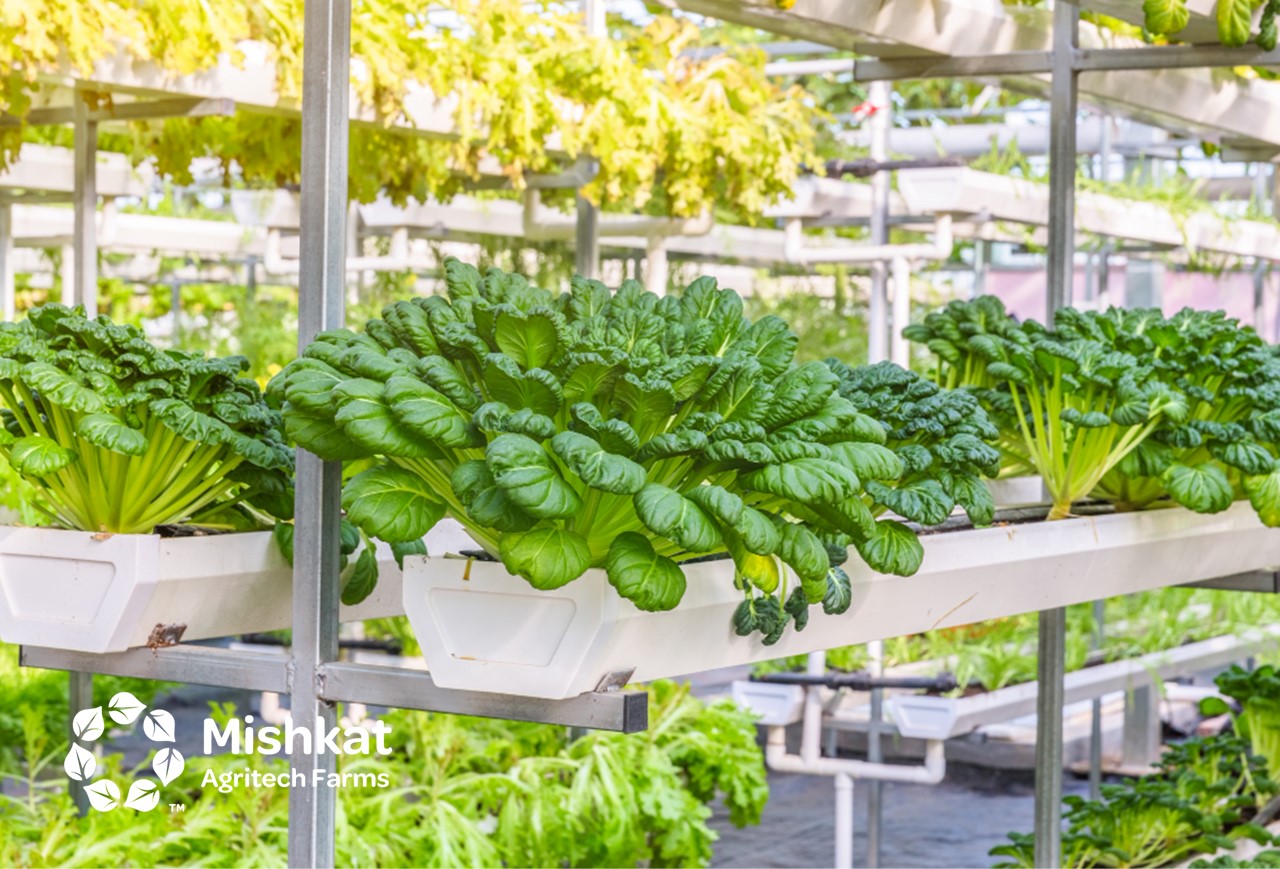
- Structure and channels
- Trays, pipes or troughs where roots and nutrient solution meet.
- Sometimes vertical columns or towers for high density growing indoors.
- Growing medium
- Inert materials such as perlite, rock wool or coco coir that hold the roots and keep oxygen moving.
- The medium is not soil. It does not feed the plant. It simply supports the roots and holds water and air.
- Water and nutrient reservoir
- A tank that holds water mixed with hydroponic fertilizer.
- A pump sends nutrient solution to the plants and returns it to the reservoir.
- Oxygenation systems
- Air stones, diffusers or falls that add oxygen to water so roots can breathe.
- This is a simple but critical part of hydroponic technology.
- Control and monitoring
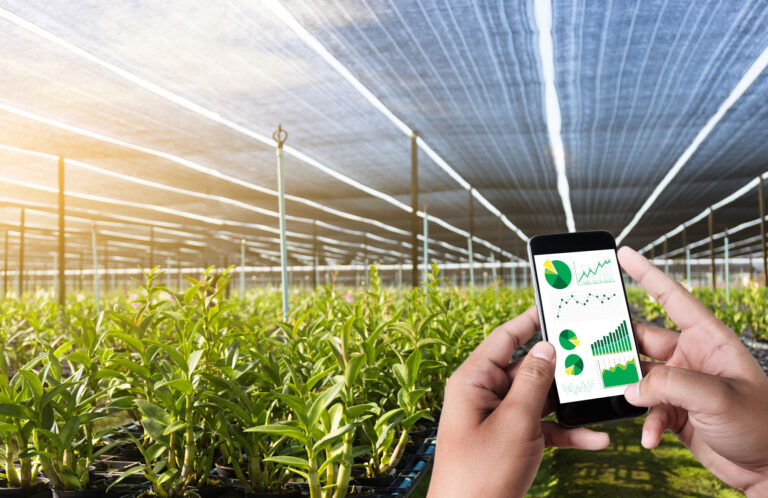
- Instruments that measure pH, electrical conductivity, water temperature and in advanced systems, oxygen and individual nutrient levels.
- Valves, timers and controllers that run pumps, lighting and dosing systems.
- Light, climate and protection
- Greenhouses, shade structures or fully indoors grow rooms with artificial light.
- Systems for cooling, ventilation and sometimes heating to protect crops from extreme conditions.
Hydroponics is a systems based method. Every change in one part, such as water temperature, can affect plant health. For this reason, investors often start with a pilot hydroponics lab or small commercial block before scaling to hectares. Mishkat Company and similar partners help design these early modules so that you can learn, grow and update your design based on real data.
Micro takeaway: think of hydroponics as a controlled loop where water, nutrients, oxygen and light are carefully managed to keep plants growing at their optimum point.
Nutrient solutions and plant health
In soil based systems, nutrients are held in complex particles and slowly released. In hydroponics, nutrients are dissolved directly in water as simple ions. Getting that nutrient solution right is the heart of the method.
Turn your vision into a data-backed plan with Mishkat
Book a quick, free assessment session with the Mishkat Services team: we define your goals and align them with the market and your budget, and deliver a one-page roadmap with expected returns, operating options, and linking to a purchase agreement when needed, with no obligation.
Key concepts:
- Nutrient balance
Plants need the right ratio of nitrogen, phosphorus, potassium, calcium, magnesium and trace elements. Many growers buy complete products marketed as best hydroponic nutrients, then fine tune the recipe for local water and crops. - pH range
Most hydroponic crops grow best in slightly acidic conditions, often between pH 5.5 and 6.5, which keeps nutrient ions available. - Electrical conductivity (EC)
EC is a simple way to estimate total nutrient concentration in the solution. It allows you to adjust feeding according to plant stage. - Water quality
High salt or unusual mineral content in the source water can lead to nutrient imbalances. Pretreatment or blending may be needed.
For serious projects, a dedicated hydroponics lab can test water, nutrient mixes and plant tissue. This supports continuous improvement of nutrient use, which lowers cost and reduces waste. Mishkat Company can design and operate such labs for multi site greenhouse portfolios.
Micro takeaway: nutrients in hydroponics are not a mystery, they are a measurable solution that can be adjusted in real time to keep plants healthy.
Indoors and greenhouse based layouts
Hydroponics can be used both in greenhouses and fully indoors. The choice depends on your budget, energy costs and target markets.
- Greenhouse based hydroponics
- Uses sunlight as the main energy source.
- Needs cooling and ventilation in Saudi summers.
- Often the best balance between cost and control for vegetables and herbs.
- Indoors hydroponic systems
- Use artificial lighting and complete climate control.
- Allow true year round growing even in extreme weather.
- Often used for high value crops, hydroponic gardening education and R&D.
In both cases, you are building a water based plant factory. The key is to match system complexity to your management capacity and to the value of crops you plan to grow.
Hydroponics vs Aquaponics Vs Aeroponics
Hydroponics vs Aquaponics Vs Aeroponics
When investors compare aquaponics vs hydroponics or aeroponics vs hydroponics, they are really choosing how many living systems they want to manage at once. Hydroponics focuses on plants only, with water and nutrient solutions designed for crop performance. Aquaponics combines fish and plants in one loop, where fish waste becomes a natural nutrient source and beneficial bacteria convert it into plant available forms, so you are running a small ecosystem instead of a single crop system. A simple way to think about hydroponic vs aeroponic is that hydroponic roots sit in water or moist media, while aeroponic roots hang in air and are misted with fine droplets, which can improve oxygen supply but makes the system more sensitive to power or nozzle failures. Hydroponics is usually the easiest entry point for commercial production, aquaponics is attractive when you want both fish and plants and are ready for more biological complexity, and aeroponics fits specialized, high value production and research when you have strong technical support.
| Aspect | Hydroponics | Aquaponics | Aeroponics |
|---|---|---|---|
| Main focus | Plants and nutrient solution | Plants, fish and bacteria in one integrated system | Plants with roots suspended in air |
| Nutrient source | Commercial hydroponic fertilizer and mineral salts | Fish waste converted by bacteria into plant nutrients | Commercial nutrient solutions delivered as fine mist |
| System complexity | Moderate, mainly technical and mechanical | High, combines aquaculture, biofiltration and hydroponics | High, requires precise pumps, nozzles and controls |
| Sensitivity to failures | Moderate, some buffer in water and media | Moderate to high, failures affect both fish and plants | High, roots can dry quickly if misting stops |
| Water use | Very efficient, recirculating water based systems | Very efficient, water reused between fish and plants | Very efficient, low water volume in root zone |
| Biological management | Limited to plant health and root zone hygiene | Strong focus on fish health and microbial balance | Focus on clean hardware and root environment |
| Typical crops | Leafy greens, herbs, tomatoes, cucumbers, peppers | Leafy greens and herbs paired with suitable fish species | Leafy greens, herbs and high value nursery plants |
| Typical scale | From small units to large commercial greenhouses | Often medium scale, educational and niche commercial farms | Often pilot, research or specialized commercial blocks |
| Strengths | Proven for commercial food production, simpler to run | Produces both fish and plants, strong sustainability story | Very high oxygen to roots, potential for fast growth |
| Main limitations | Needs reliable inputs and technical know how | More complex management, slower to scale safely | Sensitive to power and nozzle problems, higher upkeep |

Hydroponics vs soil and aeroponics: pros, cons and where each wins
Investors often start by comparing hydroponics vs soil and hydroponic vs aeroponic systems on a simple list of pros and cons. The goal is not to choose one method forever, but to understand which combination of methods fits your current land, water and market situation.
Hydroponics vs soil
Hydroponics and soil based farming each have strengths. The table below summarizes common differences for controlled environment crops such as lettuce, herbs and tomatoes.
| Aspect | Hydroponics | Soil based growing |
|---|---|---|
| Water use | Up to 90 percent less | Higher, with losses to evaporation and soil |
| Yield per m² | 20 to 30 percent higher for many crops | Lower and more variable |
| Control of nutrients | Precise and measurable | Dependent on soil chemistry |
| Setup cost | Higher initial investment | Lower for basic fields |
| Labor pattern | More technical, less manual field work | More manual and seasonal |
| Pest and disease risk | Lower if hygiene is strong | Often higher, more soil borne issues |
Research on spinach and other leafy vegetables has shown hydroponic yields can be almost three times higher per square meter than soil under similar conditions.
From a business perspective, soil remains useful for low value field crops and large scale commodity production. Hydroponics is more suited to high value plants, premium food markets and integrated farm to table concepts where consistency matters more than lowest possible cost per kilogram.
Turn your vision into a data-backed plan with Mishkat
Book a quick, free assessment session with the Mishkat Services team: we define your goals and align them with the market and your budget, and deliver a one-page roadmap with expected returns, operating options, and linking to a purchase agreement when needed, with no obligation.
Hydroponic vs aeroponic systems
Aeroponics is a related method where roots hang in the air and are misted with nutrient solutions. When comparing hydroponic vs aeroponic or aeroponics vs hydroponics, the core difference is where the roots sit: in water or in air.
- Hydroponics
- Roots sit in water or moist media such as perlite.
- Technology and management are simpler.
- Systems are robust and suitable for a wide range of crops.
- Aeroponics
- Roots are suspended and sprayed with fine droplets.
- Requires high pressure pumps and nozzles that must be kept clean.
- Can deliver very high oxygen levels and fast growing plants, but failures are more sudden if misting stops.
For most investors in Saudi Arabia, hydroponics offers a more comfortable balance of risk, complexity and return. Aeroponics can be tested later in a dedicated hydroponics lab or R&D block when your team is ready.
Pros and cons checklist
When weighing methods, use a simple pros and cons checklist for your own site:
- Water availability and price.
- Access to skilled technicians for systems maintenance.
- Energy costs for pumping, cooling and lighting.
- Market price and stability for target crops.
- Your appetite for technology based operations vs simple soil based gardening.
Micro takeaway: instead of asking “which method is the best”, ask “which mix of soil, hydroponics and possibly aeroponics fits my land, water, energy and market realities today”.
Types of hydroponics systems: basics and use cases
There are many types of hydroponics systems, but most commercial projects rely on a small set of basics. This section is a simple guide to the main designs you will encounter when planning a hydroponics project.
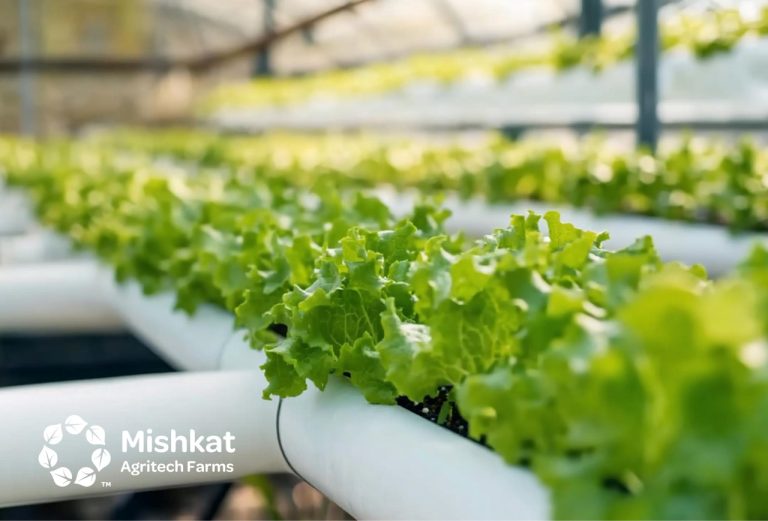
Nutrient Film Technique (NFT)
- Thin sheets of nutrient rich water flow along shallow channels.
- Roots form a mat inside the channel and absorb nutrients from the moving film.
- Ideal for lettuce, herbs and small rooted plants.
NFT is widely used in commercial greenhouse systems because it is simple, scalable and uses water efficiently.
Deep Water Culture (DWC) and raft systems
- Plants float on rafts while roots hang into deep, aerated nutrient solution.
- Water stays in one large tank or series of tanks.
- Excellent for leafy crops and educational setups.
In a compact greenhouse, a DWC block can operate like a waterfarm where crops float on circulating solution. It is visually impressive for hospitality tours and easy to explain to visitors.
Drip systems
- Nutrient solution is dripped onto the base of each plant in a container filled with perlite or other media.
- Excess solution drains back to the reservoir.
- Suitable for tomatoes, cucumbers, peppers and fruiting crops.
Drip based systems are flexible and can be arranged in vertical or horizontal layouts. They often form the backbone of a commercial hydroponic farm that serves supermarkets and hotels.
Ebb and flow (flood and drain)
Turn your vision into a data-backed plan with Mishkat
Book a quick, free assessment session with the Mishkat Services team: we define your goals and align them with the market and your budget, and deliver a one-page roadmap with expected returns, operating options, and linking to a purchase agreement when needed, with no obligation.
- Trays holding plants and media are flooded with nutrient solution then allowed to drain.
- Roots experience cycles of wetting and drying that deliver oxygen and nutrients.
- Useful for nurseries, propagation and mixed crop layouts.
Simple wick systems and small devices
- No pumps. The nutrient solution moves by capillary action up wicks into the media.
- Suitable for very small, low cost systems and educational projects.
In these compact designs, a hydroponic device may be as simple as a bucket with a wick, some media and a few leafy plants. This is often how people learn the basics before investing in bigger systems.
Matching systems to crops
Summary:
- NFT and DWC: leafy greens, herbs, baby leaf products.
- Drip: tomatoes, cucumbers, peppers, strawberries and other fruiting crops.
- Ebb and flow: nurseries, mixed crops, herbs in pots.
- Simple wick and small waterfarm style pots: home scale hydroponic gardening and school projects.
Micro takeaway: you do not need every method at once. Choose one or two types of hydroponics that match your first commercial crop list, then expand as your team gains experience.
From idea to hydroponics project: steps, budgets and risk control
To move from curiosity to investment, you need a clear list of steps of hydroponics as a project, not just as a growing technique. This section offers a simple guide that you can adapt with your own numbers.
Step 1: Define your role and market
Decide whether you are:
- A greenhouse owner upgrading to hydroponics to stabilize yields and reduce water use.
- An investor building a new hydroponic farm to sell fresh food to retailers or hospitality.
- A hospitality developer integrating a visible hydroponic planting area into a resort, hotel or restaurant.
For each role, write a short hydroponics project statement. Example:
- “Develop a 2,000 m² greenhouse near Jeddah with drip based hydroponic systems for tomatoes and cucumbers supplying three supermarket chains and two hotels.”
Micro takeaway: clear target markets and roles stop you from building technology without a buyer.
Step 2: Choose crops and production volumes
Next, list crops and target volumes. Focus on plants that:
- Have strong local demand and good price stability.
- Grow quickly in hydroponic systems.
- Fit your climate and energy costs.
Common choices for Saudi hydroponic farms include lettuce, baby leaf mixes, herbs, tomatoes, cucumbers and peppers. Many projects add a small block of specialty food such as edible flowers or microgreens for premium hospitality clients.
Turn your vision into a data-backed plan with Mishkat
Book a quick, free assessment session with the Mishkat Services team: we define your goals and align them with the market and your budget, and deliver a one-page roadmap with expected returns, operating options, and linking to a purchase agreement when needed, with no obligation.
Step 3: Select system type and layout
Based on your crop list, choose the main system type and sketch a layout:
- Size in square meters for each crop.
- Number of NFT channels, DWC rafts or drip lines.
- Required water storage, nutrient reservoirs and pumping systems.
- Space for cold rooms, packaging and a hydroponics lab corner if needed.
This is where collaboration with a design firm such as Mishkat Company is valuable. They can translate your crop and market decisions into detailed layouts and bills of quantities.
Step 4: Budget and financial model
Build a simple financial model using conservative assumptions:
- Capital costs: greenhouse or building, hydroponic systems, water treatment, control, packing area and basic vehicles.
- Operating costs: water, energy, nutrients, labor, packaging, maintenance and marketing.
- Revenue: yields per square meter, planting cycles per year and expected selling prices.
A 2025 techno economic analysis of hydroponic farming reported internal rates of return above 60 percent for well managed projects in suitable markets, driven by high cropping intensity and water savings. Your numbers will differ, but this shows why investors are looking closely at hydroponic technology.
Step 5: Pilot phase and learning
Before committing full capital, start with a controlled pilot:
- Build a smaller block or a dedicated hydroponics lab with NFT and drip systems.
- Train staff on how to grow hydroponic plants, including seeding, transplanting, pruning and harvesting.
- Test different nutrient solutions, perlite and other media.
- Measure water use, yield, labor hours and real costs.
This pilot phase is where you learn the basics and refine your system. Mishkat Company can operate this phase with you, helping your team learn without risking the full project budget.
Step 6: Scale up and integrate
After at least one full year of data, you can move confidently to a larger hydroponic farm. At this stage, integration with logistics, hospitality and branding becomes important:
- Contracts with buyers such as hotels, restaurants and retailers.
- Clear branding of hydroponic food quality, safety and freshness.
- Integration with farm tours and guest experiences.
Micro takeaway: successful hydroponics projects follow a clear sequence from concept and guide level knowledge to pilot, then to scale. They do not jump straight from YouTube videos to multi hectare farms.
Designing a commercial hydroponic farm and lab in Saudi Arabia
A commercial hydroponic farm is more than rows of plants. It is a coordinated system that must deliver food safely, consistently and profitably.
Key design blocks
When planning a hydroponic farm in Saudi Arabia, pay special attention to:
- Climate control design
- Cooling loads in summer, including fans, pads and possibly mechanical cooling.
- Ventilation rates to balance temperature, humidity and disease pressure.
- Water systems
- Source water quality and treatment.
- Storage capacity to cover supply interruptions.
- Nutrient mixing rooms and safe chemical handling.
- Hydroponics lab and quality control
- Small lab space to test water, nutrient solutions and sometimes plant tissue.
- Simple protocols to track EC, pH, temperature and key nutrient levels.
- Labor and training
- Clear roles for system technicians, crop managers and harvest staff.
- Practical training materials that help workers learn and grow in their jobs.
- Food safety and certification
- Procedures for hygiene, chemical handling and pest control.
- Documentation needed for audits and buyer requirements.
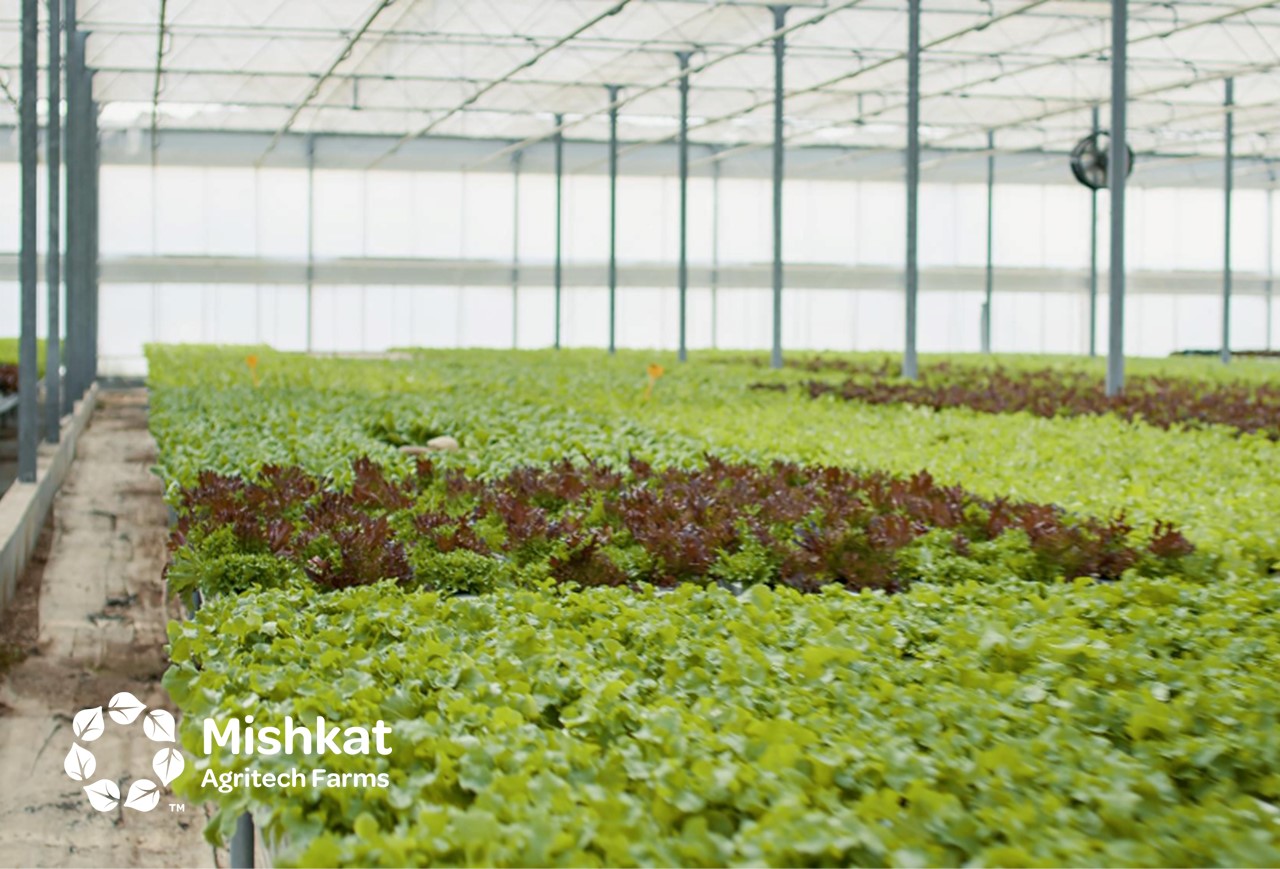
Mishkat Company designs hydroponic farms and hydroponics lab setups as part of integrated services, combining engineering with agronomy and training. This reduces the risk of building beautiful systems that are difficult to operate day to day.
Hydroponics business models
Several hydroponics business models are possible in Saudi Arabia:
- Wholesale vegetable supplier
- Sell bulk crops such as lettuce, herbs and tomatoes to retailers and food service distributors.
- Farm to table partner for hospitality
- Build a greenhouse next to a resort or restaurant.
- Offer tours, cooking classes and tasting menus that highlight ultra fresh hydroponic food.
- Contract growing for brands
- Produce specific crops under contract for nutrition focused brands.
- Educational and demonstration centers
- Operate a hydroponics lab, waterfarm displays and simple guide level tours for schools and public visitors.
- Mixed model
- Combine wholesale, hospitality and education for diversified income.
Micro takeaway: your hydroponics business is not only about plants, it is about matching a stable production engine to one or more reliable markets.
Quick win mini case: a small farm to table greenhouse
To make these concepts concrete, consider a simple mini case that could be implemented in many Saudi cities.
Setup
- Site: 800 m² next to a boutique hotel on the edge of a city.
- Systems: NFT for leafy greens and herbs, drip systems for cherry tomatoes and peppers.
- Crops: lettuce, rocket, basil, mint, cherry tomatoes and snack peppers.
- Market: the hotel restaurant plus a small weekly subscription program for nearby families.
Steps
- The hotel partners with Mishkat Company to design and build a small greenhouse with hydroponic systems based on site climate and guest demand.
- A compact hydroponics lab is set up to manage water, nutrient solutions and simple quality tests.
- Staff are trained to manage planting schedules so that the restaurant has a daily supply of young, crisp plants.
- Guests can walk through a guided path that explains how hydroponic planting works, why hydroponics saves water and how a waterfarm style unit recirculates nutrient solution.
- The hotel uses this story in its marketing, focusing on freshness, transparency and responsible water use.
Expected outcomes
- Reduced vegetable purchasing costs for the hotel, especially for premium herbs and baby leaves.
- New revenue from tours, classes and home box subscriptions.
- Stronger brand position as a responsible, food focused hospitality site.
Micro takeaway: you do not need thousands of square meters to see value. A well planned small hydroponics project attached to hospitality can become a working showpiece within one season.
Objections about Hydroponics
Even after seeing the numbers and systems, you might still have concerns. That is healthy. Here are common objections and how to think about them.
“Hydroponics is too technical for my team”
Hydroponic systems are more technical than simple soil gardening, but the complexity can be managed:
- Start with simple systems and clear basics instead of the most advanced technology.
- Use standard operating procedures for daily tasks.
- Partner with experienced operators such as Mishkat Company for training and early phase support.
Over time, your team will learn to read plants, adjust nutrient solutions and solve common problems.
“I am worried about taste and food quality”
Many chefs report that hydroponic crops, especially leafy greens, have excellent flavor when grown with balanced nutrient solutions and correct harvest timing. Soil can add complexity of flavor, but hydroponics offers consistency, cleanliness and control. You can also trial both methods side by side in a small block and let your own customers decide.
“Energy costs will eat my profits”
Energy is a real concern, especially for cooling and indoors lighting. Strategies to manage this include:
- Prioritize greenhouse based hydroponics instead of fully indoors systems where possible.
- Use shading, natural ventilation and energy efficient fans and pumps.
- Match crop choice and planting schedules to seasons to reduce cooling loads.
“I do not have time to learn and grow an entirely new method”
You do not need to become a scientist to run a successful hydroponic farm, but you do need a learning mindset. Short, focused training and a staged project plan can spread learning over time instead of overwhelming your team.
Micro takeaway: most objections can be softened by starting small, learning with support and scaling up only when data and skills are in place.
Start your Hydroponics Now
Build your next hydroponics project with confidence
If you are ready to move from theory to an actual hydroponics project, the next step is a structured conversation about your site, goals and constraints. Mishkat Company designs and supports hydroponic farm systems, hydroponics lab setups and integrated farm to table concepts tailored to Saudi conditions. Start with a focused pilot, learn how to grow hydroponic plants with your team, then scale into a resilient, profitable hydroponic farm that fits your wider strategy.
FAQs about Hydroponics
What is hydroponics in simple terms?
Hydroponics is a way of growing plants without soil. Instead of planting in earth, roots are placed in water or inert media such as perlite while a nutrient solution delivers everything the crop needs. Because nutrients, water and climate are controlled, plants can grow faster and more consistently than in many soil based systems.
What is hydroponic compared with a full hydroponic farm?
When people say “what is hydroponic” in daily conversation, they often mean a single hydroponic device, such as a bucket, small channel or compact unit in which plants grow with a nutrient solution. A hydroponic farm brings together hundreds or thousands of these growing positions, plus climate control, packing areas, staff and management systems.
How do hydroponics how it works principles affect project design?
Hydroponics how it works can be summarized as a cycle: water and nutrients go to the plant, the plant uses what it needs, and the rest of the solution returns to a reservoir for adjustment and reuse. This loop requires pumps, sensors and enough oxygen in the water. When designing a hydroponic farm, understanding this cycle helps you size tanks, pumps and backup systems correctly so that the loop never stops during critical growth stages.
How do I choose between hydroponics vs soil for my site?
Compare hydroponics vs soil along four axes: water, land, capital and market value. In water scarce areas with high value crops, hydroponics usually wins because it uses less water and offers stable yields. In regions with cheap water and low value crops, soil based systems can still make more sense. Many farm owners use soil for bulk field crops and hydroponics for high value vegetables and herbs.
How do I compare hydroponic vs aeroponic systems?
Hydroponic vs aeroponic comparisons focus on root environment. Hydroponics keeps roots in water or moist media, which is simpler to manage and more forgiving if something goes wrong. Aeroponics sprays roots in air and can deliver more oxygen, but it depends on high quality nozzles and pumps, and failures can damage plants quickly if misting stops. For most new investors, hydroponics is a safer first step, with aeroponics tested later in a controlled hydroponics lab.
What are the main types of hydroponics systems?
The main types of hydroponics include Nutrient Film Technique, deep water culture and raft systems, drip based systems, ebb and flow tables and simple wick designs. These types of hydroponics cover most commercial needs. NFT and rafts are common for leafy greens. Drip systems are common for fruiting crops like tomatoes and peppers. Ebb and flow and wick systems are popular for nurseries and small guide level projects.
How to grow hydroponic plants step by step?
The basic steps of hydroponics are:
- Prepare clean water and mix nutrient solution to the correct EC and pH.
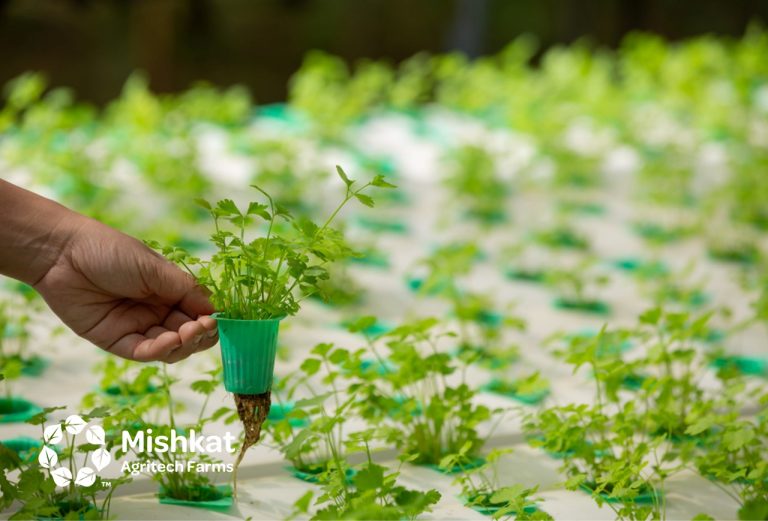
- Seed plants in plugs or small trays until they reach transplant size.
- Move young plants into the main hydroponic system, such as NFT channels or drip lines filled with perlite.
- Monitor water level, nutrient concentration and system performance daily.
- Adjust nutrient levels as plants grow and temperature changes.
- Harvest at the right stage and reset the system for the next cycle.
Learning how to grow hydroponic plants is a process, but with good procedures it becomes a predictable routine.
What is hydroponic gardening at home compared with a commercial project?
Hydroponic gardening at home usually uses small devices, sometimes called countertop units or balcony systems. They are simple, often pre assembled and designed to be easy to run. A commercial hydroponic farm is larger, has more complex control systems and needs careful planning around labor, energy and markets. The basics of water, nutrients and roots are the same, but scale changes the level of management needed.
What role do hydroponic fertilizer and best hydroponic nutrients play in success?
Hydroponic fertilizer is the primary food source for your plants. It must provide all essential elements in the right ratios. Products sold as best hydroponic nutrients are useful starting points, but success also depends on how you adjust these mixes for your water quality and crops. A small hydroponics lab, simple testing tools and clear records help you turn nutrient management from guesswork into a controlled process.
How can a waterfarm style unit help me learn before investing big?
A small waterfarm or similar compact system can run on a balcony, in a greenhouse corner or in an office lobby. It is a simple way to learn the basics of hydroponic planting, including seeding, transplanting, nutrient adjustment and harvesting. The low cost and limited size keep risk small while your team practices. Lessons from such pilot units can then be scaled up into a larger hydroponic farm or integrated into a hospitality site.
Conclusion about Hydroponics
Key takeaways:
- Hydroponics is a water based growing method that fits Saudi climate constraints and food security needs.
- Compared with soil, hydroponics can deliver higher yields per square meter and use far less water, especially for leafy greens and herbs.
- Success depends on systems thinking: structure, water, nutrients, oxygen and climate must work together.
- A staged approach from pilot hydroponics lab to full hydroponic farm reduces risk and builds skills.
- Integration with hospitality, education and branding can turn a simple greenhouse into a visible, profitable asset.
- Partners such as Mishkat Company can help design, build and manage hydroponics projects that match the realities of Saudi water, energy and markets.
Hydroponics is not magic, but it is a powerful method when applied with clear goals, good data and disciplined management. For greenhouse owners, investors and hospitality developers who are ready to learn and grow, it offers a practical path to reliable production, smarter water use and stronger guest experiences.
Proof and credibility for Hydroponics
Recent scientific and technical studies provide strong evidence that hydroponics is more than a trend. A 2023 analysis of Saudi water use showed that agriculture consumed around 85 percent of total water in 2015 while renewable supplies were far lower, underlining the need for more efficient production systems. (MDPI)
Multiple reviews between 2021 and 2025 reported that hydroponic crops such as spinach and leafy greens can yield 20 to 30 percent more per unit area compared with soil based systems and sometimes nearly triple yields when conditions are optimized. (ARCC Journals) At the same time, hydroponic systems were shown to use up to 90 percent less water than traditional field methods, making them highly suitable for arid climates. (PMC)
Economic studies published in 2024 and 2025 highlighted strong internal rates of return for well designed hydroponic projects, driven by high cropping intensity, predictable output and the ability to target premium segments such as fresh herbs and baby leaves. (Journal of Social Research and Review) Regional food security analyses in 2025 also noted that Gulf countries import around 85 percent of their food, which increases the strategic value of local controlled environment agriculture, including hydroponic and related systems. (Arab News)
Together, these findings show that hydroponics is a credible, evidence based option for investors and operators in Saudi Arabia who want to reduce water use, stabilize production and support long term food security.
Turn your vision into a data-backed plan with Mishkat
Book a quick, free assessment session with the Mishkat Services team: we define your goals and align them with the market and your budget, and deliver a one-page roadmap with expected returns, operating options, and linking to a purchase agreement when needed, with no obligation.