Modern farming is becoming a practical business model in Saudi Arabia for greenhouse owners, soilless growers, and hospitality developers who need better control, cleaner output, and steadier supply. This guide explains where it creates value, how to assess risk, and how to move from concept to a bankable project.
Table of Contents
Why modern farming matters in Saudi Arabia
For many investors, the key question is whether modern farming can produce stable volumes, sensible margins, and dependable quality under Saudi conditions.
The conversation has shifted from technology to returns. Owners want systems that reduce uncertainty, while hospitality operators want consistent fresh produce close to the kitchen. This article shows how modern farming fits those goals and what to test before you commit capital.
You will find a simple decision framework, a checklist, a quick-win mini case, a table for comparing models, and practical guidance on design, operations, and scale.
What modern farming really means
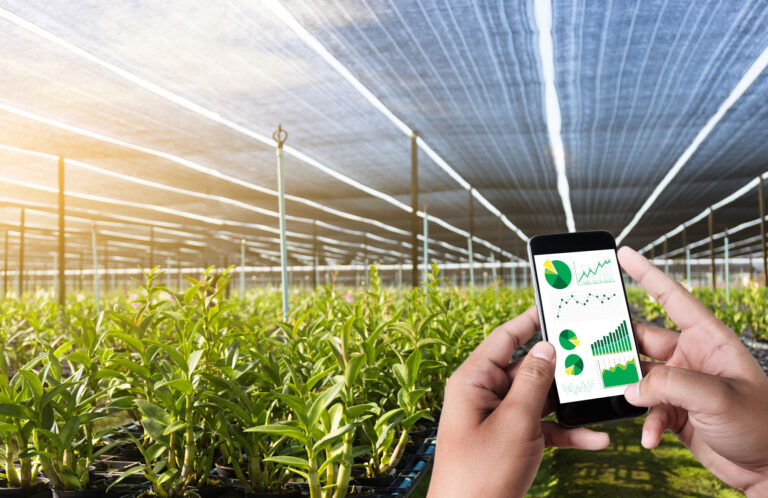
Modern farming shifts production toward control, measurement, and repeatability. In simple terms, modern farming uses data, climate control, planned nutrition, cleaner water loops, and disciplined routines to grow more predictably.
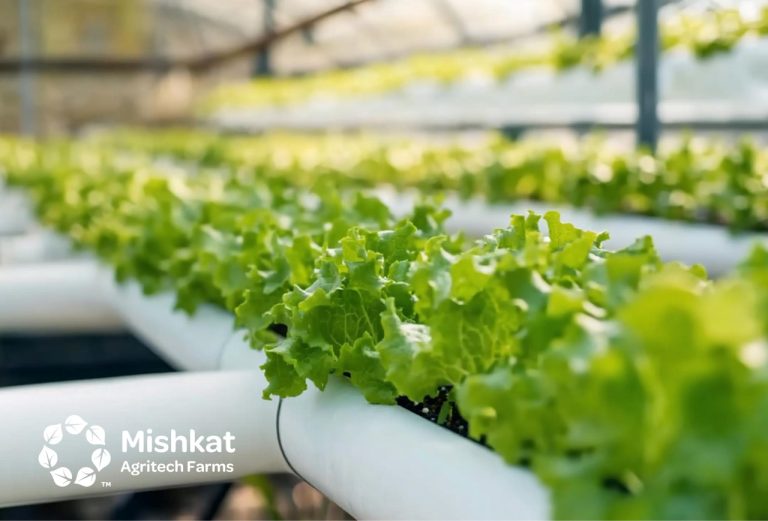
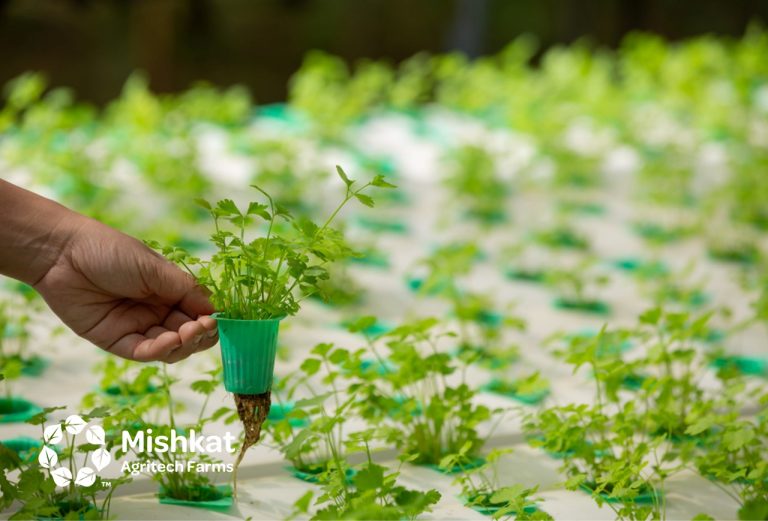
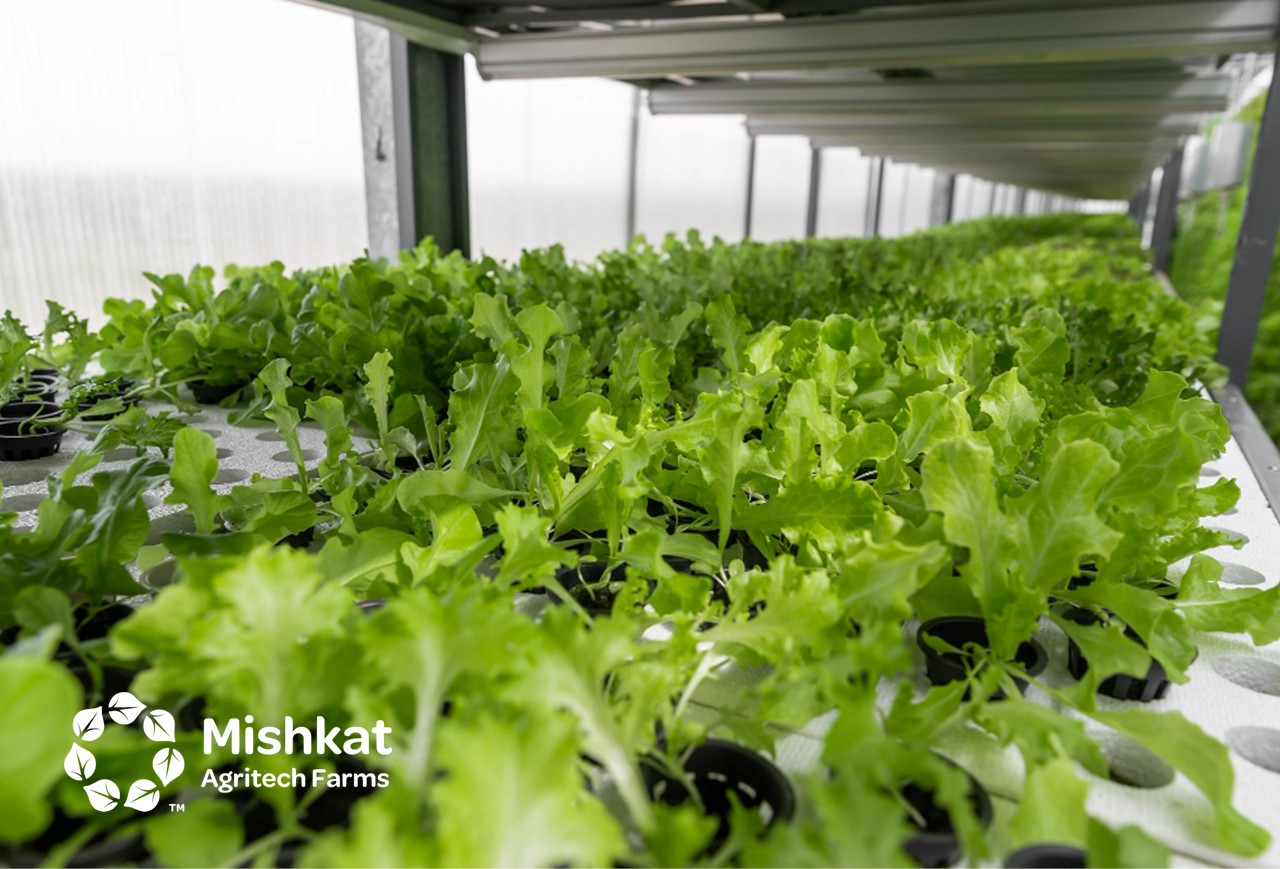
In Saudi Arabia, modern farming often appears in protected agriculture, hydroponic production, aquaponic integration, fertigation control, climate-managed structures, and post-harvest systems that protect quality. In hospitality projects, modern farming may include compact production zones, chef-linked crop plans, or visible growing areas that support a premium farm-to-table story.
Unlike traditional farming, modern farming does not depend as heavily on open-field variability. That matters in a hot climate where water efficiency, heat stress management, and supply consistency can determine whether a project thrives or struggles.
Many people use modern farming and modern agriculture as if they mean the same thing. In practice, modern agriculture is the wider shift across the sector, while modern farming is the day-to-day application inside a real production business. That distinction helps investors focus on execution instead of buzzwords.
Problem and stakes
The pressure behind modern farming is real, not theoretical. In September 2024, one major international agriculture update highlighted that agriculture accounts for 72% of freshwater withdrawals in many regions facing water scarcity. For Saudi decision-makers, that reinforces why water-smart design is central to any modern farming plan. (FAOHome)
The supply challenge is also growing. A current plant production reference states that by 2050, global food production will need to increase by 50% to meet demand, with 80% of the additional food demand expected to come from plant products. That is one reason modern farming and modern agriculture are attracting serious investor attention. (FAOHome)
Saudi data points in the same direction. Official figures released in 2025 showed that agricultural consumption of non-renewable groundwater in 2023 still reached 9,356 million cubic meters, even after a 7% decline from 2022. The same release noted a 12% rise in reused water consumption in 2023, showing why efficient systems are becoming more important. (الهيئة العامة للإحصاء)
There is also clear momentum in protected production. Official 2024 agricultural results released in December 2025 showed protected vegetable production reaching 797 thousand tons, up 10.6% from 2023, with cultivated area at 7.8 thousand hectares. That is a practical signal that controlled production systems are scaling, not just being discussed. (الهيئة العامة للإحصاء)
Where modern farming creates value for Saudi investors
The first advantage of modern farming is control. Better control over water, climate, and nutrient delivery usually means better output quality and more reliable supply.
The second advantage of modern farming is resource efficiency. Water, fertilizers, labor time, and harvest planning become visible instead of guessed.
Turn your vision into a data-backed plan with Mishkat
Book a quick, free assessment session with the Mishkat Services team: we define your goals and align them with the market and your budget, and deliver a one-page roadmap with expected returns, operating options, and linking to a purchase agreement when needed, with no obligation.
The third advantage of modern farming is market positioning. A project can compete on consistency, freshness, specialty varieties, and year-round availability, not only price.
The fourth advantage of modern farming is land flexibility. Some systems create viable production where open-field methods are less practical.
This is also where modern agriculture and vertical farming intersect. Vertical farming is not the answer for every crop, but it can be useful when land is tight, hygiene matters, and short-cycle leafy production fits the business case. Investors should treat vertical farming as one tool inside modern farming, not as the default answer for every site.
The core formula for a bankable project
Use this formula to evaluate modern farming:
Project quality = Market fit × Production stability × Resource efficiency × Team capability
If one factor is weak, the whole model weakens.
Market fit means you know who will buy, in what volume, at what quality level, and at what price range.
Production stability means the farm can deliver planned output with acceptable losses across seasons.
Resource efficiency means the system manages water, fertilizers, labor, and energy with discipline.
Team capability means the people running the project can actually execute the plan.
Many proposals fail because they focus on the greenhouse frame, not the operating engine. A good investor memo on modern farming should answer five questions:
- What crop mix fits the local buyer and the local climate strategy?
- What system is best for those crops, not just the most advanced-looking option?
- What are the expected yield, reject rate, and harvest rhythm?
- What skills are needed to run the site from day one?
- What commercial path protects revenue, direct retail, wholesale, hospitality supply, or mixed channels?
When Mishkat Company Services support a project, the useful role is not only design. It is aligning concept, farm design, operations, training, and commercial reality so the system makes business sense.
Comparing leading production models
| Model | Best fit | Main strengths | Main watchouts |
|---|---|---|---|
| Climate-controlled greenhouse | Mid to large commercial supply | Strong crop control, scalable, suitable for many crops | Energy strategy and labor discipline matter |
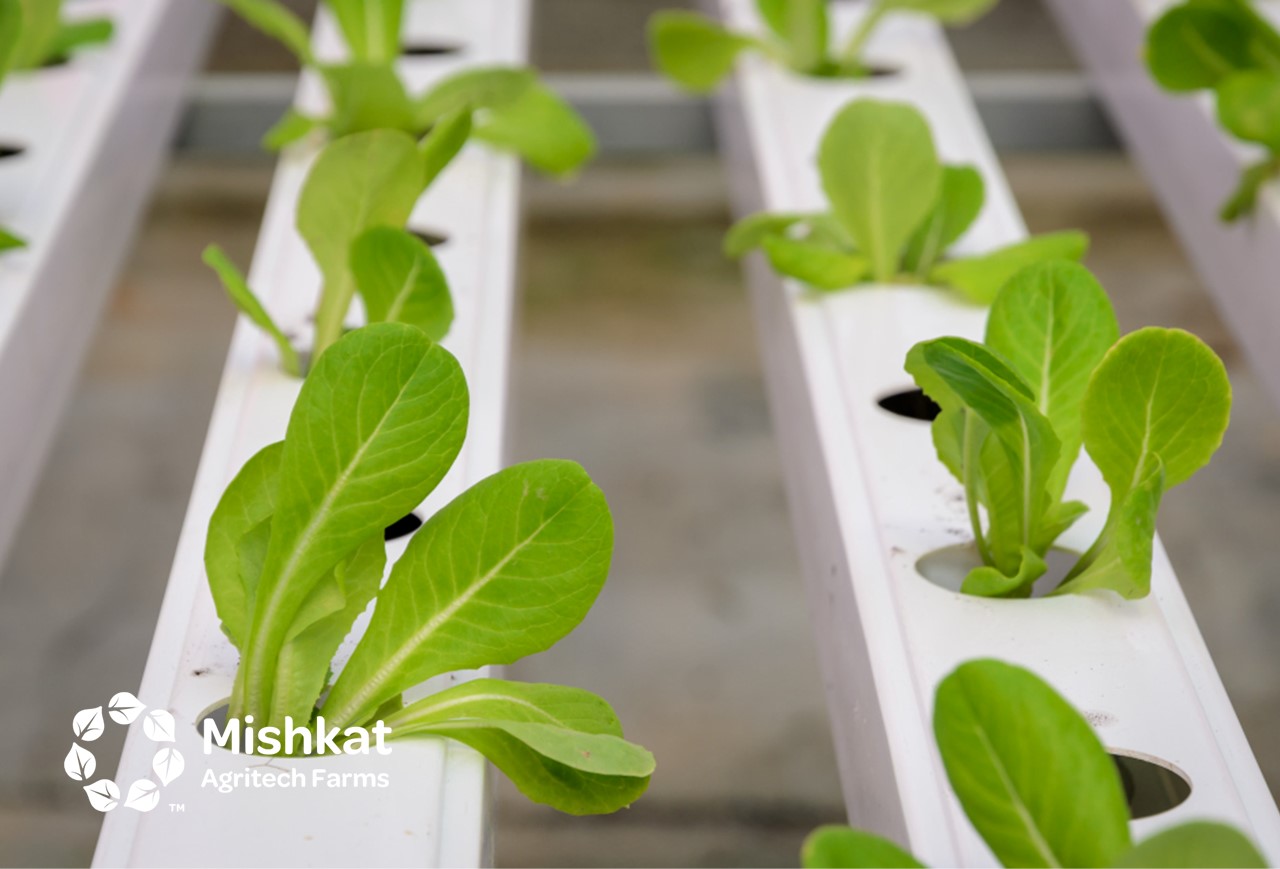
| Hydroponic greenhouse | Leafy greens, herbs, vine crops | Good water control, clean production, repeatability | Requires precise monitoring and agronomy |
| Aquaponic setup | Niche integrated food model | Dual output story, education value, brand appeal | More complex biology and tighter management |
| Vertical farming | Premium leafy greens near demand centers | High hygiene, compact footprint, visible innovation | Power cost and crop selection are critical |
| Hospitality-linked farm | Resorts, hotels, destination dining | Freshness, guest experience, brand differentiation | Must match chef demand and service rhythm |
The table shows that modern farming is not one single method. The right choice depends on crop, site, budget, buyer, and operating discipline.
How to choose the right system
A useful sequence is to choose in this order, market, crop, system, infrastructure, and only then equipment. Many projects do the opposite and end up overspending.
Turn your vision into a data-backed plan with Mishkat
Book a quick, free assessment session with the Mishkat Services team: we define your goals and align them with the market and your budget, and deliver a one-page roadmap with expected returns, operating options, and linking to a purchase agreement when needed, with no obligation.
Step 1: Start with the buyer
Modern farming works best when demand is clear. A wholesale leafy greens project needs different economics from a resort herb garden or a premium salad supply model.
Step 2: Pick crops that match the business model
Do not build a site around crops that buyers do not consistently reorder. The safest starting point is usually crops with repeat demand, short cycles, and visible freshness value.
Step 3: Match the system to the crop
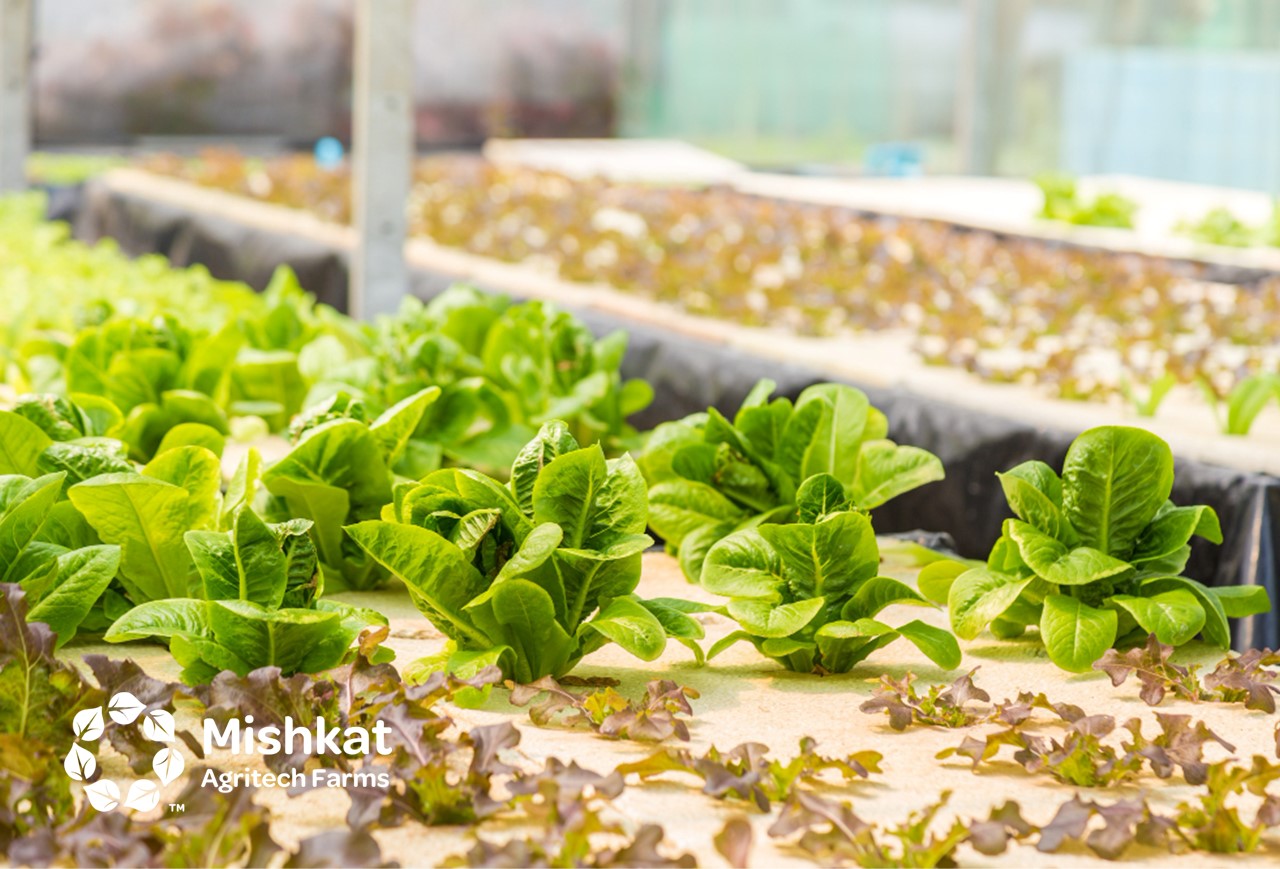
This is where farming techniques have evolved over time. Leafy greens may suit hydroponics or vertical farming, while fruiting crops may fit greenhouse systems better.
Step 4: Design for operations, not just for launch day
Modern farming succeeds when workflow, harvest handling, water treatment, and staff routines are planned well.
Step 5: Build a training plan before first planting
Farming techniques have evolved over time, and modern farming teams need the same upgrade. Training should cover crop monitoring, hygiene, irrigation response, nutrient control, and record keeping. Mishkat Company Team adds value when training is treated as a core asset, not an extra.
A practical checklist before you invest
Use this checklist before approving the budget for any modern farming project:
- Clear target buyer and pricing logic
- Crop list linked to real demand
- Water source and water quality assessment
- Climate strategy for hot months
- Energy strategy and backup planning
- Labor model and training plan
- Input sourcing plan
- Post-harvest handling workflow
- Sales channel plan
- Pilot phase or proof block before full scale
- Weekly KPI dashboard
- Agronomy support defined in writing
If more than three of these items are still vague, the modern farming plan is probably not ready for full investment.
Quick-win mini case: a hospitality developer tests on-site growing
A hospitality developer in western Saudi Arabia wants a stronger farm-to-table story but does not want to build a large production site immediately. The project team starts with a compact modern farming pilot focused on leafy greens and herbs used every week by the kitchens.
The first step is to map chef demand by volume, cut style, and delivery rhythm. The second step is to choose a simple hydroponic block instead of a more complex mixed system. The third step is to assign one trained operator and one kitchen liaison. The fourth step is to measure yield, waste, harvest timing, and menu use for twelve weeks.
Expected outcome: the developer learns whether modern farming improves freshness and purchasing control before spending on a larger expansion.
This kind of pilot is often more useful than a large, rushed launch. It lets modern farming prove itself with real numbers.
The real differences between traditional farming and controlled production
Turn your vision into a data-backed plan with Mishkat
Book a quick, free assessment session with the Mishkat Services team: we define your goals and align them with the market and your budget, and deliver a one-page roadmap with expected returns, operating options, and linking to a purchase agreement when needed, with no obligation.
The discussion is not about declaring one model good and the other bad. Traditional and modern approaches both have a place. The real task is to match the approach to the environment, crop, and market.
Traditional farming can still make sense where land is available, crop value is lower, and open-field production risk is acceptable. Modern farming becomes more attractive when water efficiency, protected quality, year-round planning, or premium positioning matter more.
Traditional farming usually carries more exposure to weather shifts and uneven supply windows. Modern farming usually offers tighter control, but it also asks for better management.
This should not be framed as a culture war. In Saudi Arabia, traditional and modern approaches often work best together, with open-field production serving some crops and modern farming serving higher-value or more time-critical crops.
When investors compare traditional and modern farming techniques, the real question is which model gives the best balance of cost, resilience, and market value.
Common operating mistakes in modern farming
The first mistake is buying technology before defining the sales model. Modern farming is not a showroom exercise.
The second mistake is underestimating management intensity. Even small sites need consistent records and quick corrective action.
The third mistake is choosing too many crops at the start. A narrow crop focus is often better for a new modern farming operation.
The fourth mistake is ignoring post-harvest handling. A strong site can still lose money if harvest cooling, packing, and delivery timing are poor.
The fifth mistake is treating agronomy as optional. Nutrient adjustments, root-zone health, crop timing, and sanitation routines are not side issues.
This is where Mishkat Company, or any serious delivery partner, should be evaluated carefully. Ask for design logic, crop strategy, training scope, operating assumptions, and ramp-up support, not just layout drawings.
Objections and edge cases
Some investors worry that modern farming is too expensive. That can be true if the model is oversized, energy-heavy, or built for the wrong crops. It is less true when the project starts with clear demand and an appropriate scale.
Others think modern farming is only for leafy greens. That is too narrow. This is a toolbox, and different systems support different crops and business goals.
Another common objection is that traditional farming is simpler. In one sense, yes. But if the market needs clean, predictable produce, modern farming may reduce commercial risk even if operations are more technical.
There are also edge cases where modern farming is not the best choice. Low-value bulk crops, weak logistics, poor management depth, or unclear sales channels can all weaken the case.
For this reason, modern approaches being at the forefront does not mean every investor should copy every new idea. It means the best projects use modern approaches being at the forefront where they create real measurable value.
Take the next step with modern farming
If you are evaluating a greenhouse upgrade, a new hydroponic site, an aquaponic concept, or a hospitality-linked farm, start with a practical design and operations review, not a product catalog. A disciplined modern farming plan can turn a promising concept into a repeatable business. Mishkat Company Services can help shape that next step with a realistic modern farming lens.
Turn your vision into a data-backed plan with Mishkat
Book a quick, free assessment session with the Mishkat Services team: we define your goals and align them with the market and your budget, and deliver a one-page roadmap with expected returns, operating options, and linking to a purchase agreement when needed, with no obligation.
FAQs About Modern Farming
What does this model mean in simple terms?
It is a way of producing food with more control, data, and efficiency.
Is it only about high technology?
No. It includes technology, but also planning, training, hygiene, crop scheduling, and better decision-making.
How is this model different from modern agriculture?
Modern agriculture is the wider sector shift toward better tools and sustainability. Modern farming is how those ideas show up inside a real operating farm.
Is vertical farming always the best option?
No. Vertical farming can be excellent for some premium short-cycle crops, especially near demand centers. But not every crop or site justifies it.
Can it work for hospitality projects?
Yes. Modern farming can support resorts, hotels, and high-end dining projects that want fresher produce and a stronger local food story.
Does it replace traditional farming completely?
No. Traditional and modern approaches can complement each other. The right mix depends on crop type, site conditions, customer requirements, and margin structure.
What is the biggest risk?
The biggest risk is mismatch, the wrong system for the wrong crop or market. Technology alone does not protect returns.
How should investors start?
Start with buyer demand, crop planning, and water and climate analysis, then pilot the system where possible. Mishkat Company often adds value when this sequence is followed from the beginning.
Why do some projects fail?
They often fail because the commercial plan is weak, the training is thin, the crop mix is too broad, or the operating discipline is inconsistent.
Conclusion
- This model creates value when it improves control, consistency, and market fit.
- The best projects begin with the buyer, not the equipment.
- Water strategy, training, and post-harvest handling matter as much as structure.
- Traditional and modern farming can complement each other in Saudi Arabia.
- A pilot can reduce risk before a full rollout.
- Strong execution turns the concept into a business.
For Saudi investors, the opportunity here is building a more resilient, efficient, and market-aware production model.
Proof and credibility
This guide is written for practical decision-making, not trend chasing. It reflects current public data on water, protected production, and food-system pressure, then applies that context to greenhouse, soilless, and hospitality-linked investment choices in Saudi Arabia. It also reflects integrated project thinking used by Mishkat Company Team and Mishkat Company Services, where farm design, hydroponics and aquaponics, management support, and agronomist training need to work together if modern farming is expected to deliver consistent commercial results.
Sources
- General Authority for Statistics, 2025, https://www.stats.gov.sa/en/w/news/8
- General Authority for Statistics, 2025, https://www.stats.gov.sa/en/w/news/127
- Food and Agriculture Organization of the United Nations, 2024, https://www.fao.org/neareast/news/details/fao-leads-dialogue-on-water-scarcity-in-agriculture-at-world-water-week-2024/en
- Food and Agriculture Organization of the United Nations, 2025, https://www.fao.org/plant-production-protection/about/en
Turn your vision into a data-backed plan with Mishkat
Book a quick, free assessment session with the Mishkat Services team: we define your goals and align them with the market and your budget, and deliver a one-page roadmap with expected returns, operating options, and linking to a purchase agreement when needed, with no obligation.