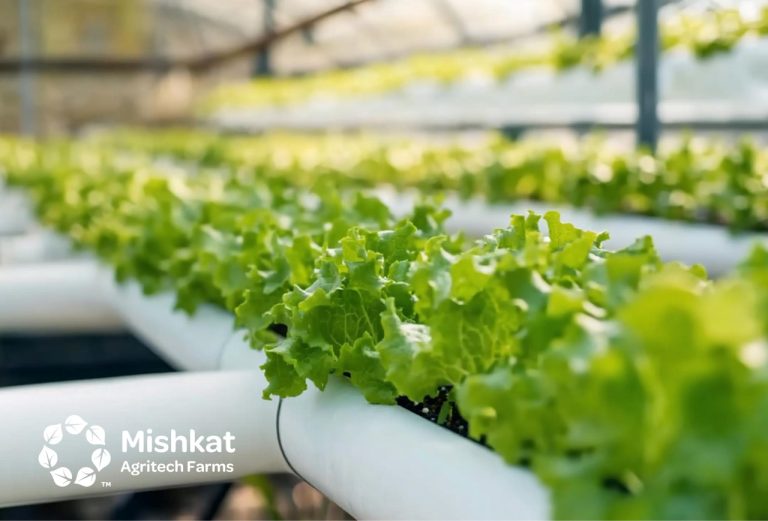
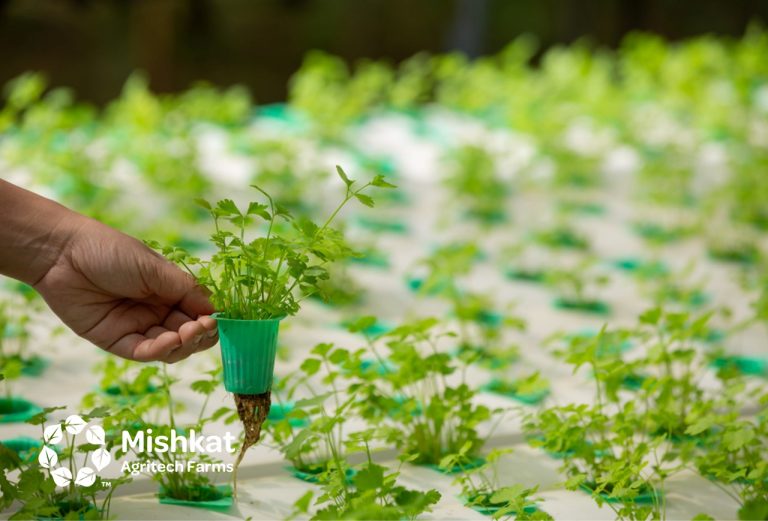
Farm management is the difference between a good greenhouse idea and a stable operating business. In Saudi Arabia, owners, investors, and hospitality operators need farm management that connects production, quality, labor, water, energy, and sales. This guide explains how farm management works in protected agriculture, hydroponics, aquaponics, and farm-to-table projects, and shows how to build a clear operating model that supports consistent output, better margins, and smarter decisions.
Table of Contents
Farm management in Saudi Arabia
Farm management matters because a controlled growing project can look impressive and still underperform. A clean structure, advanced irrigation, and strong crop genetics do not guarantee results. Farm management turns technical capacity into a business system. Farm management also helps owners ask the right questions early. What should the farm produce? Which crops fit the target market? How should management control labor, cost, and quality? Which farm records matter every week? Which management routines create stable output across seasons?
For Saudi investors, farm management is especially important because the market is changing fast. Protected production is expanding, hospitality buyers expect steady quality, and water discipline is non-negotiable. A greenhouse project, an aquaponics project, or a premium herb unit all need farm management that is practical, measurable, and linked to business results. Good farm management is not theory. It is a working system for planning, execution, review, and improvement.
Problem and stakes
The stakes are high. In 2024, protected vegetable production in Saudi Arabia reached 797 thousand tons, up 10.6 percent from 2023, and the protected area reached 7.8 thousand hectares. That means more agricultural supply, more agricultural competition, and a higher need for strong farm management and operational discipline. (الهيئة العامة للإحصاء)
Water pressure is just as important. In 2023, water consumption for agricultural purposes in the Kingdom reached 12,298 million cubic meters. For any farm management model in Saudi Arabia, that makes water efficiency, crop planning, and production control central business issues, not side topics. In 2024, total agricultural crop imports also reached 18,762 thousand tons, up 10.8 percent from 2023, showing that local production still operates in a highly competitive supply environment. (الهيئة العامة للإحصاء)
This is why farm management deserves board-level attention. In Saudi Arabia, a farm that ignores management discipline can lose money through weak planning, poor harvest timing, soft communication, and preventable waste even when the production system itself is modern.
What farm management means in practice
Farm management is the process of organizing land, water, people, inputs, time, and capital to achieve clear production and business goals. In a greenhouse or soilless setting, farm management covers crop planning, labor assignment, irrigation review, nutrition, quality checks, harvest timing, packing, delivery, and financial follow-up. In a hospitality model, farm management also aligns the farm with menu needs, freshness standards, and service windows.
A practical definition helps. Farm management is the art and science of running an agricultural business so that daily operations support long-term profit. That definition matters because many owners treat farm management as record keeping only. Real farm management is much wider. It includes planning, management practices, management services, communication, financial control, legal basics, and strategic decisions about what to grow, when to harvest, and where to sell.
For a greenhouse investor, farm management should answer five basic questions. What is the production plan? Who owns each task? What does each crop really cost? Which quality rules protect the brand? What changes should management make this week based on actual farm data? When those questions are answered clearly, farm management becomes easier to scale.
Mishkat Company often sees that the biggest gap in a new project is not the physical design. It is farm management. Owners may have the structure, climate equipment, and nutrient system, but they need a better management resource, stronger management information systems, and clearer business management routines to reach stable performance.

The five pillars of farm management
1. Planning and crop fit
Every strong farm management system starts with planning. Planning defines the crop mix, the production calendar, the target client, the harvest rhythm, and the labor requirement. In Saudi Arabia, planning must also reflect climate conditions, water strategy, and market demand. Farm management without planning becomes reactive. A reactive farm usually buys inputs late, overplants weak products, and misses high-value windows.
For controlled agriculture, planning should link production to sales. If the farm serves hospitality, planning should start with menu demand and chef requirements. If the farm sells to retail or premium wholesale, planning should start with shelf-life, pack format, and weekly demand patterns. Effective farm management depends on this first step.
2. People, roles, and accountability
Turn your vision into a data-backed plan with Mishkat
Book a quick, free assessment session with the Mishkat Services team: we define your goals and align them with the market and your budget, and deliver a one-page roadmap with expected returns, operating options, and linking to a purchase agreement when needed, with no obligation.
A farm manager cannot do everything. Farm management works when management breaks the site into clear roles. Who checks irrigation? Who scouts crop health? Who handles harvest? Who signs off on quality? Who updates the record? In a growing business, the answer cannot stay inside one person’s head.
Good management practices make work visible. They also help farmers and supervisors learn faster. When labor knows the standard, communication improves, error rates fall, and farm management becomes more consistent. This is true in leafy greens, herbs, vine crops, and even mixed aquaponics operations where livestock management overlaps with crop production.
3. Financial management and unit economics
Financial management is a core part of farm management. Owners need to know cost per kilogram, cost per square meter, labor cost by zone, packaging cost, utility cost, and rejection loss. Without that view, management cannot compare crop options or understand profit by client channel.
A simple formula helps:
Gross margin per square meter = saleable yield per square meter × net selling price – direct growing cost per square meter
This formula is not the whole business model, but it gives farm management a clear starting point. If the crop looks strong in production but weak in margin, management must review price, waste, labor, or crop choice. If a premium hospitality account demands difficult specifications, farm management must decide whether the margin supports the service level.
4. Quality, food safety, and consistency
Farm management is not only about volume. It is about saleable volume. That means crop quality, postharvest handling, cooling, cleanliness, and traceability. A farm can produce well and still disappoint the buyer if quality is inconsistent. Good farm management uses standard harvest maturity, clear handling rules, basic legal and safety records, and fast response when problems appear.
5. Maintenance and risk control
A modern greenhouse depends on pumps, sensors, dosing systems, cooling, lighting in some projects, and structured sanitation. Farm management must include preventive maintenance, spare parts, backup procedures, and weekly inspection. Risk control is part of effective farm management because breakdowns damage production, quality, and customer trust at the same time.
Mishkat Company Services support this wider view of farm management by connecting hydroponics and aquaponics design with practical operating systems, agronomist training, and hospitality design choices that match real Saudi conditions.
A farm management framework that works
A simple framework can improve farm management quickly:
- Plan the week
- Measure the week
- Review the variance
- Decide the action
- Repeat with discipline
This farm management framework works because it is easy to understand. It also keeps management focused on decisions, not just data collection. A farm that records numbers but never changes behavior does not have strong farm management. It only has paperwork.
Below is a practical table for weekly farm management control.
| Area | What management checks weekly | Why it matters |
|---|---|---|
| Crop planning | sowing, transplanting, harvest forecast, crop age | keeps production aligned with sales |
| Labor | attendance, task completion, output by team | improves accountability and cost control |
| Water and nutrition | EC, pH, irrigation timing, corrective action | protects crop quality and productivity |
| Quality | rejection, complaint trends, shelf-life issues | protects brand reputation and repeat orders |
| Inventory | seeds, nutrients, packaging, spare parts | prevents disruption and emergency buying |
| Finance | cost per kg, waste, margin by customer | supports better business decisions |
This table is simple, but simple is good. Farm management improves when management uses a small number of metrics consistently.

Turn your vision into a data-backed plan with Mishkat
Book a quick, free assessment session with the Mishkat Services team: we define your goals and align them with the market and your budget, and deliver a one-page roadmap with expected returns, operating options, and linking to a purchase agreement when needed, with no obligation.
Farm management software and information systems
Many owners ask when farm management software becomes necessary. The answer is simple. Use farm management software when paper records and spreadsheets start hiding mistakes instead of revealing them. Early-stage sites can begin with a lean system, but growing operations benefit from software, farm management information systems, and cleaner data flows.
The right farm management software should support planning, production tracking, labor logs, inventory, quality records, and reporting. It should not create extra work for the team. Management software is useful only when it makes farm management easier, faster, and more accurate. For this reason, software choice should follow process design, not lead it.
Good management information systems help a farm manager see patterns. Which crop block is underperforming? Which harvest day creates the highest rejection? Which client generates low profit after service cost? Which team needs more instruction? Those are management questions, and software should help answer them.
For complex sites, source farm management software and source farm management systems should also connect with purchasing, dispatch, and financial management. A growing agribusiness cannot rely on memory. It needs a reliable record, clear dashboards, and management services that turn farm data into business action.
Weekly farm management checklist
Use this checklist every week:
- Confirm the production plan and expected harvest by crop
- Review water, nutrient, and sanitation records
- Check labor attendance and task completion
- Compare actual production with forecast
- Review waste, reject, and complaint data
- Update inventory and spare parts levels
- Review delivery timing and buyer feedback
- Check costs for labor, packaging, and utilities
- Close maintenance issues
- Record decisions and assign owners
This checklist may look basic, but basic farm management usually beats complicated farm management that no one follows. Strong farmers, supervisors, and owners learn that consistency wins.
A quick-win mini case
A Saudi hospitality developer launches a premium farm-to-table concept linked to a medium-sized greenhouse. The site grows herbs, lettuce, and small specialty crop lines. The design is attractive, but the first months reveal weak coordination. Harvests are uneven, chef requests change late, and management cannot explain true cost per item.
The solution is not expansion. The solution is farm management.
First, management builds a one-page weekly plan for crop blocks, demand, harvest, and dispatch. Second, the farm manager creates simple quality rules and a daily record. Third, the team reviews labor use, waste, and utility cost each week. Fourth, management defines which products are core and which products stay seasonal. Fifth, the business creates a clear communication rhythm between the farm and the kitchen.
The expected outcome is better production visibility, fewer urgent changes, more stable pricing, and stronger profitability. This is where Mishkat Company can contribute through farm design, hydroponics and aquaponics support, hospitality design, and farm management services that help operators move from concept to repeatable results.
What investors should measure in farm management
Owners and investors often focus on yield first. Yield matters, but farm management needs a wider view. A profitable farm or ranch style operation in Saudi Arabia should measure the following:
- saleable yield per square meter
- labor hours per kilogram
- water use per kilogram
- rejection rate
- on-time delivery rate
- customer margin
- energy cost trend
- crop cycle variance
- downtime by equipment type
- working capital tied in inventory
These indicators help management see whether the farm is becoming more effective, more productive, and more profitable. They also improve communication between ownership and operations because decisions become evidence-based.
A comprehensive guide to farm management should also stress that one metric can mislead. A crop can show strong productivity while creating poor margin. A farm can show impressive output while hiding weak legal compliance, high waste, or unstable quality. Good management looks at the whole system.
Farm management scorecard for daily control
Turn your vision into a data-backed plan with Mishkat
Book a quick, free assessment session with the Mishkat Services team: we define your goals and align them with the market and your budget, and deliver a one-page roadmap with expected returns, operating options, and linking to a purchase agreement when needed, with no obligation.
- A strong agricultural business needs simple scorecards. Each agricultural scorecard should help management make better business decisions without delay. In practical farm management, agricultural planning links land, crop selection, production timing, labor, and business priorities. Owners should learn which agricultural practices improve output, which agricultural practices add cost, and which agricultural practices create long-term success.
- For greenhouse investors, agricultural planning should not stop at planting dates. Good planning connects land use, production blocks, crop rotation, labor capacity, and business goals. A farm that wants better success must learn to turn planning into action. Farm management software can support that work, but management software only helps when the planning logic is clear.
- Many farmers focus on production first, but effective farm management asks deeper questions. Which crop improves productivity? Which crop protects business margin? Which crop fits the land, the market, and the buyer? These decisions need agricultural science, practical experience, and a comprehensive guide that helps the farm manager learn from data instead of assumption.
- A comprehensive guide to farm management should show how agricultural science supports production, how sustainable practices protect land and water, and how effective planning improves business results. It should also explain how farmers use resources, how farmers review crop performance, and how farmers adjust operations when actual production differs from the plan.
- In Saudi Arabia, land is valuable and controlled environments are capital intensive. That makes agricultural planning, agricultural production, and agricultural business control more important. Management should learn how land constraints affect crop density, how land allocation affects productivity, and how land strategy affects the wider business. Good farm management keeps those land decisions visible.
- Modern farm management software can organize resources, record production, compare crop batches, and improve communication. The best farm management software does not only store information. It helps management learn, helps farmers follow practices, and helps the business make fast decisions. When management software is simple, teams use it. When management software is too complex, operations slow down.
- A professional farm manager should know the difference between activity and progress. A busy farm is not always a successful farm. Success comes when planning, production, resources, and quality move together. Effective management depends on practical science, clear practices, and business discipline. That is why a comprehensive guide and the right software are useful tools.
- For mixed projects, livestock management also matters. If aquaponics or animal-related operations exist, livestock planning, livestock records, livestock health, and livestock feed control must align with crop production. In that case, farm management connects livestock, farming, water, and crop performance through one management rhythm. A ranch mindset may be different from greenhouse work, but ranch and greenhouse operations still need structured planning and clear decisions.
- Every agricultural business should review these topics weekly: production, crop quality, labor, resources, software records, financial performance, and market decisions. This weekly guide creates a comprehensive view of the farm. It also helps management learn where productivity is strong, where practices are weak, and where effective action can improve success.
- Sustainable agriculture is not only a marketing message. Sustainable farm management means using water, nutrients, labor, and energy with discipline. Sustainable practices protect resources. Sustainable planning improves long-term business resilience. Sustainable production also helps farmers position their agricultural business for future market changes.
- A farm that wants maximum productivity should learn to compare planned production with actual production. It should review crop losses, quality losses, and timing losses. These production decisions affect business margin directly. Farm management becomes more effective when managers use science, software, and field observation together.
- Mishkat Company Services often support projects that need a more comprehensive operating guide. Some sites need stronger planning. Some need better software structure. Some need clearer agricultural practices, better crop control, or tighter communication between the farm manager and owners. In each case, the goal is the same: effective farm management that improves productivity, profit, and business confidence.
- Another useful habit is to classify resources by criticality. Water, labor, nutrients, packaging, cooling capacity, and transport windows are all resources that shape production. Management should learn which resources are fixed, which resources can expand, and which resources create risk. This turns planning into smarter decisions.
- Farmers also need instruction that is practical. They do not need long theory every day. They need clear practices, simple targets, and visible standards. When farmers learn the right process and understand why it matters, communication improves and management becomes more effective. This is one reason professional training creates lasting success.
- A comprehensive guide should also cover agriculture beyond production. It should cover business records, legal basics, quality systems, and the way agriculture links to hospitality and supply programs. For a Saudi project, agriculture is both a technical activity and a business operation. Farm management succeeds when both sides are managed together.
- In some projects, landowners or investors think software will solve weak management. It will not. Software supports management, but farmers still need planning, crop knowledge, and field discipline. Effective management combines software, science, practices, and leadership. That is how a farm becomes productive and profitable.
- When management reviews data, it should look for patterns, not noise. Which crop line is effective? Which crop line harms productivity? Which practices improve success? Which business channel deserves more resources? Which agricultural decisions should change next week? This review cycle is one of the most useful habits in farm management.
- A final point matters for long-term success. Farm management should help the business learn continuously. Learn from crop data. Learn from buyer feedback. Learn from labor performance. Learn from software records. Learn from agricultural results. That habit turns farm management from a static system into a living guide for better decisions, better production, and better business performance.
Objections and edge cases
Some investors say that farm management is only important for large operations. That is not true. Smaller sites often need stronger farm management because they have less room for error. A single crop mistake, labor gap, or delivery failure can hurt cash flow quickly.
Others assume that software alone will solve weak management. It will not. Software supports farm management, but it cannot replace discipline, instruction, communication, and review. Effective farm management still depends on people and habits.
Another edge case appears in mixed systems. A project may include hydroponic greens, nursery activities, fish production, and some livestock management elements. In that case, farm management should separate cost centers but keep one operating language. Management can adapt the system by zone without losing control of the whole business.
Family-owned projects also face a special challenge. Family decision-making can be fast, but role confusion is common. Farm management helps by creating structure, reporting lines, and a professional rhythm that protects both relationships and results.
Call to action
If your greenhouse, hydroponic site, aquaponics unit, or hospitality-linked project needs better control, start with farm management before you start with expansion. Review the operating model, the KPI set, the reporting rhythm, and the cost picture. For Saudi projects that want a more practical path, Mishkat Company offers a grounded next step through design, training, and farm management support aligned with real operating needs.
FAQs about Farm management
What is farm management in simple words?
Farm management is the organized way a farm plans work, uses resources, tracks results, and makes business decisions. It connects production, people, cost, and quality.
Why is farm management important in greenhouses?
Because greenhouse success depends on timing, climate control, labor discipline, and fast decisions. Farm management keeps those parts aligned.
How is farm management different in hydroponics?
Hydroponics requires tighter water, nutrient, and system control. Farm management must be more precise because small mistakes spread quickly.
What should a farm manager check every day?
A farm manager should check irrigation, crop condition, labor attendance, hygiene, harvest status, and any open maintenance issue.
What should management review every week?
Management should review production, waste, labor cost, water use, complaints, inventory, and the next week’s plan.
Is farm management software necessary for every project?
Not on day one. But as operations grow, software and farm management information systems help improve records, speed, and accuracy.
How does farm management improve profitability?
It reduces waste, improves labor use, protects quality, supports better pricing, and helps management make better crop and customer decisions.
Does farm management matter for hospitality farm-to-table models?
Yes. It is essential because these models need consistency, timing, freshness, and close communication between the farm and the hospitality operation.
What is the biggest mistake in farm management?
The biggest mistake is making decisions without clear records. A farm that guesses cannot improve consistently.
Conclusion
- farm management turns technical growing into a reliable business system
- farm management should guide planning, labor, quality, and finance together
- farm management is essential for Saudi greenhouse and soilless projects
- farm management improves control, consistency, and profit
- farm management works best when data leads to action
- farm management should start before expansion, not after it
In Saudi Arabia, the opportunity in protected agriculture is real, but so is the pressure to perform. Owners, investors, and operators who build strong farm management create more resilient projects. They improve production, protect margin, support better decisions, and position the business for long-term success.
Proof and credibility
This guide is built around the real operating needs of controlled agriculture in Saudi Arabia: production planning, labor control, water discipline, quality systems, financial management, and hospitality alignment. Mishkat Company Team works in areas that directly support these needs, including hydroponics and aquaponics systems, farm design, hospitality design, and agronomist training. That combination matters because farm management improves fastest when technical design and operating discipline move together.
Sources
- General Authority for Statistics, 2025, https://www.stats.gov.sa/en/w/news/127
- General Authority for Statistics, 2025, https://www.stats.gov.sa/documents/20117/2435281/Agricultural%2BStatistics%2B2024%2B%2B-%2BEN.pdf/1d9fef9e-4238-e4c7-4c41-86475ce8241c?t=1764479027952
- General Authority for Statistics, 2024, https://www.stats.gov.sa/en/w/news/8
Turn your vision into a data-backed plan with Mishkat
Book a quick, free assessment session with the Mishkat Services team: we define your goals and align them with the market and your budget, and deliver a one-page roadmap with expected returns, operating options, and linking to a purchase agreement when needed, with no obligation.