Vertical Farming is no longer a futuristic novelty. In Saudi Arabia, it’s becoming a serious option for investors who want predictable supply, premium positioning, and tighter quality control than conventional farming can reliably deliver. This guide explains what works, what fails, and how to build a decision process you can defend to partners, chefs, and financiers. You’ll learn the practical tradeoffs, the operating method that reduces surprises, and how to align design with climate, consumption, and the realities of running indoor systems.
Article Contents
Introduction to Vertical Farming in Saudi Arabia
Vertical Farming sounds simple on paper: grow high-value crops in stacked layers, inside a controlled environment, using farming technology to stabilize yield. In real operations, it’s more like running a food factory with living inventory. How do you decide what to grow, which systems actually fit Saudi conditions, and where the biggest risks hide?
This article is built for greenhouse owners, investors in soilless agriculture, and hospitality operators who want farm-to-table supply that holds up to scrutiny. You’ll discover the core method choices, cost drivers, and operating techniques that separate scalable projects from expensive experiments. We’ll move from problem framing, to design, to operating playbooks, then finish with objections, FAQ, and a next-step path.
Vertical Farming in Saudi Arabia: investor reality check
Vertical Farming in Saudi Arabia sits at the intersection of agriculture, climate pressure, logistics, and premium demand. Investors usually love the advantages of year-round predictability, but underestimate the challenges of keeping systems stable, staff trained, and costs aligned with market pricing.
Problem and stakes
In 2023, total water consumption for agricultural purposes reached 12,298 million cubic meters (Saudi official water accounts). In 2023, consumption of non-renewable groundwater decreased to 9,356 million cubic meters, down from 10,044 million cubic meters in 2022, a reminder that the national direction is pushing agriculture toward higher efficiency under tightening water constraints.
Those numbers matter for Vertical Farming because its strongest economic argument in Saudi Arabia is not “cool tech”, it’s resource discipline under harsh climate conditions. Investors who ignore energy, water quality, and operating rigor usually discover that “indoors” does not automatically mean “easy”. You still have an environment that can drift, crops that can fail fast, and consumption patterns that can punish inventory mistakes.
What Vertical Farming is, and what it is not
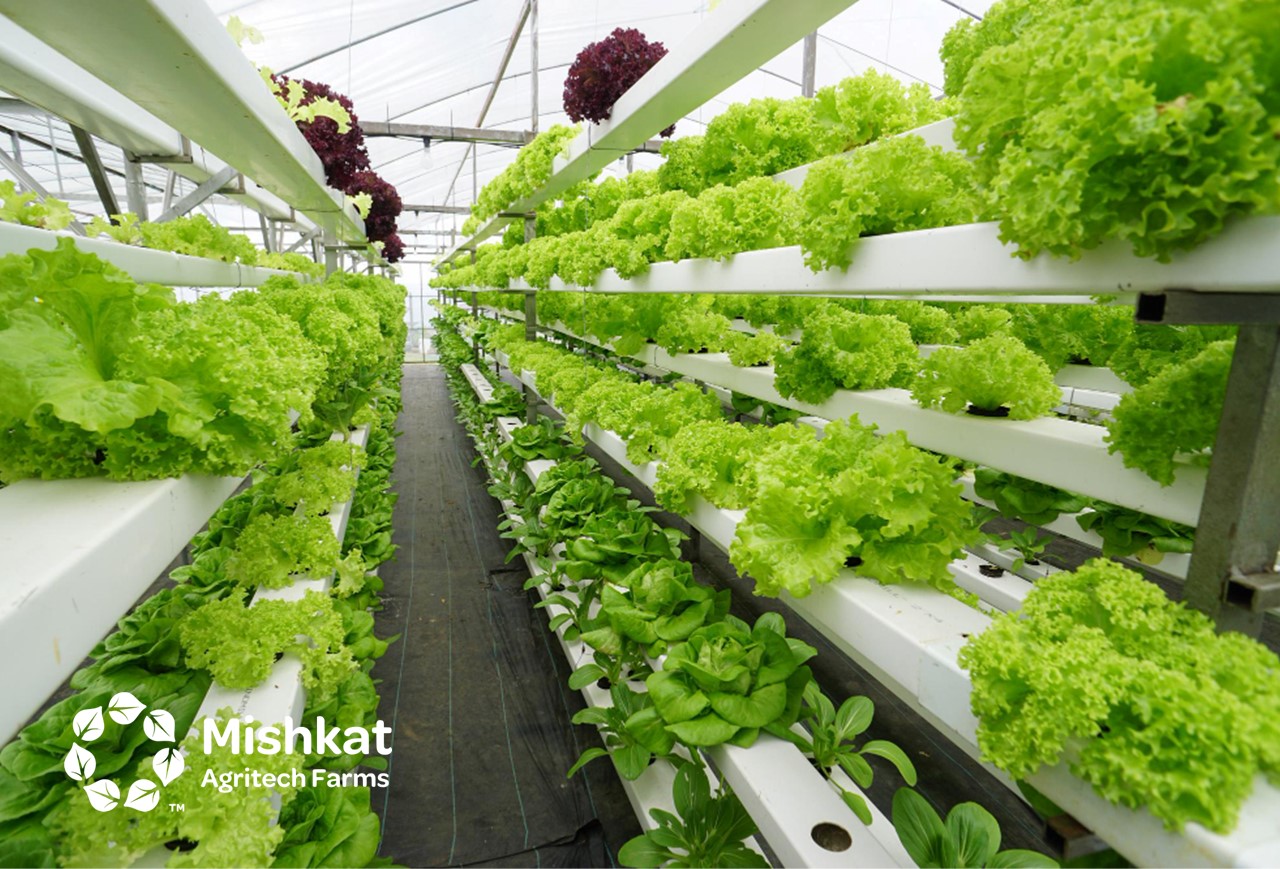
Vertical Farming is a farming method that uses stacked layers to grow crops indoors, typically without soil, using farming technology to control light, temperature, humidity, airflow, and nutrition. Vertical systems can be hydroponic or other soilless systems. The core promise is that controlled conditions reduce variability, letting you grow consistent crops year-round.
What it is not:
- It is not a guaranteed profit machine.
- It is not a plug-and-play replacement for a greenhouse.
- It is not a shortcut around management, training, and process discipline.
Vertical Farming works when the business model, crop strategy, and operating systems are engineered together. Farming technology can amplify results, but it can also amplify mistakes.
Vertical Farming models that work in Saudi Arabia
Vertical Farming is not one monolithic design. The best model depends on target crops, climate load, labor, and the buyer you serve. Hospitality developers care about freshness, storytelling, and reliable supply. Investors care about margin, payback, and operating stability. Greenhouse owners care about integration and risk.
Three common models
1) Commercial indoor Vertical Farming for retail and food service
This is the classic “stacked layers indoors” approach. It relies heavily on farming technology and tight systems control.
2) Hybrid model: greenhouse plus vertical modules
Use greenhouses for sun-driven crops and vertical modules for herbs and leafy greens. This reduces climate and energy exposure while keeping the advantages of year-round supply.
Turn your vision into a data-backed plan with Mishkat
Book a quick, free assessment session with the Mishkat Services team: we define your goals and align them with the market and your budget, and deliver a one-page roadmap with expected returns, operating options, and linking to a purchase agreement when needed, with no obligation.
3) Hospitality-integrated micro-farms
Smaller Vertical Farming footprints located near kitchens, designed around consumption patterns. This is often the easiest way to learn, discover operational needs, and validate crop-market fit.
What to grow in Vertical Farming in Saudi Arabia
Crops are the economic engine. The goal is to grow items with:
- High value per kilogram
- Short shelf life (where freshness is priced)
- Consistent demand
- Strong fit with indoor controlled systems
Best-fit crops for Vertical Farming:
- Leafy greens (romaine, arugula, mixed greens)
- Culinary herbs (basil, mint, parsley)
- Microgreens (high margin, fast turns)
- Select specialty items (edible flowers, some berries) with careful method control
Avoid at the start:
- Low-value crops with long cycles
- Crops that need pollination complexity
- Crops with heavy biomass that stress stacked systems
Your crop list should match your method, your labor, and your buyer’s consumption rhythm.
Farming technology stack: what actually matters
Farming technology is a means, not a product. Investors often buy “features” instead of reliability. The right technology choices stabilize the environment, protect crops, and reduce operator stress.
The systems that deserve your budget
- Lighting systems that deliver uniform coverage across layers
- HVAC and dehumidification sized for Saudi climate peaks
- Water treatment and filtration that protect hydroponics from scaling and pathogens
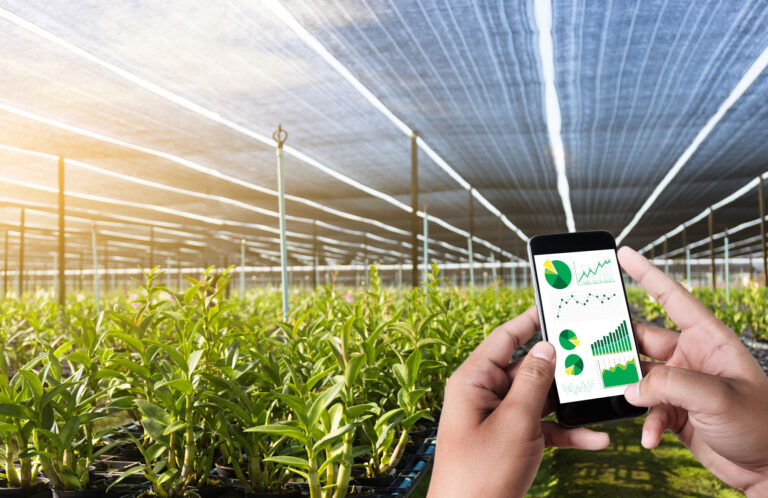
- Sensors that track temperature, humidity, CO2, and nutrient dosing
- Alarms and redundancy (pumps, power, critical controls)
What to measure daily
A practical method is to measure what prevents fast failure:
- Nutrient balance (EC and pH)
- Root-zone temperature
- Air temperature and humidity
- Airflow uniformity across stacked layers
- Water quality basics (especially in hydroponic loops)
If you cannot measure it, you cannot manage it. And if you cannot manage it, the environment will manage you.
Hydroponics, soil-free methods, and why investors should care
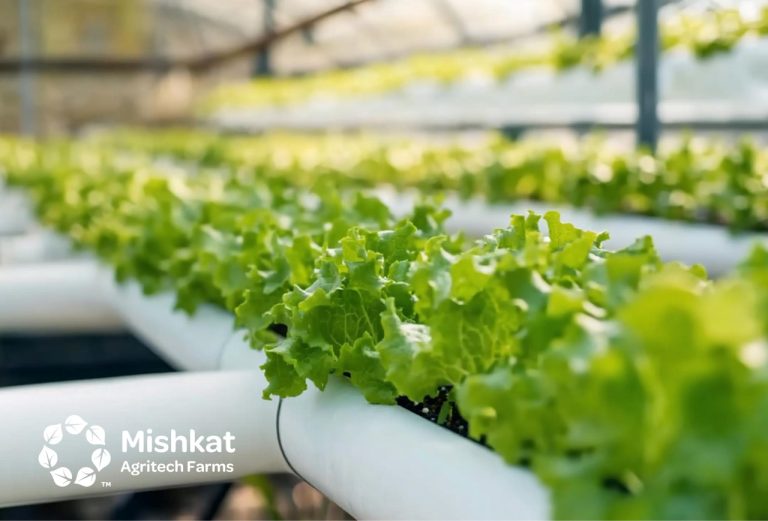
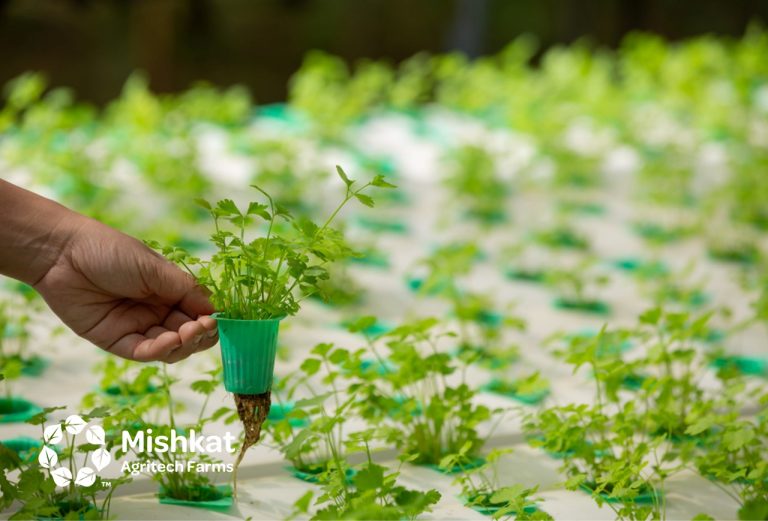
Most Vertical Farming projects rely on hydroponics because it fits stacked systems and supports repeatable growing. Removing soil improves hygiene and consistency, but it also demands discipline.
Turn your vision into a data-backed plan with Mishkat
Book a quick, free assessment session with the Mishkat Services team: we define your goals and align them with the market and your budget, and deliver a one-page roadmap with expected returns, operating options, and linking to a purchase agreement when needed, with no obligation.
Why hydroponics fits Vertical Farming
Hydroponics supports:
- Uniform nutrition delivery
- Cleaner workflows indoors
- Faster iteration in crop “recipes”
- Better integration with farming technology monitoring
In hydroponic systems, a 2024 open-access review reports water usage reductions of more than 90% compared with soil agriculture in some setups, depending on crop and recycling. Water savings are real, but only when the method includes filtration, sanitation, and tight operating routines.
Hydroponic vs soil thinking, a simple translation
Soil thinking: “the soil buffers my mistakes.”
Hydroponic thinking: “my system reveals my mistakes immediately.”
That’s why the right guide is not just a design spec. It is an operating guide that builds technique and discipline.
Designing Vertical Farming to survive Saudi climate and costs
The Saudi climate is the constraint you cannot negotiate with. Cooling load, humidity control, and summer peaks can dominate consumption costs. Design choices must reduce ongoing load while protecting the environment in stacked layers.
The climate-first design checklist
- Size cooling for peak summer conditions, not average days
- Plan humidity control as a primary system, not an add-on
- Treat airflow as a design feature, not a fan choice
- Make maintenance access easy across stacked layers
- Add redundancy for pumps, alarms, and critical controls
A simple framework: the “3C” decision filter
Use this filter to evaluate any Vertical Farming concept:
- Crop value
Does the crop’s margin justify the cost of indoor systems? - Climate load
Can the environment remain stable under Saudi peaks without destroying consumption economics? - Customer pull
Is demand stable enough to avoid inventory waste and pricing pressure?
If any “C” fails, adjust the model before you build.
Operating routines: the difference between success and pain
Most Vertical Farming failures are not design failures. They are operating failures: training gaps, hygiene drift, inconsistent technique, and unclear accountability.
The operating method that reduces surprises
Use a method built around:
- Standard operating procedures (SOPs)
- Short daily checks
- Weekly trend review
- Clear escalation rules
Turn your vision into a data-backed plan with Mishkat
Book a quick, free assessment session with the Mishkat Services team: we define your goals and align them with the market and your budget, and deliver a one-page roadmap with expected returns, operating options, and linking to a purchase agreement when needed, with no obligation.
A reliable farming method is boring by design. Boring is profitable.
The “Daily 12” checklist
Use this checklist to keep systems stable:
- Check temperature and humidity trends
- Confirm airflow uniformity across layers
- Validate alarms and critical setpoints
- Check nutrient EC and pH
- Inspect roots and visible plant stress
- Confirm water clarity and filtration
- Inspect pumps and backup systems
- Check lighting uniformity
- Review harvest and packing schedule
- Check sanitation tasks completion
- Log anomalies (don’t rely on memory)
- Review consumption forecast vs harvest plan
Costs, unit economics, and what investors should model
Vertical Farming economics are driven by recurring consumption, not just CapEx. Model operational reality before you commit.
The cost categories that matter most
- Electricity and climate control
- Labor and training
- Consumables (nutrients, media, packaging)
- Water treatment and sanitation
- Maintenance and replacement cycles
- Quality losses (waste, downgrades)
A table to keep planning honest
| Cost driver | What to model | Why it matters |
|---|---|---|
| Energy | monthly kWh and peak demand | climate systems decide survival |
| Labor | minutes per tray/layer task | stacked work can inflate labor |
| Yield | saleable output, not total output | buyers pay for quality, not volume |
| Waste | spoilage and downgrades | consumption mistakes kill margin |
| Maintenance | downtime probability | systems fail fast without redundancy |
Don’t finance a dream. Finance a method.
A quick-win mini case: hospitality pilot inside Riyadh
A hospitality operator wants year-round herbs with consistent flavor and story value. They choose a small Vertical Farming module near the kitchen, with stacked layers and a simple farming technology set.
Setup
- Target crops: basil, mint, arugula
- Goal: daily fresh supply for predictable consumption
- Constraints: summer climate peaks, limited space
Steps
- Start with one crop “recipe” per product and lock it for two weeks
- Train staff on one method and one sanitation routine
- Track consumption daily, harvest daily, pack immediately
- Run weekly review to discover drift in the environment
- Expand only after two stable harvest cycles
Expected outcome
Within 6–10 weeks, the operator should learn true labor minutes, discover their waste drivers, and validate advantages in menu consistency. If performance holds, they scale into a larger Vertical Farming footprint or integrate with a greenhouse partner.
Advantages and challenges for Saudi investors
Turn your vision into a data-backed plan with Mishkat
Book a quick, free assessment session with the Mishkat Services team: we define your goals and align them with the market and your budget, and deliver a one-page roadmap with expected returns, operating options, and linking to a purchase agreement when needed, with no obligation.
This section is not marketing. It is a practical place to compare advantages and challenges in a way that helps your team design the right method, pick the right systems, and protect crops under real Saudi conditions.
Advantages you can monetize
- The advantages of tighter freshness windows show up when agriculture delivery is short and crops reach kitchens quickly, often improving sustainable customer trust.
- The advantages of consistent quality appear when environmental hygiene is stable indoors, and chefs can plan menus without surprise defects.
- The advantages of predictable scheduling matter when agriculture buyers want steady crops, and sustainable contracts depend on repeatable supply.
- The advantages of traceability improve when environmental records are consistent, and agriculture teams can prove how crops were grown indoors.
- The advantages of year-round supply can help agriculture planning when climate extremes disrupt open production, and sustainable sourcing becomes a priority.
- The advantages of cleaner handling grow when soil is removed from the workflow, and environmental sanitation keeps crops safer indoors.
- The advantages of fast cycle value are strongest when hydroponics supports uniform growth, and agriculture buyers pay for premium crops.
- The advantages of flavor control appear when hydroponics and nutrition are tuned, and environmental techniques keep aroma stable indoors.
- The advantages of reduced spoilage show up when postharvest is integrated, and consumption losses drop for premium crops.
- The advantages of space efficiency matter when hydroponics is paired with careful layout, and agriculture sites are limited in buildable footprint.
- The advantages of rapid iteration appear when hydroponics recipes are measured, and agriculture teams can adjust crops in weeks, not seasons.
- The advantages of lower pesticide pressure can improve environmental outcomes when biosecurity is strong and crops remain clean indoors.
- The advantages of guest experience can support hospitality when hydroponics is visible, and agriculture storytelling is backed by real crops.
- The advantages of staff skill building grow when training is structured, and environmental audits reinforce sustainable routines.
- The advantages of stable supply can protect brand promises when indoor sanitation reduces defects and crops stay consistent.
- The advantages of premium positioning improve when indoor presentation is strong and environmental quality control is proven.
- The advantages of diversified revenue can help agriculture investors when specialty crops perform and sustainable pricing holds.
- The advantages of long-term reliability appear when maintenance is planned and environmental techniques prevent downtime surprises.
Challenges you must engineer around
- The challenges of shared water loops appear when soil or debris enters the system, so agriculture hygiene and growing discipline are critical indoors.
- The challenges of humidity and condensation can stress crops, so systems design must hold stable conditions and protect indoor surfaces.
- The challenges of staff turnover amplify errors, so agriculture training and a clear guide must be continuous indoors.
- The challenges of pump failures are fast and unforgiving, so systems redundancy and a tested method matter for growing stability.
- The challenges of uneven airflow show up in stacked zones, so techniques must keep growing uniform across layers indoors.
- The challenges of biofilm and contamination can spread through hydroponics, so sanitation techniques must be strict under real conditions.
- The challenges of quality drift appear when the environment is not consistent, so agriculture monitoring and controlled response are required.
- The challenges of maintenance access appear in stacked layouts, so stacked safety and cleaning routines must be built into the method.
- The challenges of energy spikes can raise consumption costs, so agriculture scheduling and systems tuning matter in peak conditions.
- The challenges of poor data discipline are common, so a guide for logging keeps agriculture teams aligned and improves growing decisions.
- The challenges of nutrient instability can harm crops, so hydroponic dosing must be measured and adjusted under changing conditions.
- The challenges of pests inside a sealed site still exist, so environmental scouting techniques must be routine indoors.
- The challenges of labor minutes increase when layers are too dense, so layers design must match the method and the work pace.
- The challenges of cooling load can stress the environment, so climate strategy and controlled dehumidification must be sized correctly.
- The challenges of packaging delays can damage crops, so systems flow and cold handling techniques must be disciplined.
- The challenges of inconsistent seeding create uneven growing, so agriculture SOPs and a method for checks are essential indoors.
- The challenges of water quality variation affect hydroponic root health, so filtration and sanitation techniques protect crops.
- The challenges of poor cleaning can reintroduce soil risk, so indoor procedures must stay controlled and verified.
- The challenges of emergency response are real, so a guide and drills protect crops when systems alarms trigger.
- The challenges of scaling too fast are common, so the method should expand in stages and keep growing stable.
- The challenges of training gaps are expensive, so agriculture leaders must coach, audit, and reinforce techniques indoors.
- The challenges of buyer inconsistency can hurt margins, so agriculture contracts should match realistic growing capacity and conditions.
- The challenges of stale inventory waste money, so consumption tracking and harvest timing keep crops aligned with demand.
- The challenges of unclear ownership persist, so agriculture governance and a clear guide keep systems stable and teams accountable.
How to grow indoors: a practical guide for Saudi teams
This section is a hands-on guide for agriculture teams that want a repeatable method. The goal is to learn quickly, discover what drives quality, and protect advantages while reducing avoidable challenges in a harsh climate and a demanding market environment.
17 grow recipe prompts you can pilot
- Start with this guide: grow basil, then grow mint indoors, keep sustainable checks, environmental hygiene, and a method that logs consumption in systems for growing.
- Pilot this guide to grow arugula and grow lettuce indoors, keep sustainable cleaning, environmental routines, and a method that tracks consumption in systems for growing.
- Use this guide to grow romaine and grow kale indoors, keep sustainable staffing, environmental discipline, and a method that measures consumption in systems for growing.
- Follow this guide to grow parsley and grow cilantro indoors, keep sustainable handling, environmental standards, and a method that controls consumption in systems for growing.
- Try this guide to grow dill and grow chives indoors, keep sustainable timing, environmental hygiene, and a method that records consumption in systems for growing.
- Run this guide to grow microgreens and grow baby leaves indoors, keep sustainable trays, environmental sanitation, and a method that limits consumption in systems for growing.
- Keep this guide handy: grow basil and grow oregano indoors, keep sustainable prep, environmental routines, and a method that forecasts consumption in systems for growing.
- Use the same guide to grow strawberries and grow edible flowers indoors, keep sustainable harvest, environmental hygiene, and a method that maps consumption in systems for growing.
- Apply this guide to grow spinach and grow rocket indoors, keep sustainable cooling, environmental consistency, and a method that checks consumption in systems for growing.
- Repeat this guide to grow coriander and grow thyme indoors, keep sustainable packaging, environmental hygiene, and a method that audits consumption in systems for growing.
- Work through this guide to grow bok choy and grow tatsoi indoors, keep sustainable airflow, environmental routines, and a method that stabilizes consumption in systems for growing.
- Use this guide to grow basil and grow sage indoors, keep sustainable training, environmental hygiene, and a method that standardizes consumption in systems for growing.
- Use this guide to grow rosemary and grow lavender indoors, keep sustainable lighting, environmental control, and a method that reduces consumption in systems for growing.
- Use this guide to grow spinach and grow chard indoors, keep sustainable spacing, environmental hygiene, and a method that monitors consumption in systems for growing.
- Use this guide to grow arugula and grow watercress indoors, keep sustainable cleaning, environmental routines, and a method that tracks consumption in systems for growing.
- Use this guide to grow lettuce and grow mixed greens indoors, keep sustainable harvesting, environmental hygiene, and a method that manages consumption in systems for growing.
- Use this guide to grow herbs and grow greens indoors, keep sustainable SOPs, environmental hygiene, and a method that records consumption in systems for growing.
These prompts are only useful when you record conditions and keep the environment stable, so you can learn faster and discover what actually works in your facility.
Soil-to-hydroponics notes for operators
- Soil habits can create preventable risk; one of the advantages of soil-free work is simpler sanitation indoors.
- Soil tracking should be explicit; one of the advantages is knowing when soil contamination threatens the environment.
- Soil removal changes workflow; one of the advantages is fewer surprises in agriculture hygiene and the environment.
- Soil is not the target; one of the advantages is stable flavor when agriculture routines stay clean indoors.
- Soil myths waste time; one of the advantages is that hydroponics can standardize nutrient delivery in the environment.
- Soil variability creates challenges; one of the advantages is that hydroponic loops reduce those challenges indoors.
- Soil-free SOPs reduce challenges; one of the advantages is a clearer guide for agriculture teams to follow.
- Soil stays outside; one of the advantages is that hydroponic cleaning keeps the environment consistent indoors.
- Soil management still matters as an idea; one of the advantages is that teams learn faster in hydroponics when logs are strict.
- Soil contact is a trigger; one of the advantages is that you can discover root causes by tracing soil pathways.
- Soil residue causes challenges; one of the advantages is that you can discover issues in agriculture audits earlier.
- Soil is a training topic; one of the advantages is that teams learn the method without mixing old habits indoors.
- Soil-free handling supports sustainable goals; one of the advantages is better environmental control in the environment.
- Soil mistakes raise costs; one of the advantages is reduced consumption waste when procedures are stable indoors.
- Soil-free protocols support sustainable goals; one of the advantages is that hydroponics reduces avoidable loss in agriculture.
- Soil-free design improves sustainable outcomes; one of the advantages is environmental consistency in hot climate work.
- Soil can be reintroduced by tools; one of the advantages is that a simple guide prevents that in agriculture teams.
- Soil can enter through packaging; one of the advantages is that you can discover the source with good records.
- Soil is not a warranty; one of the challenges is staff drift when the environment is not monitored indoors.
- Soil-free does not mean problem-free; one of the challenges is humidity control in the environment during summer climate peaks.
- Soil-free farms still face challenges; one of the challenges is maintenance discipline in agriculture systems indoors.
- Soil-free work still has challenges; one of the challenges is that teams must learn and discover issues before scaling.
Hydroponic environment controls that prevent downtime
- A hydroponic room should keep the environment stable, and a hydroponic log should show drift in pH before symptoms.
- A hydroponic loop should protect the environment from biofilm, and a hydroponic rinse schedule should be written as a simple guide.
- A hydroponic filter protects the environment, and hydroponics testing should be routine under changing conditions.
- A hydroponic dosing plan protects the environment, and hydroponics records help teams learn what works.
- A hydroponic sump protects the environment, and hydroponics audits help you discover where losses begin.
- A hydroponic reservoir protects the environment, and hydroponics SOPs reduce soil transfer in tools.
- A hydroponic pump protects the environment, and hydroponics maintenance prevents stacked zones from drying out.
- A hydroponic alarm protects the environment, and hydroponics training helps staff respond in indoor emergencies.
- A hydroponic schedule protects the environment, and hydroponics discipline helps agriculture teams stay consistent.
- A hydroponic sanitation plan protects the environment, and hydroponics techniques reduce contamination in stacked layers.
- A hydroponic temperature check protects the environment, and hydroponics techniques reduce root stress in stacked layers.
- A hydroponic EC check protects the environment, and hydroponics techniques improve uniformity across layers.
- A hydroponic water test protects the environment, and hydroponics practices should match local conditions.
- A hydroponic lighting plan protects the environment, and hydroponic spacing supports airflow across stacked layers.
- A hydroponic airflow check protects the environment, and hydroponic airflow reduces humidity pockets in stacked layers.
- A hydroponic drainage check protects the environment, and hydroponic drainage keeps floors clean around stacked layers.
- A hydroponic scouting routine protects the environment, and hydroponic scouting helps you discover early pest signals.
- A hydroponic cleaning routine protects the environment, and hydroponic cleaning keeps soil away from root zones.
- A hydroponic transplant routine protects the environment, and hydroponic transplant steps help you learn consistent timing.
- A hydroponic harvest routine protects the environment, and hydroponic handling supports sustainable quality in layers.
- A hydroponic commissioning plan protects the environment, and hydroponic commissioning tests climate response in layers.
- A hydroponic review protects the environment, and hydroponic review tracks consumption and waste in agriculture.
Stacked layout checks for stable conditions
- A stacked plan should keep indoor work simple, keep soil out, and keep the environment predictable. These five notes are a practical guide for sustainable operations under Saudi conditions.
- A stacked aisle plan should protect airflow, and stacked access should make cleaning fast in an indoor environment with stable conditions. This paragraph helps you discover small blockages early, and it keeps agriculture routines aligned with sustainable targets.
- A stacked spacing plan should keep humidity uniform, and stacked zones should avoid dead corners in an indoor environment with stable conditions. This is where teams learn to balance layers and labor, and it supports growing consistency without added complexity.
- A stacked workflow plan should reduce handling, and stacked carts should move smoothly in an indoor environment with stable conditions. It helps you discover where layers create bottlenecks, and it protects growing quality for premium products.
- A stacked maintenance plan should reduce downtime, and stacked repairs should be safe in an indoor environment with stable conditions. It helps you discover which systems drift first, and it supports hydroponics readiness in mixed operations.
- A stacked commissioning plan should validate setpoints, and stacked audits should stay routine in an indoor environment with stable conditions and stable conditions. It helps teams learn faster, it supports hydroponics discipline, and it keeps soil risk low.
- Saudi agriculture teams tend to win when a sustainable plan keeps soil out of production areas and trains simple techniques for cleaning. Use climate logs to discover how layers affect growing, and keep hydroponics routines aligned with daily checks.
- A sustainable checklist should pair soil monitoring with techniques that reduce labor errors across layers, especially during peak season staffing.
Keep sustainable audits monthly, and treat soil transfer as a training item with simple techniques.
Indoor agriculture scorecard for Saudi operators
Turn your vision into a data-backed plan with Mishkat
Book a quick, free assessment session with the Mishkat Services team: we define your goals and align them with the market and your budget, and deliver a one-page roadmap with expected returns, operating options, and linking to a purchase agreement when needed, with no obligation.
Use this simple scorecard to decide whether a Vertical Farming concept is ready for investment.
The scorecard
Give each item a score from 1 to 5.
| Dimension | What “5” looks like | Common “1” failure |
|---|---|---|
| Crop fit | premium demand and stable pricing | low value, unstable demand |
| Climate strategy | stable indoor setpoints year-round | undersized cooling and humidity control |
| Systems resilience | redundancy and alarms tested | single points of failure |
| Labor realism | trained team and clear method | vague roles and no training plan |
| Data discipline | logs drive decisions weekly | no records, repeated mistakes |
| Route-to-market | predictable buyer and consumption forecast | inconsistent buyers, waste rises |
A strong score does not guarantee success, but a weak score almost guarantees struggle.
Vertical Farming risks, objections, and edge cases
Investors should hear objections early. Vertical Farming is not for every buyer, every crop, or every site.
Objection: “Energy cost makes this impossible”
Energy is the biggest recurring cost for most projects. But “impossible” is not the right conclusion. The right conclusion is: match crop value, design for climate peaks, and reduce unnecessary load. Hybrid models (greenhouse plus vertical modules) are often the best method when energy is the binding constraint.
Objection: “We can’t find skilled operators”
This is real. Vertical Farming requires operators who understand agriculture and systems. The fix is not a hiring miracle, it’s a training method and a clear guide, with audits and checklists. Start smaller, learn faster, discover your gaps, then scale.
Objection: “Humidity and disease will ruin crops”
Humidity management is one of the hardest challenges indoors. Address it with:
- airflow design across stacked layers
- dehumidification sized for peak load
- sanitation techniques that prevent biofilm
- scouting and quarantine routines
Edge case: hospitality micro-farms
Hospitality farms can succeed even when large commercial farms struggle, because demand is local and consumption is known. But they still need a method, and they still need systems discipline.
CTA
If you want a Vertical Farming plan that fits Saudi conditions, start with a feasibility review, a crop strategy, and an operating guide that your team can actually follow. Mishkat Company can support the full path, from concept and farm design to hydroponics and aquaponics strategy, management routines, and agronomist training for operators.
FAQs About Vertical Farming
How is Vertical Farming different from a greenhouse in Saudi Arabia?
Vertical Farming depends more on farming technology and indoor climate control, while greenhouses can use sunlight and ventilation to reduce energy load. In Saudi conditions, the difference is often driven by cooling and humidity management, plus how stacked layers change labor and access.
What crops are most profitable for Vertical Farming?
High-value, fast-turn crops with consistent demand tend to perform best: leafy greens, culinary herbs, and microgreens. Profit depends on margin after energy, labor, and consumption losses, not just yield.
Is hydroponics required for Vertical Farming?
Not always, but hydroponics is common because it fits stacked systems and allows precise nutrition control. Soil is usually avoided indoors to reduce contamination, improve hygiene, and keep the environment stable.
How long does it take to break even?
Payback depends on CapEx, energy consumption, labor, price, and waste. Many projects fail because they scale before they learn their true unit economics. Start with a pilot, discover your real costs, then scale.
What are the biggest operational risks?
Common risks include pump failures, humidity spikes, biofilm, staff turnover, and inconsistent technique. These risks are managed with redundancy, alarms, training, and a clear method.
Can Vertical Farming support farm-to-table hospitality?
Yes, especially when the farm is designed around menu planning and consumption patterns. The advantages show up in freshness, consistency, and storytelling, but only when operations stay disciplined.
What does “stacked layers” change operationally?
Stacked layers increase space efficiency but can increase labor minutes if access is poor. They also increase the need for uniform airflow, consistent lighting, and cleaning routines across layers.
How should investors evaluate a project before building?
Use a scorecard: crop value, climate strategy, systems resilience, labor realism, data discipline, and route-to-market. If any category is weak, adjust the method and design before committing capital.
What is the best way to start learning without over-risking capital?
Start with a small pilot that targets a narrow crop list and a clear buyer. Use short cycles to learn, discover your true operating costs, refine techniques, then scale in stages.
Conclusion About Vertical Farming
- Vertical Farming in Saudi Arabia can work when crop value matches climate and energy realities.
- Farming technology improves results only when the operating method is disciplined.
- Stacked layers improve space efficiency, but they demand better access, airflow, and cleaning.
- Hydroponics supports repeatable growing, but it requires hygiene, filtration, and training.
- The environment indoors can drift fast, so logs and alarms are not optional.
- Start with a pilot, learn quickly, discover gaps, then scale with confidence.
Vertical Farming is a systems business disguised as agriculture. If you treat it like a gadget purchase, it will punish you. If you treat it like an operating method, it can deliver stable supply, premium positioning, and a strong fit for modern Saudi food demand.
Proof and credibility About Vertical Farming
Mishkat Company Services include farm design, hydroponics and aquaponics, farm management support, hospitality integration, and agronomist training, so operators can move from concept to repeatable operations.
This guide is built on practical operational logic: climate-first design, process discipline, and unit economics. The frameworks above are designed to be used in real projects, with checklists and scorecards that make risks visible early. The goal is not to “sell vertical”, it is to make decision-making defensible and execution realistic.
Sources About Vertical Farming
- General Authority for Statistics (GASTAT), 2025, https://www.stats.gov.sa/en/w/news/8
- Technology in Horticulture (open-access review), 2024, https://www.maxapress.com/article/doi/10.48130/tihort-0024-0002
- Food and Agriculture Organization of the United Nations (FAO) eLearning, 2023, https://elearning.fao.org/course/view.php?id=676
- Aalto University Thesis, 2019, https://aaltodoc.aalto.fi/bitstreams/cb017d38-a7ce-4a00-bbc4-6961d2a3302c/download
Turn your vision into a data-backed plan with Mishkat
Book a quick, free assessment session with the Mishkat Services team: we define your goals and align them with the market and your budget, and deliver a one-page roadmap with expected returns, operating options, and linking to a purchase agreement when needed, with no obligation.