Indoor farming is moving from niche concept to strategic infrastructure in Saudi Arabia. For greenhouse owners, soilless growers, and hospitality developers, the question is no longer whether it can work, but which model fits local water, energy, labor, and market realities. This guide explains the options, the economics, the design choices, and the common mistakes, so you can evaluate the model with a practical investor lens.
Table of Contents
Why indoor farming matters in Saudi Arabia
If land is available but water is limited, should you still expand? If demand is growing but quality swings hurt margins, can a more controlled model fix the problem? These are the questions driving serious interest in indoor farming across Saudi Arabia.
Indoor farming matters because it gives owners and operators tighter control over climate, irrigation, nutrition, hygiene, crop timing, and consistency. In a market where heat, salinity, logistics, and labor quality can all affect output, it offers a way to reduce variability and bring production closer to the customer. For investors, this is not one thing. It ranges from simple protected structures to highly automated indoor vertical farms. That is why the category should be planned as a spectrum, not as a single technology bet.
This article will define indoor farming in the Saudi context, explain where it creates value, compare major systems, show how to size and evaluate projects, and close with a practical framework for decision making.
What indoor farming really includes
Indoor farming is often used as a catchall phrase, but not every enclosed project is the same. In practice, Saudi projects usually fall into four groups: protected greenhouse production, climate-controlled greenhouse production, warehouse-style indoor vertical farms, and hybrid systems that combine protected structures with packhouse, cooling, nursery, or service functions.
At the simplest end, it may mean a greenhouse with shade, basic cooling, fertigation, and disciplined crop protocols. At the more advanced end, it may mean a sealed facility with artificial lighting, automation, racking, recirculating water, and strict environmental control. Both approaches fit the category, but their cost structure, energy exposure, staffing model, and risk profile are very different.
That distinction matters because many failed investments were not caused by the concept itself. They were caused by choosing the wrong format for the wrong crop, market, and utility profile. A hospitality project that needs premium herbs every day has a different logic from a large wholesale grower pushing cucumber volumes. A resort that wants a visible farm-to-table story may value experiential production as much as yield. A commercial operator may care only about cost per kilogram and packout quality.
Problem and stakes
The stakes are real. In 2024, protected vegetable production in Saudi Arabia reached 797 thousand tons, up 10.6 percent from 2023, which shows that controlled cultivation is already expanding and that the market is moving beyond pilot scale. In the same year, Saudi Arabia welcomed around 116 million domestic and inbound tourists, increasing the need for fresh, reliable produce across hotels, resorts, mixed-use destinations, and food service operations. Globally, agriculture still accounts for about 70 percent of freshwater withdrawals, which keeps water efficiency at the center of every indoor farming decision in a dry climate.
Those numbers shape the investment case in two ways. First, controlled production is becoming more relevant because fresh demand is rising in urban and hospitality centers. Second, the model is under pressure to prove that tighter control, better quality, and faster turns can offset higher capital and energy intensity. Saudi Arabia’s population reached about 35.3 million in 2024, which adds another layer of demand concentration around major cities where shorter delivery windows can improve freshness. (World Bank Open Data)
Indoor farming models and where each one wins
The smartest way to think about indoor farming is to match the model to the market.
Indoor farming for greenhouse upgrades
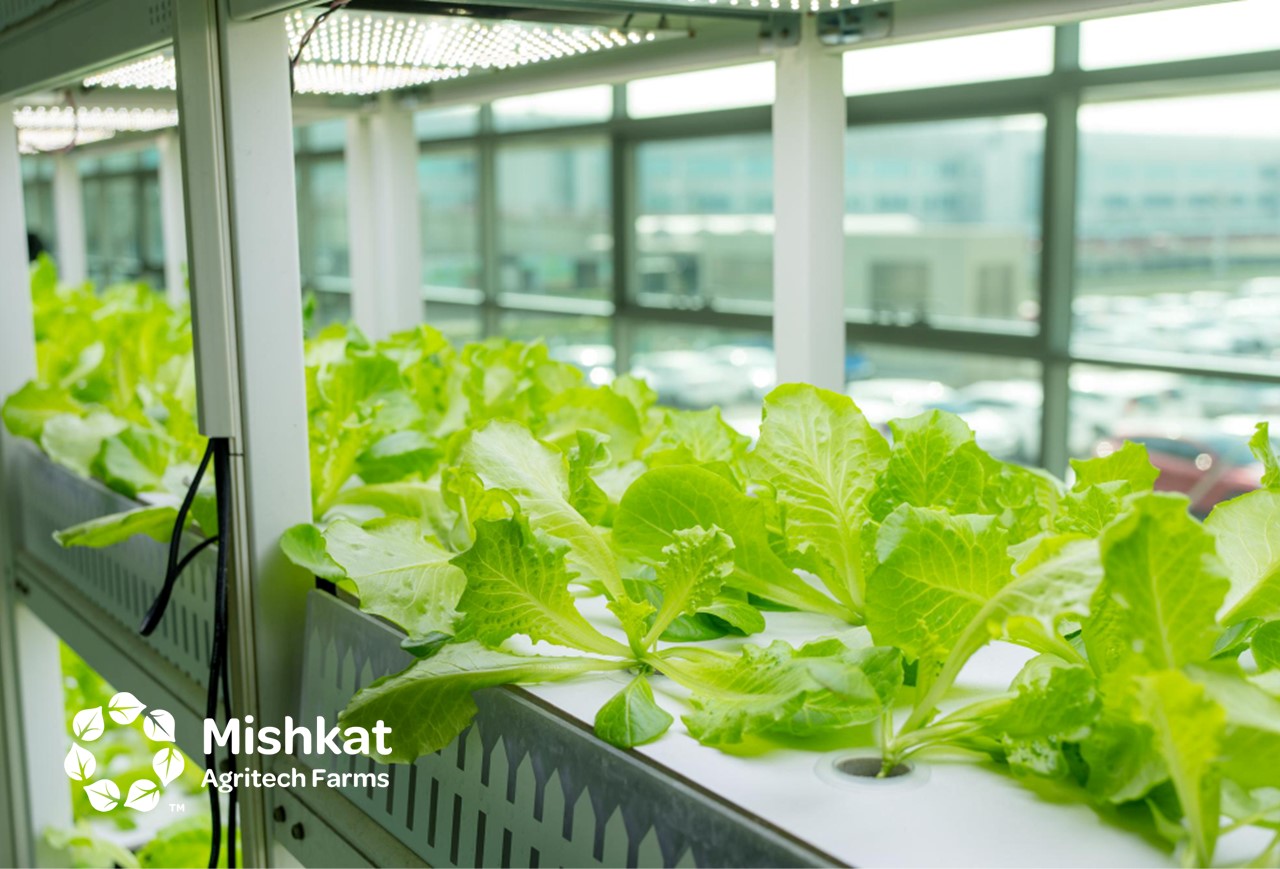
This is usually the best first move for existing growers. Instead of jumping straight into a fully artificial-light facility, owners improve structure quality, irrigation control, fertigation precision, climate tools, crop scheduling, and post-harvest handling. This kind of indoor farming can lift consistency without taking on the full energy burden of multi-layer production.
It works well for growers who already have land, labor, water access, and a nearby market. It is also a natural entry point for investors who want to build indoor farming capability in stages.
Indoor farming for premium leafy greens and herbs
Turn your vision into a data-backed plan with Mishkat
Book a quick, free assessment session with the Mishkat Services team: we define your goals and align them with the market and your budget, and deliver a one-page roadmap with expected returns, operating options, and linking to a purchase agreement when needed, with no obligation.
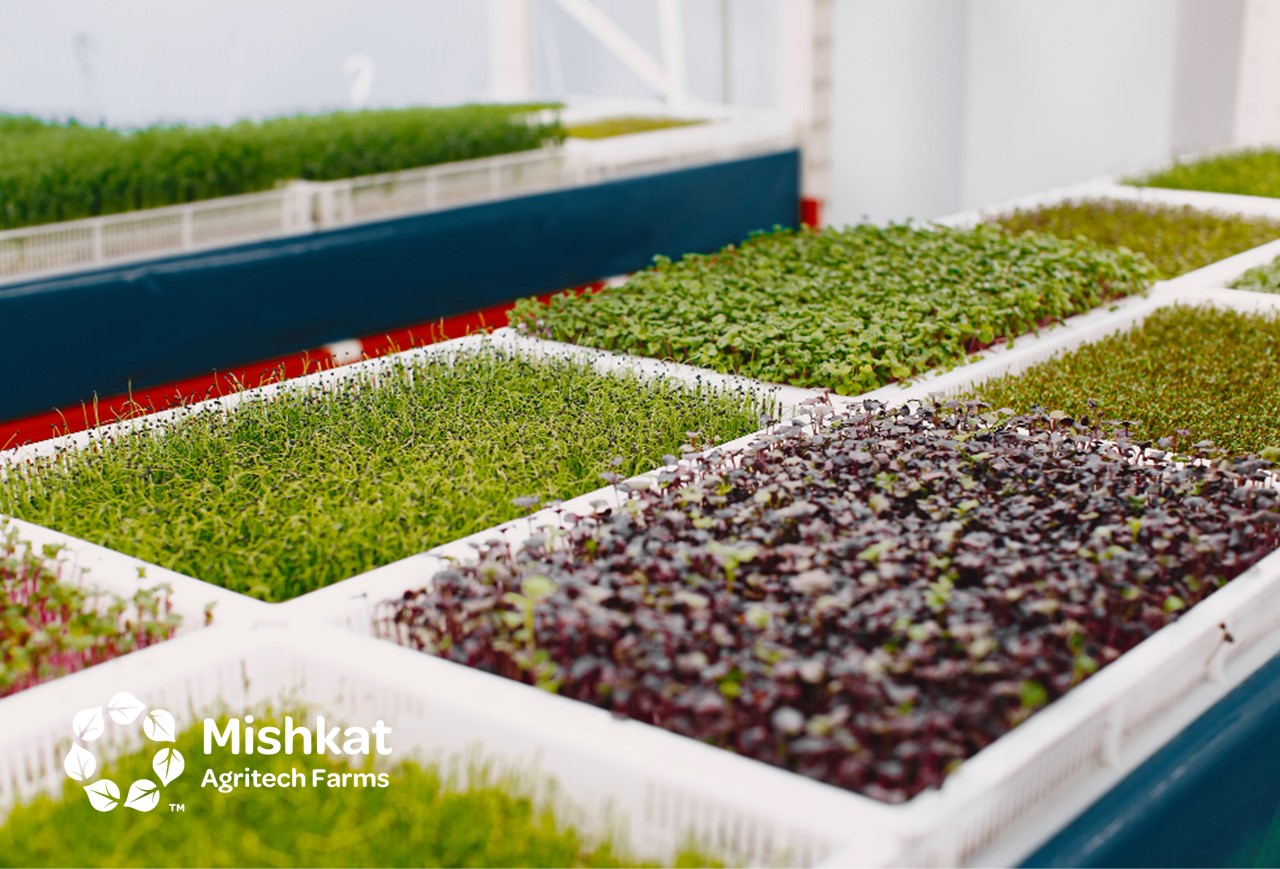
When the target customer is a hotel, premium grocer, compound, or food service account, indoor farming can justify a tighter quality promise. Leafy greens, herbs, and selected micro crops respond well to controlled production, short harvest cycles, and frequent delivery.
This is the segment where indoor farming often has the strongest pricing story. The value is not only yield. It is appearance, shelf life, cleanliness, standardization, and the ability to harvest on demand.
Indoor farming for hospitality and destination projects
For resorts, branded residences, and mixed-use hospitality projects, indoor farming can be both an operating asset and a guest experience asset. The produce supports kitchens, the farm supports storytelling, and the visible sustainability message strengthens positioning.
In this use case, indoor farming is not judged only by cost per kilogram. It is also judged by brand value, menu freshness, reduced shrink, guest engagement, and supply resilience.
Indoor farming for urban infill and local delivery
Urban farming becomes more attractive when land is limited but the market is dense. Indoor farming can be placed close to consumption centers, reducing handling time and preserving quality. This matters most for tender crops with short shelf life.
For investors, the appeal of this indoor farming model is proximity. For operators, the challenge is facility cost and utility discipline.
Indoor farming systems you can choose from
Indoor farming systems vary more than many first-time investors expect. The right choice depends on crop, climate control target, labor strategy, and utility price exposure.
| Indoor farming model | Best fit in Saudi Arabia | Main strength | Main caution |
|---|---|---|---|
| Naturally ventilated or lightly protected greenhouse | Entry-level upgrades, lower capex sites | Lowest cost path into indoor farming | Less control in peak heat |
| Climate-controlled greenhouse | Commercial vegetables, stronger consistency goals | Good balance between output and control | Cooling and maintenance discipline matter |
| Hydroponic greenhouse | Leafy greens, herbs, premium vegetables | Water-efficient indoor farming with strong crop control | Requires nutrient and sanitation rigor |
| Aquaponic indoor farming | Education, niche hospitality, integrated concepts | Strong story and circular systems appeal | More biological complexity |
| Fully indoor vertical farming | Premium greens near urban demand | Maximum control and year-round production | Highest capex and energy exposure |
| Hybrid indoor farming systems | Packhouse, nursery, production mix | Flexible phased expansion | Design complexity if poorly planned |
A useful rule is simple. The more sealed and technology-heavy the system becomes, the more it depends on strong operating discipline. Advanced systems can produce excellent results, but only when the management model is as strong as the hardware.
That is one reason Mishkat Company Services should be viewed as more than equipment selection. In Saudi Arabia, good design also includes crop planning, water strategy, climate assumptions, workflow design, and staff capability building. The physical system is only part of success.
A practical framework for evaluating indoor farming
Many investors ask whether indoor farming is profitable. The better question is this: under what conditions will it be profitable for this site, this crop mix, and this buyer?
Use the WEMC framework for indoor farming:
- Water: What is the source, quality, pressure, treatment need, and real delivered cost?
- Energy: What is the expected cooling, pumping, lighting, and backup requirement?
- Market: Who buys, how often, in what pack format, at what consistency level?
- Crop: Which crops match the climate envelope, facility type, and sales channel?
If one of these four pillars is weak, the model becomes harder to justify. If all four are aligned, it becomes much more resilient.
The indoor farming formula investors should use
Turn your vision into a data-backed plan with Mishkat
Book a quick, free assessment session with the Mishkat Services team: we define your goals and align them with the market and your budget, and deliver a one-page roadmap with expected returns, operating options, and linking to a purchase agreement when needed, with no obligation.
A simple screening formula helps:
Contribution per square meter = (Yield per square meter × Net selling price) – Variable production cost per square meter – Utility cost per square meter – Labor cost per square meter
Then ask three follow-up questions:
- Can indoor farming raise net selling price through quality, freshness, or premium positioning?
- Can indoor farming reduce variable cost through lower loss, better uniformity, and tighter planning?
- Can indoor farming keep utility and labor intensity within a realistic operating envelope?
If the answer is yes on the first two and controlled on the third, the project has a fair chance. If utility cost balloons or the market will not pay for quality, it may look impressive but stay financially weak.
What to stress-test before you sign
Use this checklist before approving an indoor farming project:
- Crop list is tied to actual buyers, not assumptions
- Water analysis is complete, including salinity and treatment cost
- Cooling strategy is sized for peak local conditions
- Packhouse and cold chain are included, not treated as an afterthought
- Labor model includes training, supervision, and hygiene routines
- Utility cost scenarios include normal months and peak summer months
- Crop trials are planned before full scale rollout
- Maintenance and spare parts access are budgeted
- Data logging and reporting are defined from day one
- Expansion path is phased, not all-or-nothing
This checklist sounds basic, but many weak projects skip one of these items. The result is usually the same: a technically attractive farm with unstable commercial performance.
How indoor farming creates value for greenhouse owners
For an existing greenhouse owner, indoor farming is usually less about novelty and more about margin protection. The main value drivers are better crop uniformity, better packout, reduced waste, lower disease pressure through cleaner routines, and a more reliable harvest calendar.
This approach also supports better segmentation. A grower can dedicate part of the facility to core commercial crops and part to higher-margin specialty lines. That allows the farm to serve two goals at once: stable base revenue and selective premium upside.
Another overlooked advantage of indoor farming is planning. When environmental control improves, harvest dates become more predictable. That improves labor scheduling, order confidence, and post-harvest coordination. In practice, reliable timing can be just as valuable as higher yield.
For greenhouse owners in Saudi Arabia, indoor farming also creates a pathway to upgrade without discarding existing assets. Cooling, fertigation, benches, nursery strategy, crop hygiene, and post-harvest flow can all be improved in stages. Mishkat Company Team can be valuable in this phase because many projects need a bridge between practical agronomy and commercial design, not just a list of equipment.
How indoor farming creates value for hospitality developers
Hospitality developers evaluate indoor farming differently from commercial growers. The question is not only how much the farm produces. The question is what it changes inside the broader guest and food operation.
Indoor farming can support menu consistency for herbs and leafy greens, especially where imported quality fluctuates or last-mile delivery adds waste. Indoor farming can also create a visible farm-to-table narrative that guests remember. In a resort or destination asset, that narrative can support dining, wellness, family activities, culinary classes, and sustainability communication.
This is where indoor and vertical farming can align with placemaking. A visible growing zone near a restaurant, culinary studio, or experience garden can make the development feel more distinctive. At the same time, back-of-house indoor farming can reduce shrink and improve freshness if crop choice stays disciplined.
The mistake is trying to make the farm supply everything. A hospitality project usually wins when it focuses on high-value, fast-moving, chef-relevant crops rather than bulk staples. That makes it a precision supply tool, not an unrealistic self-sufficiency promise.
Mishkat Company Services can support this kind of hospitality design when the farm must work operationally and visually. The design brief is broader than production alone. It includes guest flow, food safety, staff access, harvest timing, and the look and feel of the space.
Turn your vision into a data-backed plan with Mishkat
Book a quick, free assessment session with the Mishkat Services team: we define your goals and align them with the market and your budget, and deliver a one-page roadmap with expected returns, operating options, and linking to a purchase agreement when needed, with no obligation.
Indoor farming methods that fit Saudi conditions
Not every indoor farming method fits every region, crop, or business model. In Saudi Arabia, the key is to choose methods that respect heat, water quality, infrastructure quality, and market distance.
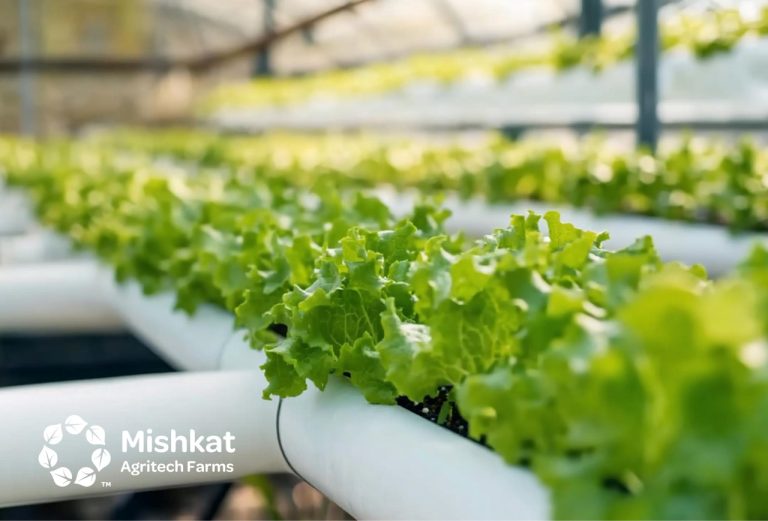
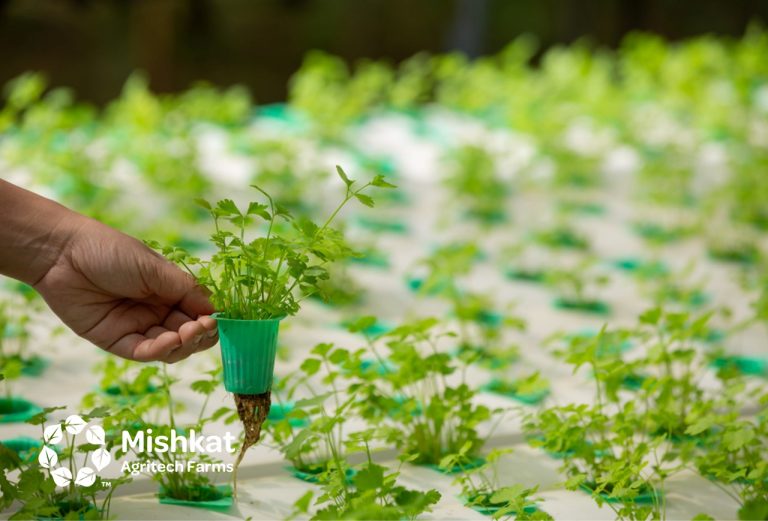
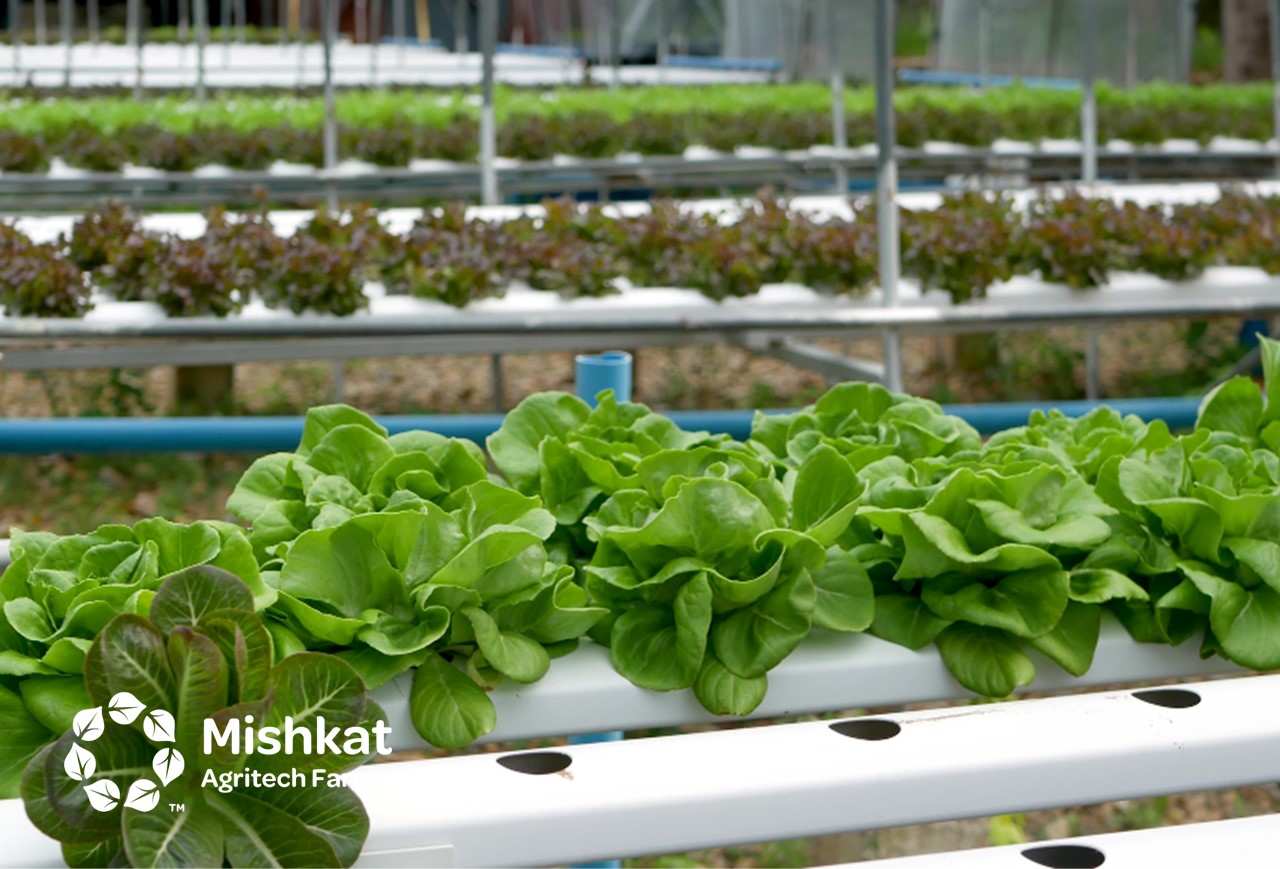
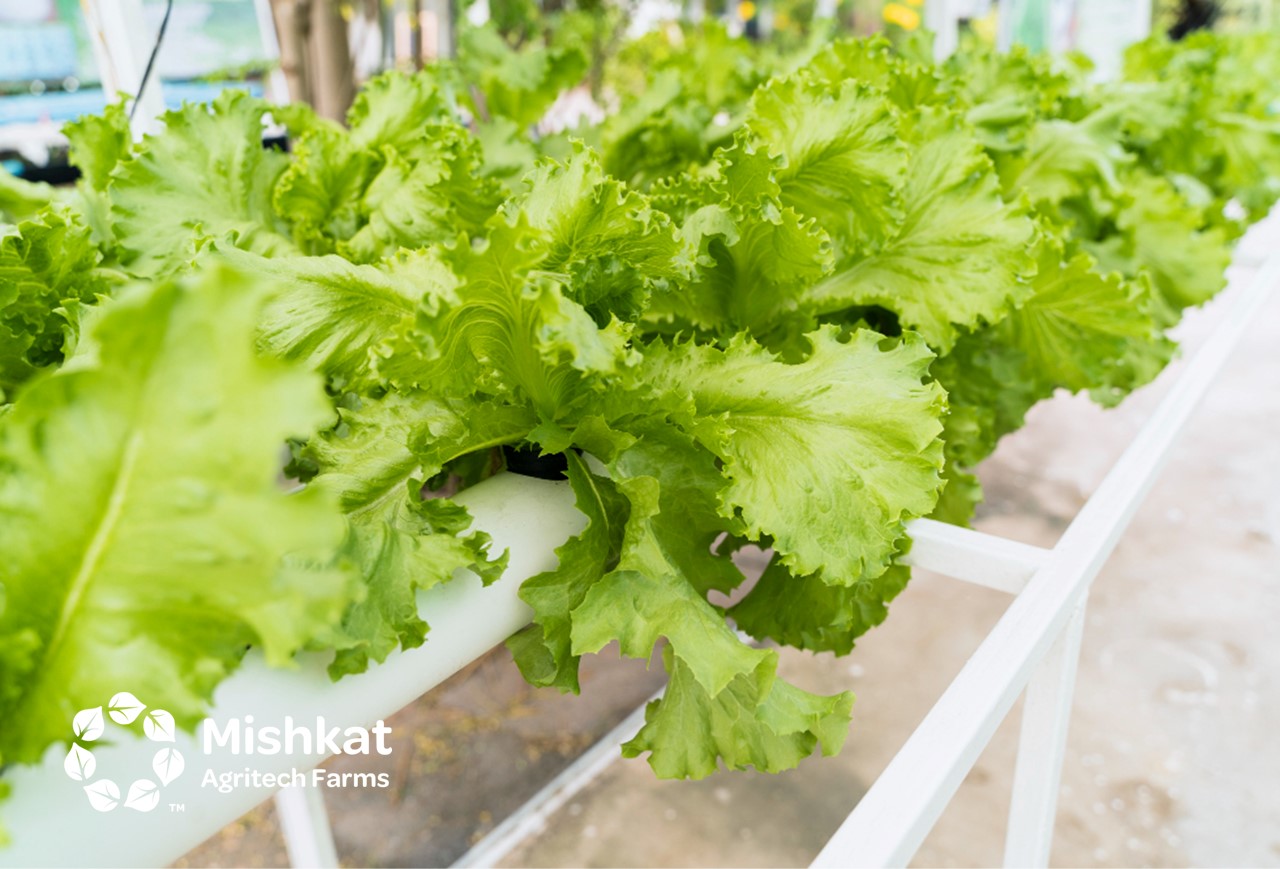
Hydroponic indoor farming
Hydroponics is often the strongest starting point for indoor farming in Saudi Arabia. It removes dependence on soil quality, supports recirculation, and gives tight control over nutrition. Recent neutral sources continue to describe hydroponics as a water-saving, input-efficient approach that can work year-round in harsh climates when paired with protected cultivation, and some sources estimate water savings around 80 to 90 percent compared with conventional methods in the right setup. (FAOHome)
Hydroponic production is especially useful for leafy greens, herbs, and selected fruiting crops. Its main demands are sanitation, nutrient management, and reliable monitoring.
Aquaponic indoor farming
Aquaponics can be attractive where the project needs education value, circular economy storytelling, or integrated hospitality programming. The strength of aquaponic indoor farming is that it connects plant production and fish production in a single system.
The caution is complexity. Aquaponic systems ask the operator to manage both plant health and aquatic biology. For a commercial investor, this is not impossible, but it requires a realistic management plan.
Indoor vertical farms
Indoor vertical farms offer the highest degree of environmental control. They can deliver clean, repeatable output close to cities, which is why they attract attention in urban farming conversations. But indoor vertical farms also carry the heaviest dependency on electricity, climate control, and operational precision.
For that reason, indoor vertical farms are often best reserved for premium, high-turn crops and dense urban demand nodes where local freshness is rewarded.
Hybrid farming systems
Some of the most robust systems are hybrid. A project may use a greenhouse for volume crops, a small indoor vertical room for herbs or seedlings, and a controlled post-harvest zone for cooling and packing. This lets the operator place control only where control creates real value.
Hybrid indoor farming methods are often easier to scale because they avoid putting every kilogram into the most expensive part of the system.
Common design choices that make or break indoor farming
Performance is shaped by design choices that look small on paper but matter daily in operation.
Crop choice
Indoor farming should begin with crops that fit the facility, not with wish lists. In Saudi Arabia, the first phase often performs best when it centers on leafy greens, herbs, nurseries, or selected premium vegetables with clear buyers.
Environmental control
Good control is not about chasing perfection. It is about staying inside a safe and productive range. Overspecifying a system can make the project too expensive. Underspecifying it can make production unstable.
Turn your vision into a data-backed plan with Mishkat
Book a quick, free assessment session with the Mishkat Services team: we define your goals and align them with the market and your budget, and deliver a one-page roadmap with expected returns, operating options, and linking to a purchase agreement when needed, with no obligation.
Workflow
Indoor farming succeeds when movement is clean and logical. Inputs, staff, harvested product, waste, and visitors should not cross in messy ways. This matters even more when the farm is part of a hospitality project.
Post-harvest handling
Many investors focus on the grow room and forget the minutes after harvest. Yet value can be lost quickly without cooling, trimming, packing discipline, and dispatch timing. Premium production is really a full chain, not a grow-only activity.
Data and routines
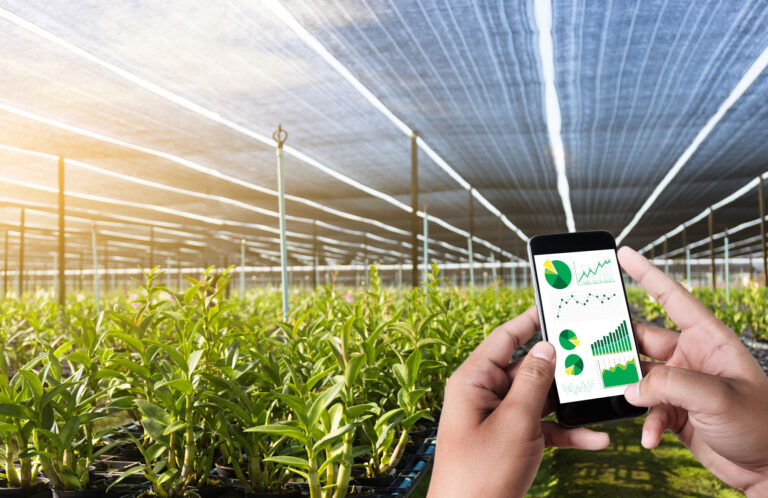
Indoor farming improves when the team records the same core metrics every day. Germination, losses, nutrient corrections, disease notes, labor hours, packout, and utility use should all be visible. Production without data tends to drift.
This is also where Mishkat Company Team can add practical value. Indoor farming knowledge should live in routines, dashboards, and staff habits, not only in drawings and purchase orders.
A quick-win mini case for indoor farming
Consider a mid-scale hospitality development in western Saudi Arabia with two restaurants, one lounge, and a wellness program. The operator wants more consistent herbs, lettuces, and edible garnishes, but does not want to rely on a large showcase farm in phase one.
The quick-win indoor farming setup is modest:
- a compact hydroponic room for high-turn greens,
- a small nursery zone,
- a clean wash and pack area,
- and a harvest plan linked to chef orders.
The steps are simple:
- Limit the crop list to 8 to 12 items with weekly demand.
- Build the indoor farming room close to kitchen receiving, not far from operations.
- Start with one season of measured output before expanding.
- Track shrink, purchase substitution, and chef satisfaction.
- Expand only after the indoor farming routine is stable.
Expected outcome: the project does not replace all produce purchasing, but it improves freshness on the most visible menu items, reduces emergency buying, and creates a credible farm-to-table story. That is often enough for phase one indoor farming to justify itself.
The first 90 days of indoor farming operations
The launch period decides whether a new facility becomes a stable production asset or an expensive experiment. In the first 90 days, management should focus less on expansion and more on routine quality. Indoor farming performs best when the team repeats the same core tasks well before adding more crops, more zones, or more automation.
A practical launch sequence looks like this:
- Days 1 to 30: stabilize water treatment, nutrient mixing, climate set points, hygiene rules, and harvest handling.
- Days 31 to 60: measure germination, growth speed, losses, labor hours, and packout quality against the original plan.
- Days 61 to 90: compare real demand with crop planning, then adjust the crop list, spacing, and harvest rhythm.
Management should hold a short weekly review covering five questions. Where did the farm lose quality? Where did labor slip? Which crop delivered the strongest margin? Which task created repeat errors? Which fix can be applied this week without new capital?
Turn your vision into a data-backed plan with Mishkat
Book a quick, free assessment session with the Mishkat Services team: we define your goals and align them with the market and your budget, and deliver a one-page roadmap with expected returns, operating options, and linking to a purchase agreement when needed, with no obligation.
This discipline matters because early instability is normal. Pumps fail, nutrient recipes drift, staff forget sequence, and post-harvest bottlenecks appear. A strong response does not rely on blame. It relies on quick logging, clear SOPs, and visible correction. That is why many successful operators treat the first quarter as a commissioning phase for people and processes, not only for equipment.
For investors, this section of the plan should be written before construction ends. For operators, it should be signed off by the production lead, the maintenance lead, and the commercial lead together.
Indoor farming economics in plain language
The economics of indoor farming depend on six levers:
- Selling price
- Yield density
- Crop turns per year
- Utility intensity
- Labor productivity
- Post-harvest loss
If the model improves only one lever while damaging two others, the project struggles. Strong projects improve several levers at once. For example, a grower may accept higher utility cost if it raises sellable quality, shortens delivery time, and reduces shrink.
A useful investor view of cost
Think of indoor farming cost in three layers:
- Fixed cost: structure, equipment, fit-out, depreciation, financing
- Semi-variable cost: maintenance, packaging, supervision, service contracts
- Variable cost: seeds, nutrients, water, labor hours, electricity tied to production
The best decisions improve output quality and control before they chase extreme density. Overdesigned facilities can produce impressive presentations but weak margins.
Where many projects misread the numbers
A frequent error is valuing the project only on gross yield. A better measure is sellable yield delivered in the exact pack and timing the customer wants. Another error is ignoring crop loss between harvest and kitchen or retail shelf. The model is powerful because it can reduce that hidden loss.
The third error is using perfect assumptions in the model. Every indoor farming project should run base, conservative, and stress scenarios. If the project only works in the optimistic case, it is not ready.
Objections and edge cases
Some objections to indoor farming are valid, and they should be taken seriously.
“Indoor farming is too expensive”
Sometimes it is. Fully indoor vertical farming can be too expensive for bulk crops or weak markets. But not every project is capital-heavy. Upgraded greenhouse production can be a sensible middle path.
“Indoor farming uses too much energy”
This risk is real in high-control facilities. The answer is not denial. The answer is crop discipline, fit-for-purpose design, efficient cooling strategy, and avoiding technology layers that do not create commercial value.
“Indoor farming is too technical for our staff”
Indoor farming does require better routines. But it does not require magic. Many projects become manageable when training, SOPs, and reporting are built into the launch. Agronomist training is not optional. It is part of the asset.
“Indoor farming will replace conventional agriculture”
That is the wrong frame. Indoor farming is best seen as a complement. It fits crops, locations, and customers where control, cleanliness, water efficiency, and timing matter most. Conventional agriculture still has a role.
“Indoor farming should make us fully self-sufficient”
This is rarely the best goal for a single project. A smarter goal is selective resilience. Let indoor farming cover the crops where local control creates the highest value.
Take the next step with indoor farming
If you are assessing a new project or upgrading an existing asset, start with the market, then size the system around the crop and the utility reality. Mishkat Company Services can help translate indoor farming ambition into a practical scope, whether the need is hydroponics, aquaponics, farm management, farm design, hospitality design, or agronomist training.
Frequently asked questions about indoor farming
Is indoor farming only for large investors?
No. Indoor farming can start with a compact greenhouse upgrade, a focused hydroponic zone, or a small hospitality-linked installation. The scale should match the crop list and buyer profile, not ego.
Is indoor farming the same as vertical farming?
No. Vertical farming is one form of indoor farming. Many projects are greenhouse-based or hybrid and do not rely on stacked warehouse production.
Which crops are usually best for indoor farming in Saudi Arabia?
Leafy greens, herbs, seedlings, micro crops, and selected premium vegetables are often the strongest starting point for indoor farming because they benefit from control and frequent delivery.
Can indoor farming work for hospitality projects?
Yes, especially when indoor farming is focused on chef-relevant crops and integrated with food service routines. The best hospitality projects are selective, visible when useful, and operationally simple.
Does indoor farming always save water?
Well-designed hydroponic and aquaponic indoor farming can use much less water than conventional methods because water is recirculated and losses are controlled. But the saving depends on design, maintenance, and operator discipline.
What is the biggest risk in indoor farming?
The biggest risk is mismatch. Indoor farming fails when the crop, system, market, and utility profile do not fit each other. Technology alone does not solve that.
Should we build a fully indoor vertical farm from day one?
Usually not. Many operators should start with phased indoor farming, crop trials, and a clear commercial proof point before moving into the most capital-intensive format.
How important is post-harvest in indoor farming?
Very important. Indoor farming can lose much of its value if cooling, washing, packing, and dispatch are weak. Quality is protected after harvest, not only during growth.
Can indoor farming support local food security?
Yes, but in a targeted way. Indoor farming supports local production of high-value fresh crops, strengthens reliability near cities, and reduces some supply chain exposure. It works best as part of a broader food system, not as a stand-alone promise.
Final thoughts on indoor farming
- Indoor farming is a spectrum, from upgraded protected cultivation to fully indoor vertical farms.
- The best indoor farming model depends on water, energy, market, and crop fit.
- Saudi demand drivers make indoor farming relevant for commercial growers and hospitality developers.
- Good indoor farming economics come from quality, consistency, and reduced loss, not from yield alone.
- Phased indoor farming is usually safer than all-at-once expansion.
- Strong operating routines matter as much as hardware in indoor farming.
Indoor farming is not a shortcut, but it can be a strong strategic tool when it is matched to the right crop, the right customer, and the right operating model. In Saudi Arabia, the opportunity is real for owners and investors who treat the model as a disciplined business system, not just a technology trend.
Proof and credibility
A credible indoor farming partner in Saudi Arabia should be able to connect agronomy, engineering, workflow, and commercial logic. That means defining the right crop list, choosing the right level of control, planning post-harvest flow, and preparing staff to operate the system daily.
Mishkat Company focuses on practical project thinking for hydroponics and aquaponics, farm design, farm management, hospitality-linked production concepts, and agronomist training. Mishkat Company Team should be judged by the same standard as any serious partner: does the proposal fit the site, the market, and the operator’s real capabilities? The goal is not to oversell the concept. The goal is to design a system that can actually run.
Sources
- General Authority for Statistics, 2025, https://www.stats.gov.sa/en/w/news/127
- Ministry of Tourism, 2025, https://mt.gov.sa/about/media-center/news/218/Ministry-of-Tourism%3A-Saudi-Arabia-Tops-100-Million-Tourist-Mark-for-the-Second-Year-in-a-
- UNESCO World Water Development Report, 2024, https://www.unesco.org/reports/wwdr/en/2024/s
- World Bank Data, 2024, https://data.worldbank.org/country/saudi-arabia
- Food and Agriculture Organization, 2024, https://www.fao.org/plant-production-protection/news-and-events/news/news-detail/growing-without-soil–hydroponics-fundamentals–pros-and-cons/en
Turn your vision into a data-backed plan with Mishkat
Book a quick, free assessment session with the Mishkat Services team: we define your goals and align them with the market and your budget, and deliver a one-page roadmap with expected returns, operating options, and linking to a purchase agreement when needed, with no obligation.