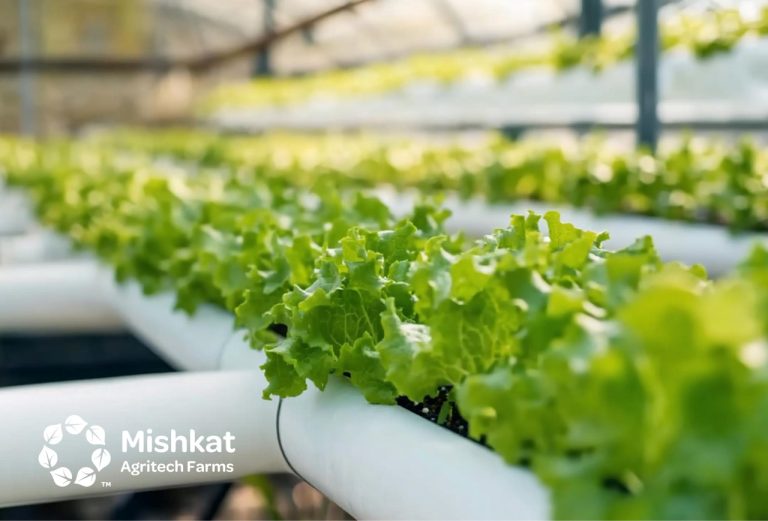
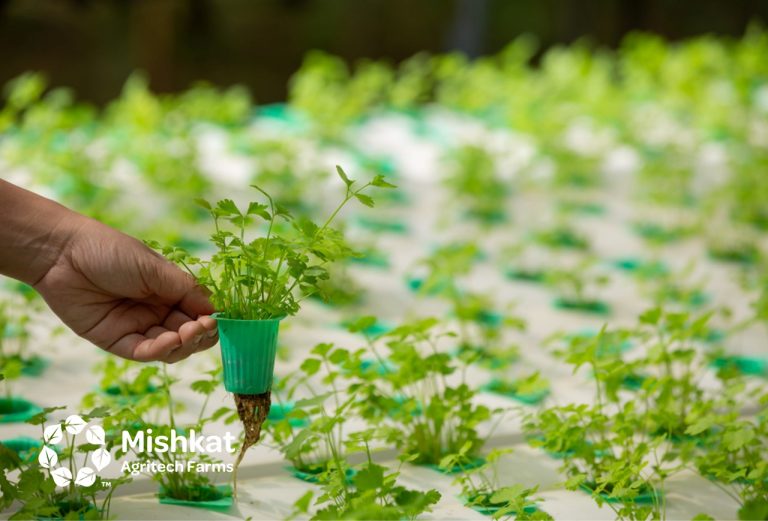
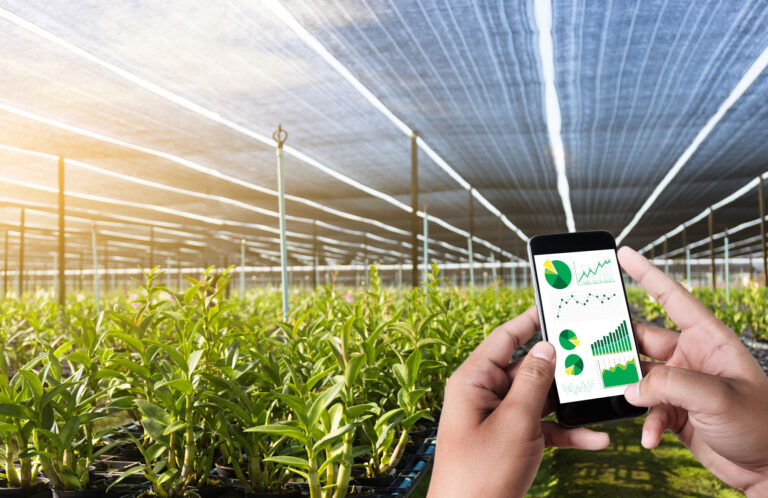
Aquaponic farming gives Saudi greenhouse owners, investors, and hospitality operators a practical way to combine premium produce, fish output, and resource control in one system. This guide explains how aquaponics works, why water matters, how fish and plants stay in balance, and how a sustainable farming model can move from concept to pilot to commercial use in Saudi Arabia.
Table of Contents
Aquaponic farming in the Saudi market
Saudi investors are looking for a farming method that does more than grow lettuce. They want a farming method that combines efficient water use, premium fresh food, and a stronger local story. Aquaponic farming can meet that need when it is planned as a business, not as a hobby. In simple terms, aquaponic farming is a farming method that combines aquaculture and soilless plant production. Fish release waste into water, bacteria convert that waste, and plants absorb the nutrient rich water before it returns to the fish tanks.
This is why aquaponics attracts attention in Saudi Arabia. Water is a strategic issue, local food quality matters, and many new projects want a visible sustainable system inside a controlled environment. Aquaponics also helps owners explore a model that links agriculture, hospitality, education, and premium cultivation in one site. Instead of separating fish, plants, water, and food into different departments, aquaponics puts fish, plants, and water into one cycle. That cycle is the core of aquaponic farming.
Problem and stakes
In Saudi Arabia, the pressure on water is clear. Official water accounts for 2023 showed that water consumption for agricultural purposes reached 12,298 million cubic meters, which confirms how central agriculture remains in the national water picture. The same 2023 publication reported that produced desalinated water accounted for 50% of total distributed water supply, up from 44% in 2022. (الهيئة العامة للإحصاء)
Climate pressure adds another layer. Saudi climate statistics for 2023 reported average annual rainfall of 152.46 millimeters across the Kingdom, versus a 1991 to 2020 average of 89.52 millimeters, while the average annual temperature reached about 26.06°C, around 0.90°C above the long-term reference. These numbers show why controlled farming, stable water management, and protected food production remain important even when rainfall improves in one year. (الهيئة العامة للإحصاء)
Market demand also matters. Tourism establishment statistics for Q3 2025 showed 5,622 licensed tourism hospitality facilities in Saudi Arabia, up 40.6% from Q3 2024. More hotels and serviced hospitality sites create more opportunity for local food, fresh herbs, specialty plants, and visible aquaponics concepts linked to guest experience. (الهيئة العامة للإحصاء)
How aquaponic farming works
Aquaponic farming is easiest to understand when you look at the relationship between fish, water, and plants. Fish are fed. Fish produce waste. That waste enters the water. Bacteria living in the system convert the waste into forms that plants can use. Plants take nutrients from the water. Cleaned water then goes back to the fish tanks. Aquaponics is therefore a symbiotic cycle between fish, plants, bacteria, and water.
A strong aquaponic farming design keeps fish healthy, keeps water moving, and keeps plants growing at a predictable pace. If fish are overfed, water quality drops. If plants are too few, nutrients build up. If filtration is weak, solids collect and roots suffer. Good aquaponics depends on balance, not guesswork.
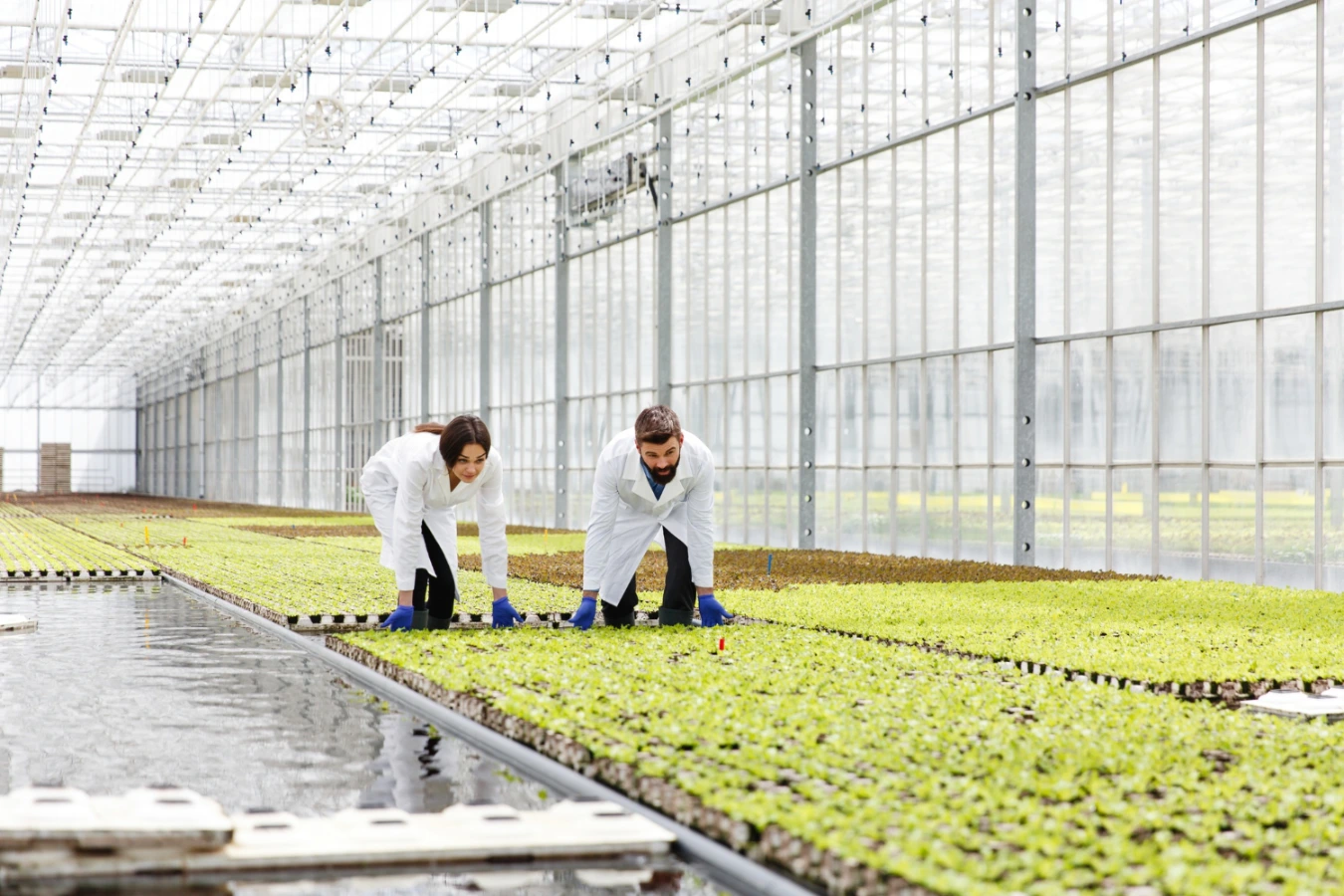
For Saudi operators, aquaponic farming usually works best in greenhouses or protected systems where temperature, humidity, water quality, and food safety can be controlled. Outdoor aquaponics can work in limited cases, but indoor or greenhouse aquaponics gives better control over fish stress, plant health, and water loss.
Why aquaponic farming can outperform a basic greenhouse concept
A normal greenhouse can grow plants well, and hydroponics can grow plants with very high efficiency. But aquaponic farming adds another layer because fish and plants support the same water loop. For an owner who wants a sustainable farming model, aquaponic farming is more than a growing method. It is a business story, a hospitality story, and in some cases an education story.
This matters for hotels, resorts, mixed-use destinations, and premium residential projects. Guests do not only want food. They want fresh food, visible food, local food, and a memorable experience. Aquaponics can support that. When guests see fish, plants, water, and harvesting in one place, the farm becomes part of the project identity. That is why aquaponic farming can be stronger than a hidden production room.
For greenhouse investors, the advantage is different. Aquaponic farming can improve brand value, product freshness, and diversification. The farm can grow plants, raise fish, and support training. The same site can also host visits, workshops, and hospitality partnerships. Mishkat Company often advises clients to evaluate aquaponics as a mixed value system, not only as a yield calculation.
Where aquaponic farming fits best
Aquaponic farming fits best where premium output matters. Herbs, leafy greens, garnish crops, and selected fast-turn plants often work well in aquaponics. These plants respond well to stable nutrient flow and can be sold as fresh products with strong visual quality. Fish can add another revenue line, but in many early projects the fish side should first be treated as the engine that supports plants and water balance.
Turn your vision into a data-backed plan with Mishkat
Book a quick, free assessment session with the Mishkat Services team: we define your goals and align them with the market and your budget, and deliver a one-page roadmap with expected returns, operating options, and linking to a purchase agreement when needed, with no obligation.
Aquaponic farming also fits where supply chain speed matters. Restaurants, chefs, hotel kitchens, and specialty retail programs value fresh harvests and short delivery windows. When aquaponics is located close to the kitchen or the city, food can move from harvest to plate very quickly. That freshness can justify a premium.
A third good fit is for projects that need visitor value. Education farms, tourism sites, and branded sustainability centers can use aquaponics as a visible example of eco friendly farming. A visitor understands the concept quickly because fish, plants, and water are visible. That makes aquaponics easier to explain than some other systems.
When aquaponic farming is the wrong choice
Not every investor needs aquaponic farming. If the goal is only bulk production of low-margin crops, hydroponics may be simpler. If the team has no interest in fish health, water testing, or daily biological monitoring, aquaponics may feel heavy. If the project wants immediate scale without a pilot, aquaponic farming can become risky.
This does not mean aquaponics is weak. It means aquaponic farming needs the right use case. A project that values sustainable output, premium local food, visible innovation, and structured management is a better candidate. A project chasing only the lowest possible production cost may prefer another method.
A practical framework for evaluating aquaponic farming
Before buying tanks or pumps, use this simple framework:
Aquaponic farming fit = market pull + water pressure + premium pricing + operational discipline + training readiness + site control
Score each item from 1 to 5.
- 24 to 30 means strong fit
- 18 to 23 means pilot first
- Below 18 means reconsider the model or start with hydroponics
This framework works because aquaponic farming succeeds when the business model, the water model, and the biological model all point in the same direction. If the market pays for fresh food and reliable quality, if the site can manage fish and water, and if the team can learn fast, aquaponics becomes much more practical.
Key components in aquaponic farming
Every aquaponic farming project includes a few essential parts. The fish tanks hold fish and start the nutrient cycle. Mechanical filters remove solids from water. Biofilters help convert waste so plants can use it. Grow beds or rafts hold plants. Pumps move water. Aeration supports fish and bacteria. Sensors help the team track water conditions. Backup power protects fish when utility power stops.
The most important point is that these components are connected. In aquaponics, weak filtration affects plants. Poor aeration affects fish. Bad temperature control affects both fish and plants. Weak management affects the whole farm. That is why aquaponic farming is a system, not just a collection of equipment.
A table for choosing the right project model
| Project type | Best crop focus | Fish role | Main value | Main risk |
|---|---|---|---|---|
| Premium greenhouse | Herbs, greens, specialty plants | Revenue plus nutrient support | Fresh local food and brand value | Overbuilding too early |
| Hospitality farm | Herbs, greens, garnish plants | Experience plus selective revenue | Farm-to-table food and guest story | Weak kitchen integration |
| Education center | Easy plants for demonstration | Learning and visitor value | Education and sustainable farming visibility | Limited commercial scale |
| Hybrid commercial site | Mixed greens and chef crops | Revenue, story, and training | Multiple income streams | Complex operations |
How to start aquaponic farming step by step
- Define the customer. Decide who will buy the food, which plants are needed, and what freshness level matters.
- Test the water source. Water quality shapes fish health, plants, and system stability.
- Choose the first crop list. Start with plants that grow reliably in aquaponics.
- Choose the fish strategy. Pick fish that suit the site, the temperature, and the team.
- Design filtration and circulation. In aquaponic farming, good water movement is non-negotiable.
- Train the operators. The team must learn fish care, water tests, crop hygiene, and daily routines.
- Run a pilot. Use a controlled step before full scale expansion.
- Review data every week. Compare fish performance, plant performance, water readings, labor time, and customer response.
A good step in aquaponic farming is never isolated. One step affects the next step. If the first step is wrong, every later step becomes harder. That is why a guide for aquaponics must focus on sequence, not only equipment.
Turn your vision into a data-backed plan with Mishkat
Book a quick, free assessment session with the Mishkat Services team: we define your goals and align them with the market and your budget, and deliver a one-page roadmap with expected returns, operating options, and linking to a purchase agreement when needed, with no obligation.
Checklist before launch
- clear crop list
- clear fish plan
- tested water source
- protected environment
- mechanical filtration installed
- biofiltration sized correctly
- aeration confirmed
- backup power ready
- harvest and packing flow defined
- food safety routine written
- training schedule prepared
- maintenance supplies stocked
This checklist looks simple, but each point protects the farm. In aquaponic farming, missed details become expensive details. Mishkat Company Services usually starts with design logic, training, and operations planning before final expansion, because a beautiful system without discipline will not stay sustainable.
Daily management in aquaponic farming
Daily management determines whether aquaponic farming feels smooth or unstable. Operators should check fish behavior, feed response, water temperature, dissolved oxygen, pH, and visible plant condition every day. The team should also inspect filters, pumps, roots, leaves, and water clarity. Small changes in water often show up in fish or plants before they appear in a report.
A useful rule is this: watch fish first, then water, then plants. Fish often show stress quickly. Water explains why. Plants reveal the medium-term result. In aquaponics, the farm manager should build this habit until it becomes automatic.
Feeding also matters. Too much feed burdens water and fish. Too little feed weakens fish growth and plant nutrition. Balanced feeding is central to aquaponic farming because feed is not just feed. It becomes nutrients for plants and a driver of the whole cycle.
Water quality targets that matter
Water quality is the heartbeat of aquaponic farming. If water is unstable, fish suffer and plants follow. Most Saudi projects should pay close attention to temperature, pH, alkalinity, dissolved oxygen, ammonia, nitrite, nitrate, and solids load. Stable water protects fish, supports plants, and improves predictable growing cycles.
The exact targets depend on fish species and crop mix, but the principle stays the same. Keep change gradual. Sudden shifts in water hurt fish and plants more than moderate values managed consistently. This is why aquaponics rewards teams that record and react early.
When owners ask whether aquaponic farming saves water, the honest answer is yes in many cases, but only when the system is maintained well. Leaks, poor filtration, bad cleaning routines, and weak staff training can waste the water advantage. Good aquaponics conserves water because it recirculates water rather than throwing water away after one irrigation cycle.
In crop planning, keep the language practical. Choose plants that kitchens reorder, plants that travel well, plants that show strong root health, and plants that match the available water and labor rhythm. The best early plants are usually the plants that are easy to harvest, easy to pack, and easy to explain to buyers.
Crop choice in aquaponic farming
The best plants for aquaponic farming are usually crops that value steady harvests, clean roots, and premium freshness. Herbs are strong candidates. Lettuce and leafy greens are also common. Some fruiting plants can work, but they may demand tighter balance and more nutrient control. In many Saudi pilots, simple plants create the best start.
Crop choice should match the sales channel. A hotel kitchen may want basil, mint, lettuce, and garnish plants. A retail concept may want salad mixes and culinary herbs. An education site may want easy plants that show root growth clearly. Aquaponics is flexible, but discipline matters more than variety.
The team should also think about post-harvest handling. Fresh plants lose value if the harvest process is messy. Clean harvest timing, quick cooling where relevant, and simple packaging help the farm turn plants into saleable food.
Fish choice in aquaponic farming
Fish choice should be practical, not romantic. The best fish for aquaponic farming are the fish that the team can manage, feed, monitor, and sell with confidence. Water temperature, local regulation, fingerling access, disease risk, and buyer demand all matter.
Some investors want fish to become the main story. That can happen later, but many early projects should treat fish as both a product and a biological engine. Strong fish health supports strong water quality, and strong water quality supports healthy plants. In aquaponics, fish are revenue, but fish are also the foundation of nutrient flow.
Operators must also plan for fish harvesting, fish handling, and fish welfare. A professional aquaponic farming project cannot ignore the practical side of raising fish. Mishkat Company Team often reminds clients that fish logistics are just as important as plant logistics.
Turn your vision into a data-backed plan with Mishkat
Book a quick, free assessment session with the Mishkat Services team: we define your goals and align them with the market and your budget, and deliver a one-page roadmap with expected returns, operating options, and linking to a purchase agreement when needed, with no obligation.
Comparing aquaponic farming with hydroponics
Hydroponics and aquaponics both reduce dependence on soil and both can deliver efficient crop production. Hydroponics gives direct control over nutrient recipes. Aquaponics uses fish waste and biological conversion as the nutrient base. Hydroponics is often easier to standardize. Aquaponic farming can offer stronger storytelling and a more integrated sustainable farming method.
The choice depends on the project goal. If the goal is simple crop production at scale, hydroponics may win. If the goal is premium food, visible sustainability, mixed revenue, and a stronger educational or hospitality concept, aquaponic farming may be better. There is no universal answer. The right answer is the one that fits the business model.

Quick-win mini case
Imagine a 300 square meter greenhouse next to a hospitality site in western Saudi Arabia. The owner wants fresh food for the kitchen, a visible sustainability story, and a practical pilot. Instead of trying to grow many plants and many fish species at once, the site begins with one aquaponic farming loop, one fish strategy, and a short list of plants.
First, the team tests the water and sets up filtration. Second, the team cycles the system before adding full plant density. Third, the kitchen agrees on a weekly list of herbs and greens. Fourth, harvest routines are linked to menu planning. Fifth, data on fish performance, water stability, and plant quality are reviewed every week.
The expected outcome is not instant scale. The quick win is clarity. The team learns how fish, plants, water, labor, and customer demand interact. The hotel gets fresh food and a visible farm story. The investor gets better data for expansion. That is a smart first move in aquaponic farming.
Aquaponics, aquaculture, and sustainable food planning
Many people use aquaponics as a loose label, but investors should separate aquaponics, aquaculture, and hydroponics clearly. Aquaponics sits between aquaculture and hydroponics. Aquaculture focuses on fish and other aquatic animals. Hydroponics focuses on plants in water without soil. Aquaponics combines parts of aquaculture and hydroponics into one sustainable production loop. When teams learn this difference early, aquaponics becomes easier to design, easier to explain, and easier to manage.
In Saudi projects, aquaponics should never be sold as magic. Aquaponics is a sustainable method, but aquaponics still needs energy, labor, water discipline, and training. Good aquaponics lowers waste, supports fresh food, and can create a sustainable local supply. Weak aquaponics creates stress for fish, stress for plants, and stress for management. This is why sustainable aquaponics is really disciplined aquaponics.
A useful way to explain aquaponics is to say that aquaculture feeds aquaponics, hydroponics shapes the plant side of aquaponics, and water links them all. In aquaponics, fish feed becomes plant nutrition. In aquaponics, plant growth helps stabilize water for fish. In aquaponics, aquaculture decisions change crop results, and crop decisions change aquaculture balance. That is why aquaponics must be reviewed as one operating system.
What teams need to learn before scaling aquaponics
Before scaling aquaponics, teams need to learn the basics of fish care, plant care, water testing, filtration cleaning, and harvest timing. They also need to learn how aquaponics behaves after feed changes, temperature changes, or stocking changes. A team that can learn fast will usually manage aquaponics better than a team that buys more equipment.
One reason owners choose Mishkat Company Services is that aquaponics training can be linked to real operating routines. The team does not only learn theory. The team learns how fish respond, how plants respond, how water responds, and how aquaponics responds as one cycle. This kind of learn by doing approach is important because aquaponics is biological. You can learn a control panel quickly, but you need time to learn a living system.
A strong learn curve also protects business performance. In aquaponics, the team should learn what to measure daily, what to record weekly, and what changes require action. In aquaponics, the team should learn when to reduce feed, when to clean filters, when to check roots, and when to adjust crop density. The faster the team can learn, the more stable the fish, the plants, and the water become.
Aquaponics operations for fresh food and local supply
Aquaponics can be especially attractive where buyers want fresh food every day. Restaurants want fresh herbs. Premium retail wants fresh greens. Hospitality operators want fresh leaves, garnish plants, and visible growing areas. Aquaponics supports this because aquaponics can sit close to the point of use. The result is fresher food, lower handling time, and stronger local identity.
A local aquaponics project can also strengthen resilience. If the project can produce local food with stable water use and strong quality, the farm gains business value beyond simple production. That is important in Saudi Arabia because local production, controlled agriculture, and premium food service often meet in the same decision. Aquaponics is not only about growing. Aquaponics is about service level, quality control, and trusted supply.
For hospitality, the best message is simple. Aquaponics can produce fresh food, visible food, and story-driven food. Guests understand fish, plants, and water. Chefs understand fresh herbs and short harvest windows. Investors understand that aquaponics can turn sustainability into a visible operating asset, not just a statement on paper.
Turn your vision into a data-backed plan with Mishkat
Book a quick, free assessment session with the Mishkat Services team: we define your goals and align them with the market and your budget, and deliver a one-page roadmap with expected returns, operating options, and linking to a purchase agreement when needed, with no obligation.
Aquaponics performance indicators
To review aquaponics properly, the owner should track a short set of indicators. Track fish survival, fish growth, feed conversion, water stability, harvest weight, crop quality, waste levels, labor hours, and sales value. Good aquaponics improves when these indicators are reviewed together.
Owners should also compare aquaponics with hydroponics and standard greenhouse cultivation using the same logic. Compare water use, crop value, reject rate, labor structure, and buyer response. Hydroponics may win on simplicity. Aquaponics may win on integrated value. The best decision comes from measured data, not assumptions.
Aquaponics language, buyer language, and operator language
A buyer may talk about fresh food, local food, and sustainable supply. An operator may talk about water, fish, plants, and filtration. An investor may talk about business risk, production, and future value. Aquaponics has to satisfy all three. Aquaponics must produce food. Aquaponics must protect fish. Aquaponics must keep water stable. Aquaponics must stay sustainable in daily practice. Aquaponics must also fit the business model.
This is why aquaponics should be described clearly. Aquaponics is not only aquaculture. Aquaponics is not only hydroponics. Aquaponics is a sustainable operating model where aquaculture and hydroponics support one production cycle. When teams learn to explain aquaponics this way, they sell aquaponics better, manage aquaponics better, and scale aquaponics more carefully.
For customers, the promise of aquaponics is easy to understand. Aquaponics can deliver fresh food, visible food, local food, and reliable food. For operators, the promise of aquaponics is disciplined water reuse and connected production. For owners, the promise of aquaponics is a future-ready system that can support sustainability, business positioning, and practical agriculture at the same time.
Extra practical notes for aquaponics in Saudi Arabia
Saudi aquaponics projects should pay close attention to heat load, cooling strategy, backup power, and water source stability. Aquaponics depends on steady water movement, and fish can decline quickly during system failure. This makes preventive maintenance essential.
It is also wise to start aquaponics with limited crop diversity. Too many plants can make the first cycle harder. Too many fish can push water too hard. Too many changes can confuse the team. A calm start helps aquaponics stabilize.
Finally, owners should remember that aquaponics is part of a wider future in controlled agriculture. The future of agriculture in Saudi Arabia will include hydroponics, aquaponics, protected cultivation, local food systems, and efficient resource use. Aquaponics will not replace every method, but aquaponics can become a strong method where fish, plants, hospitality, and sustainability meet.
A mature team will also learn that aquaculture discipline is essential for sustainable aquaponics. Better aquaculture routines improve fish welfare, improve water stability, and improve food quality. Better aquaculture records also help the team learn faster from each cycle. For this reason, sustainable aquaponics depends on staff who learn both aquaculture tasks and crop tasks, not staff who see fish and plants as separate jobs.

Objections and edge cases
Some owners say aquaponic farming is too complex. That is partly true. Aquaponics is more complex than simple irrigation because fish, plants, bacteria, and water all interact. But complexity is manageable when the project starts small and builds a strong routine.
Some owners worry that aquaponic farming is risky in hot climates. The real issue is not heat alone. It is whether the environment, water, and operations are controlled well. In a protected greenhouse with proper cooling, filtration, and backup planning, aquaponics can work well.
Others ask whether aquaponic farming is only for education projects. No. Education is one use case, but aquaponics can also serve premium food production, hospitality, mixed-use real estate, and branded sustainability programs.
A final edge case is retrofitting. Existing hydroponics sites can sometimes add aquaponics, but only if space, plumbing, training, and water treatment logic are reviewed carefully. Not every site should retrofit. Some sites should keep hydroponics and improve efficiency there.
Start Now
If you want aquaponic farming to work in Saudi Arabia, start with a clear use case, a clear pilot, and a clear operating plan. Mishkat Company can help you shape that path through hydroponics and aquaponics design, farm management, hospitality design, and agronomist training, so your next step is based on data, not assumptions.
Turn your vision into a data-backed plan with Mishkat
Book a quick, free assessment session with the Mishkat Services team: we define your goals and align them with the market and your budget, and deliver a one-page roadmap with expected returns, operating options, and linking to a purchase agreement when needed, with no obligation.
FAQs About Aquaponics Farming
What is aquaponic farming in simple words?
Aquaponic farming is a method that links fish, plants, and water in one recirculating system. Fish create waste, bacteria convert that waste, and plants use those nutrients while cleaning the water.
Is aquaponic farming profitable?
Aquaponic farming can be profitable when the farm sells premium fresh food, values local supply, and manages fish and water well. It is usually strongest in premium markets, not bulk commodity markets.
Does aquaponic farming save water?
Yes, aquaponic farming can conserve water because the system recycles water instead of constantly replacing water like many traditional methods. The benefit depends on maintenance quality and leak control.
Is aquaponic farming better than hydroponics?
Not always. Hydroponics is often simpler. Aquaponic farming becomes attractive when the project wants fish, plants, sustainability value, and a stronger brand story in one system.
Which plants work best in aquaponic farming?
Leafy greens, herbs, and some easy specialty plants are often the best starting crops. These plants usually adapt well to aquaponics and support frequent fresh harvests.
Which fish work best in aquaponic farming?
The best fish are the fish that fit the local climate, available feed, water conditions, and market demand. The choice should be practical and site specific.
Can hotels use aquaponic farming?
Yes. Hotels and resorts can use aquaponic farming to grow fresh plants, supply food to kitchens, create guest experiences, and support sustainability messaging.
Does aquaponic farming need a greenhouse?
For Saudi conditions, a greenhouse or another protected environment is usually the stronger option because it helps stabilize water, temperature, and plant quality.
How big should the first aquaponic farming pilot be?
The first pilot should be large enough to test fish, plants, water, labor, and sales, but small enough to manage closely. Starting with one clear loop is often better than building too much.
Conclusion
- Aquaponic farming works best when fish, plants, and water are planned as one system.
- Aquaponics is strongest in premium food, hospitality, and visible sustainable farming projects.
- Water quality, fish care, and plant choice matter more than impressive equipment lists.
- A pilot reduces risk and improves business clarity.
- The best projects treat aquaponic farming as both a production method and a business model.
For Saudi investors and operators, aquaponic farming is not only about growing food. It is about building a controlled, efficient, and memorable system that can support local production, better freshness, and stronger project identity.
Proof and credibility
This article is written for greenhouse owners, soilless farming investors, and hospitality operators in Saudi Arabia. It focuses on practical design, biological balance, water discipline, fish management, crop selection, and commercial fit. Mishkat Company Services supports related work in hydroponics and aquaponics, farm design, farm management, hospitality design, and agronomist training.
Sources
- General Authority for Statistics, 2025, https://www.stats.gov.sa/en/w/news/8
- General Authority for Statistics, 2025, https://www.stats.gov.sa/documents/20117/2435281/Climate%2BChange%2BStatistics%2B2023%2BEN.pdf/063fb928-7152-1055-2225-b03d731a7bdd?t=1761134386499
- General Authority for Statistics, 2026, https://www.stats.gov.sa/en/w/news/152
Turn your vision into a data-backed plan with Mishkat
Book a quick, free assessment session with the Mishkat Services team: we define your goals and align them with the market and your budget, and deliver a one-page roadmap with expected returns, operating options, and linking to a purchase agreement when needed, with no obligation.