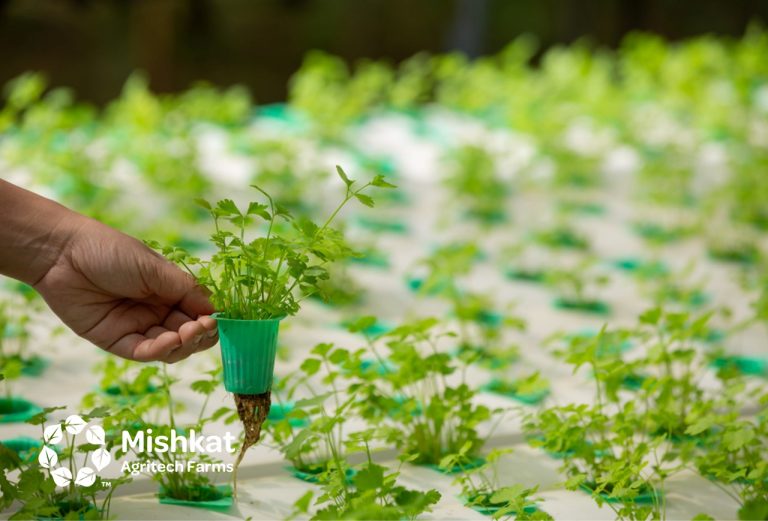
A strong hydroponics business plan is not just a finance document. In Saudi Arabia, it is the tool that connects water efficiency, controlled production, buyer demand, and investor confidence into one working model. This guide shows how to build a hydroponics business plan that fits greenhouse owners, soilless farm investors, and hospitality operators who want a realistic farm-to-table model with clearer economics, better operating discipline, and room to scale.
Table of Contents
Why a hydroponics business plan matters in Saudi Arabia
If you already own a greenhouse, run a hospitality project, or want to invest in soilless farming, you do not need more hype. You need a hydroponics business plan that answers the real questions. What should you grow, who should buy it, how much can you sell, what will it cost to run, and what will make the project stable after the launch period?
That matters even more in Saudi Arabia, where the economics of fresh produce are shaped by water limits, climate pressure, logistics, hospitality growth, and the growing value of dependable year-round supply. A hydroponics business plan gives structure to all of that. It turns a technical idea into an operating business.
Many projects fail because they start with equipment before they start with demand. A hydroponics business plan reverses that mistake. It begins with the buyer, then the product, then the production system, then the money, then the team.
A good hydroponics business plan also helps different stakeholders speak the same language. Investors want return and risk control. Agronomists want crop stability. Operators want clean workflows. Hospitality teams want freshness, consistency, and delivery reliability. A hydroponics business plan creates one common frame for all of them.
This article walks through that frame step by step. First, it explains the Saudi context and the stakes. Then it shows how to shape market choice, crop mix, site logic, capex, opex, pricing, staffing, and risk. After that, it gives a practical formula, a checklist, a table, a quick-win mini case, and a full FAQ so your hydroponics business plan is usable, not theoretical.

Problem and stakes
In 2024, Saudi Arabia’s protected vegetable production reached 797 thousand tons, up 10.6 percent from 2023, and the number of greenhouses planted with vegetables exceeded 121 thousand. The same 2024 agricultural publication reported total agricultural crop imports of 18,762 thousand tons, up 10.8 percent from 2023. That means local controlled farming is growing, but the market still depends heavily on imported crop volume.
The resource context is even sharper. The latest World Bank data point for Saudi Arabia shows renewable internal freshwater resources at 75 cubic meters per person in 2022. A related 2024 World Bank note describes absolute water scarcity at 500 cubic meters per person annually and notes that some GCC countries remain below 100 cubic meters per person. For any hydroponics business plan, that is not background noise. It is a core operating condition
Demand is also moving. Saudi inbound tourism reached about 29.73 million visitors in 2024, with overnight stays above 560 million and inbound tourist spending around SAR 168.52 billion. For hospitality-linked produce, that signals a larger addressable market for premium leafy greens, herbs, and specialty crops that benefit from short lead times and consistent quality.
Hydroponics is not a magic answer, but it does offer a useful operating logic for this setting. Official technical guidance describes hydroponics as soil-less cultivation with better control over water, nutrients, and oxygen, along with better resource use and improved crop quality. A 2024 UN brief also notes that recirculating hydroponic systems can save roughly 80 to 90 percent of irrigation water in some settings compared with conventional agriculture.
So the stakes are clear. A hydroponics business plan in Saudi Arabia is not just about launching a modern farm. It is about matching a water-constrained production model to a quality-sensitive market, while protecting margins from energy, labor, packaging, and distribution risk.
What a hydroponics business plan must actually do
A weak hydroponics business plan is just a long description of a farm. A useful hydroponics business plan makes decisions. It tells you what kind of business you are building, why that model fits the Saudi context, and what numbers must hold true for the project to work.
At minimum, your hydroponics business plan must answer seven questions. Who is the buyer? Which crops solve a real buyer problem? What production system matches those crops? What site and utilities can support the farm? What team and processes will run it? How will the farm sell and deliver? What financial outcomes make the project worth funding?
That sounds basic, but many founders skip one of those questions. They know the farm technology, but not the buyer. Or they know the buyer, but not the labor burden. Or they model revenue, but not sell-through loss. A hydroponics business plan should remove blind spots before money is committed.
The best hydroponics business plan also chooses a business identity early. Is this a premium local brand, a contract supplier, a farm attached to a hospitality asset, a wholesale greenhouse, or a phased pilot that later becomes an institutional supplier? Each path changes pricing, staffing, packaging, and even crop choice.
Turn your vision into a data-backed plan with Mishkat
Book a quick, free assessment session with the Mishkat Services team: we define your goals and align them with the market and your budget, and deliver a one-page roadmap with expected returns, operating options, and linking to a purchase agreement when needed, with no obligation.
In practice, a hydroponics business plan should be judged less by how polished it looks and more by whether it helps you say no. If the plan cannot help you reject the wrong crop, the wrong customer, the wrong site, or the wrong scale, it is not doing its job.
That is why the rest of this guide treats a hydroponics business plan as an operating document, not a brochure.
Market selection inside a hydroponics business plan
The market section of a hydroponics business plan should begin with the buyer problem, not the crop list. The buyer problem may be inconsistent freshness, unstable quality, long lead times, product shrink, imported product volatility, or lack of tailored varieties.
For greenhouse owners, the natural temptation is to say, “We will grow leafy greens because hydroponics suits leafy greens.” A better hydroponics business plan says, “We will grow the products that specific buyers in this radius want to reorder every week, at a price and volume the farm can reliably serve.”
That difference sounds small, but it changes everything. A crop may be technically easy and still be commercially weak. Another crop may be harder to produce, but fit a buyer channel with stronger margin and more predictable demand. A hydroponics business plan should rank markets by repeatability, payment behavior, delivery complexity, and margin quality.
In Saudi Arabia, the most common demand channels for a hydroponics business plan usually fall into four groups: hospitality, retail, direct subscription, and institutional food service. Hospitality often values freshness, story, and consistency. Retail values packaging discipline, shelf life, and visual uniformity. Direct subscription values brand trust and convenience. Institutional food service values steady supply and price control.
For many investors, the safest first version of a hydroponics business plan is a mixed model with one anchor channel and one margin channel. The anchor channel stabilizes weekly movement. The margin channel lifts average price. For example, hospitality contracts can create predictable flow, while premium herb or specialty lettuce sales create upside.
A hydroponics business plan should also map the sales radius. Local delivery is not just a logistics choice. It is a product strategy. The closer the buyer, the more you can compete on freshness and harvest timing. The farther the buyer, the more packaging and cold-chain discipline matter.
This is also where Mishkat Company can be mentioned in a practical way. For developers and operators looking at on-site or near-site farm-to-table models, a hydroponics business plan benefits from combining production logic with hospitality design, agronomy training, and operating workflows, the kind of joined-up view that Mishkat Company Services is built to support.
A simple buyer selection framework for a hydroponics business plan
Use this five-part screen before you commit any crop to your hydroponics business plan:
- Repeat demand
Can this buyer reorder weekly or monthly in stable quantities? - Price fit
Can the buyer pay for local quality, not just raw weight? - Operational fit
Can your team pack, label, and deliver in the format this buyer needs? - Margin fit
After waste, delivery, labor, and packaging, is the buyer still attractive? - Strategic fit
Will winning this buyer make the next buyer easier to win?
If your hydroponics business plan cannot score each target channel against those five filters, it is still incomplete.
The difference between demand and interest
Another common mistake in a hydroponics business plan is confusing friendly conversations with real demand. A chef may love the idea. A store manager may say the packaging looks great. An investor may admire the concept. None of that is demand unless the plan includes forecasted weekly volume, target price range, payment terms, packaging specs, and replacement rules.
So when you write your hydroponics business plan, collect soft evidence and hard evidence separately. Soft evidence includes interviews, tasting sessions, and trial feedback. Hard evidence includes letters of intent, test purchase orders, reorder history, and trial acceptance criteria. A serious hydroponics business plan needs both.
What to sell first
Your first crop list in a hydroponics business plan should be narrow. Too many SKUs create labor complexity, uneven demand, and quality drift. Start with products that meet three conditions: short learning curve, repeat demand, and easy grading.
Turn your vision into a data-backed plan with Mishkat
Book a quick, free assessment session with the Mishkat Services team: we define your goals and align them with the market and your budget, and deliver a one-page roadmap with expected returns, operating options, and linking to a purchase agreement when needed, with no obligation.
That usually pushes a hydroponics business plan toward a focused first wave such as lettuce mixes, basil, mint, arugula, spinach, baby leaf, or other fast-moving greens, depending on your target channel. Only after the operation stabilizes should the hydroponics business plan consider wider assortment, specialty herbs, or more complex fruiting crops.
A clear rule helps here: your first hydroponics business plan should optimize for repeatability before novelty.
Crop and site choices in a hydroponics business plan
A hydroponics business plan should never treat the site as an afterthought. The site is not just land. It is water quality, power reliability, labor access, logistics access, heat load, expansion ability, and risk exposure.
Start with water. Since hydroponics depends on tight nutrient control, a hydroponics business plan should include a water test before final design. If the source water is unstable or heavily mineralized, treatment cost can materially change opex. If you ignore that, your hydroponics business plan will be optimistic in the wrong place.
Power matters next. In Saudi Arabia, cooling, pumping, and climate control can quickly shift the economics of a hydroponics business plan. That does not mean the project is weak. It means the project must be designed around realistic utility behavior, not idealized assumptions.
The production system also has to match the crop. A hydroponics business plan for leafy greens may lean toward NFT, raft, or similar recirculating setups. A hydroponics business plan for herbs may prioritize workflow and harvest consistency. A hydroponics business plan for fruiting crops will often face a very different labor, trellising, and climate-control burden.
This is why a hydroponics business plan should separate technical fit from business fit. A crop can be growable without being strategically wise. If it needs too much skilled labor, too much packaging variation, or too much cooling per kilo sold, it may belong in phase two, not phase one.
The greenhouse envelope also changes the economics. A hydroponics business plan should specify what level of climate control is essential, what level is optional, and what level is only justified after demand is proven. Investors often overbuild because they want certainty. In reality, a phased hydroponics business plan often creates a better learning curve and protects capital.
Location relative to the customer is another big lever. A hydroponics business plan serving local hospitality can often justify higher freshness positioning and tighter harvest-to-delivery windows. A hydroponics business plan serving wider retail may need stronger packaging, more inventory discipline, and more delivery coordination.
Mishkat Company Team often becomes most valuable at this stage because design choices are easiest to correct on paper and most expensive to correct after construction. Farm design, hydroponics and aquaponics planning, agronomist training, and operating layout should all feed into the same hydroponics business plan, not sit in separate folders.
The wrong scale problem
A hydroponics business plan can fail by being too small or too large. Too small means the farm cannot absorb fixed costs or attract strong buyers. Too large means the farm creates volume pressure before the sales engine is ready.
That is why your hydroponics business plan should define the minimum viable commercial scale, not just the maximum physical capacity. The right first scale is the one that proves unit economics, operating stability, and channel fit with manageable downside.
The financial model inside a hydroponics business plan
Most people open the finance section of a hydroponics business plan and jump straight to payback period. That is too late. First, the hydroponics business plan has to prove revenue logic and cost logic. Only then should it discuss returns.
Use this base revenue formula in your hydroponics business plan:
Annual Revenue = Net Growing Area × Turns per Year × Saleable Yield per Turn × Sell-Through Rate × Average Selling Price
That formula matters because it forces your hydroponics business plan to separate production from actual sales. A farm may grow well and still lose money if sell-through is weak, grading standards are loose, or delivery timing reduces accepted volume.
Next, use this operating margin formula in your hydroponics business plan:
Turn your vision into a data-backed plan with Mishkat
Book a quick, free assessment session with the Mishkat Services team: we define your goals and align them with the market and your budget, and deliver a one-page roadmap with expected returns, operating options, and linking to a purchase agreement when needed, with no obligation.
Operating Margin = Revenue − Direct Inputs − Labor − Utilities − Packaging − Delivery − Maintenance − Rent or Land Charge − Admin Overhead
The purpose of a hydroponics business plan is not to make the margin look high. It is to make the margin believable.
What investors actually want to see
A bankable hydroponics business plan usually includes four layers of financial thinking:
| Section in the hydroponics business plan | What you must show | Why it matters |
|---|---|---|
| Revenue model | Crop mix, weekly volume, price by channel, sell-through | Tests demand realism |
| Operating cost model | Nutrients, substrate, labor, utilities, packaging, logistics | Tests day-to-day viability |
| Capital model | Greenhouse, system equipment, cooling, treatment, fit-out, contingency | Tests funding need |
| Return model | Break-even, payback, downside case, expansion trigger | Tests investment logic |
A hydroponics business plan without a downside case is weak. A hydroponics business plan without working-capital logic is also weak. You may have enough money to build the farm and still run out of cash during crop cycles, buyer onboarding, and early receivables.
Build the numbers from the ground up
The most reliable hydroponics business plan builds costs by activity, not by guesswork. Start with the crop calendar. Then estimate labor hours by seeding, transplanting, monitoring, harvest, packing, cleaning, and delivery. Then add utilities and inputs. Then add packaging. Then add buffer for waste, rejections, and startup inefficiency.
This bottom-up method makes a hydroponics business plan slower to write, but far stronger. It also helps you see which cost lines are fixed, which are variable, and which grow with complexity. That matters when you decide whether to add SKUs, widen distribution, or move into higher-control climate systems.
A disciplined hydroponics business plan also separates launch-month numbers from steady-state numbers. The first six to twelve months often include training drag, lower yields, inconsistent packing speed, and slower sales conversion. If the model assumes steady-state performance from day one, the hydroponics business plan is overstating performance.

Capex logic for a hydroponics business plan
Your hydroponics business plan should divide capex into three buckets. First, core production assets. Second, support infrastructure. Third, contingency and startup readiness.
Core production assets include greenhouse structure, benches or channels, irrigation and recirculation systems, climate systems, tanks, pumps, control systems, and crop handling equipment. Support infrastructure includes water treatment, power distribution, storage, cold room needs, packing area, hygiene workflow, and data systems. Contingency covers installation surprises, supply delays, and fit-out changes.
A common mistake in a hydroponics business plan is underestimating non-growing space. Packing, staging, cold storage, sanitation, staff movement, and access lanes all matter. The more commercial the farm becomes, the more those support zones shape labor efficiency and product quality.
Opex logic for a hydroponics business plan
The opex section of a hydroponics business plan should list costs by operational reality, not accounting category alone. Labor must be split between technical labor and repetitive labor. Utilities should be split into high-load and baseline uses. Packaging should reflect channel differences. Delivery should reflect radius and drop density.
This gives your hydroponics business plan a practical advantage. It lets you see where management attention should go. If labor is the main risk, automate workflow or simplify SKUs. If utilities drive the downside, redesign climate strategy. If packaging erodes margin, rework your channel mix.
A hydroponics business plan should also include quality loss and unsold product as a real cost line. Too many models hide that inside assumed revenue. Do not hide it. Bring it into view.
Working capital in a hydroponics business plan
Turn your vision into a data-backed plan with Mishkat
Book a quick, free assessment session with the Mishkat Services team: we define your goals and align them with the market and your budget, and deliver a one-page roadmap with expected returns, operating options, and linking to a purchase agreement when needed, with no obligation.
Working capital is where many first-time farms get surprised. Your hydroponics business plan should ask: how much cash do we need before receivables normalize and reorder cycles become predictable?
If you sell to hospitality or institutions, payment terms may stretch. If you sell to retail, listing and acceptance processes may take time. If you sell direct, marketing cost may spike at launch. A hydroponics business plan must model those timing issues, not just total revenue.
Sensitivity analysis
A serious hydroponics business plan always shows what happens if one of the main assumptions moves against you. Test at least these six variables:
- selling price
- saleable yield
- sell-through rate
- labor cost
- utility cost
- payment delay
If your hydroponics business plan still works under moderate stress, confidence goes up. If it only works under perfect conditions, the project needs redesign before funding.
Operations design in a hydroponics business plan
Operations is where the hydroponics business plan becomes real. Good farms are not built by crop science alone. They are built by repeatable systems, disciplined daily routines, and clear responsibilities.
A hydroponics business plan should define the operating rhythm of the farm week by week. What happens every day, every week, every crop cycle, and every month? Which tasks are manual? Which tasks require technical supervision? Which tasks must be logged? Which tasks stop the line if missed?
This is where many projects underestimate execution. Hydroponics can improve control over water and nutrients, but only if that control is actually used. Official technical material emphasizes that hydroponics improves resource use and crop quality because the farm can control nutrient delivery and root-zone conditions more closely than soil-based systems. The technology creates the possibility, not the result by itself.
A hydroponics business plan should therefore include standard operating procedures for water quality, nutrient preparation, sanitation, seedling handling, plant monitoring, harvest timing, post-harvest handling, and traceability. These do not need to be overcomplicated. They need to be clear, trainable, and auditable.
For investors, this is one of the most important parts of a hydroponics business plan. A farm with average equipment and strong process discipline usually outperforms a farm with expensive equipment and weak operating habits.
Staffing inside a hydroponics business plan
The staffing model in a hydroponics business plan should reflect skill layers. At the top, you need technical oversight. In the middle, you need disciplined shift or area supervision. At the execution layer, you need trained labor for repetitive workflows.
Do not build a hydroponics business plan around one hero agronomist who knows everything. That creates operational fragility. Instead, build process visibility so knowledge is distributed. When output improves, it should improve because the system is better, not because one person worked harder.
This is another place where Mishkat Company Services can strengthen a project. Agronomist training, farm management discipline, and operating system design are not separate from the business model. They are part of the hydroponics business plan because they determine whether the numbers are sustainable.
The pre-launch checklist for a hydroponics business plan
Before launch, your hydroponics business plan should confirm these items:
- buyer list validated with target volumes
- packaging format approved by priority buyers
- water source tested and treatment plan confirmed
- nutrient protocol documented
- seeding and transplant schedule mapped
- climate and utility assumptions stress-tested
- packing workflow designed for hygiene and speed
- cold holding need defined
- delivery plan and route windows defined
- QA rejection rules written
- staff roles and training schedule locked
- pilot harvest and trial sales calendar approved
A hydroponics business plan that clears this checklist is far more likely to survive the first six months.
Turn your vision into a data-backed plan with Mishkat
Book a quick, free assessment session with the Mishkat Services team: we define your goals and align them with the market and your budget, and deliver a one-page roadmap with expected returns, operating options, and linking to a purchase agreement when needed, with no obligation.

Sales and go-to-market inside a hydroponics business plan
A hydroponics business plan should never treat sales as the final chapter. Sales has to be designed as early as production, because the farm only works when volume, quality, and buyer expectations move together.
The first decision in the sales section of a hydroponics business plan is channel priority. Are you building a contract-led business, a relationship-led business, or a brand-led business? Each path needs a different sales rhythm.
A contract-led hydroponics business plan focuses on predictable accounts, volume commitment, and service reliability. A relationship-led hydroponics business plan relies on chefs, operators, procurement managers, and premium local trust. A brand-led hydroponics business plan requires stronger packaging, content, direct marketing, and repeat consumer behavior.
Do not try to do all three at full strength in the first year. A hydroponics business plan should choose one primary motion and one supporting motion.
Pricing inside a hydroponics business plan
Pricing in a hydroponics business plan should reflect value delivered, not just cost plus margin. Freshness, delivery reliability, local harvest timing, lower shrink, tailored cuts, and custom pack sizes can all affect what a buyer will accept.
At the same time, a hydroponics business plan must remain honest. Premium positioning only works when the product and service actually earn it. If the farm has inconsistent size, weak shelf life, or late delivery, premium claims collapse quickly.
One practical method is to place every product in your hydroponics business plan into one of three buckets:
- traffic products: standard items that open doors
- margin products: higher-value items with stronger contribution
- relationship products: tailored items that deepen key accounts
This helps the hydroponics business plan avoid a common trap, measuring success only by headline average price.
Sales forecast discipline
A hydroponics business plan should forecast demand using layers. Start with committed demand. Add likely demand. Then add optional demand. Never build the farm on optional demand alone.
If you are writing a hydroponics business plan for hospitality, make sure the forecast respects seasonality, menu cycles, occupancy swings, and procurement approval timing. If you are writing a hydroponics business plan for retail, model listing delays, shelf tests, and the cost of returns or replacement. If you are writing a hydroponics business plan for direct sales, model marketing spend, repeat rate, and order density.
Brand story, but with restraint
A hydroponics business plan does benefit from a clear story, especially in Saudi Arabia, where local quality, controlled farming, and sustainability can matter to buyers. But story should support the sale, not replace it.
The strongest story in a hydroponics business plan is simple: fresher product, cleaner process, dependable weekly supply, less waste, and better menu or shelf performance. That is much stronger than vague language about innovation.
Risk management in a hydroponics business plan
Every hydroponics business plan needs a risk section that goes beyond “we will monitor operations carefully.” Risk should be grouped, prioritized, and linked to prevention steps.
A useful hydroponics business plan usually groups risk into five categories: market risk, operational risk, biological risk, utility risk, and financial risk.
Market risk includes weak sell-through, buyer concentration, slow payment, and price pressure. Operational risk includes workflow bottlenecks, staffing gaps, poor sanitation, and weak packing discipline. Biological risk includes disease pressure, nursery problems, and nutrient imbalance. Utility risk includes water and power disruption. Financial risk includes undercapitalization, slow ramp-up, and capex overruns.
The point of a hydroponics business plan is not to pretend these risks disappear. The point is to show that management has already decided how to reduce them.
Practical risk controls to include
A hydroponics business plan should include real controls such as:
- no single buyer above a set share of revenue
- pilot crop phase before full production ramp
- backup pumping and critical power protection
- water testing and treatment checks
- weekly crop health review
- batch and traceability logs
- product rejection analysis
- rolling 13-week cash forecast
- phased capex release tied to milestones
These are not just “good ideas.” In a hydroponics business plan, they are proof that the project can survive normal business friction.
Water and climate risk
Because Saudi Arabia is severely water constrained, and because hydroponic systems rely on controlled irrigation, the hydroponics business plan should clearly explain how the farm will manage water quality, recirculation discipline, and emergency response. The broader context of very low renewable freshwater availability makes water governance a business issue, not only a technical issue. (World Bank Open Data)
Expansion risk
A hydroponics business plan should also explain when not to expand. Scale should be tied to proof points such as reorder stability, acceptable rejection rates, labor productivity, and working-capital control. Growth for its own sake can damage a farm that was just reaching consistency.
That is why the best hydroponics business plan includes expansion triggers. For example, the project may only add new area after a defined period of stable sell-through, a target gross margin, and a target quality acceptance rate.
A quick-win mini case inside a hydroponics business plan
Here is a simple illustrative example of how a hydroponics business plan can be structured for a hospitality-led project in western Saudi Arabia.
A developer owns or operates a hospitality cluster with multiple kitchens and wants a near-site source of leafy greens and herbs. The first version of the hydroponics business plan does not try to grow everything. It focuses on a narrow mix: two lettuce formats, basil, mint, and one specialty leaf that supports menu differentiation.
The hydroponics business plan starts with buyer behavior. Three kitchens become the anchor accounts. Together, they commit to weekly trial volume with fixed delivery windows and simple pack specs. One premium retail outlet is added as a margin channel, but only after kitchen demand is stable.
The hydroponics business plan then chooses a moderate first scale instead of an oversized launch. It sets an initial area that the operations team can control well, with room for later expansion once reorder behavior and labor productivity are proven. The plan also builds a small packing zone designed around harvest flow, hygiene, and same-day dispatch.
Financially, the hydroponics business plan assumes a conservative ramp. It does not assume perfect yields in month one. It does not assume full buyer take-up in month one. It uses a downside case for sell-through and a buffer for training drag. That makes the early months less impressive on paper, but much safer in reality.
Operationally, the hydroponics business plan keeps the crop list tight and the staffing model simple. This reduces waste, helps the team learn faster, and makes quality variance easier to see. If results are strong, the second phase can expand into additional herbs, tailored cuts, or a controlled specialty line.
The expected outcome is not “instant scale.” The expected outcome is a working proof of local supply for hospitality, with stronger freshness, better harvest timing, lower menu uncertainty, and a clearer path for expansion. That is what a good hydroponics business plan should produce: a system that earns growth, not just a concept that asks for it.

How to write a hydroponics business plan from zero
If you are starting with a blank page, this sequence is usually the fastest and cleanest way to write a hydroponics business plan.
Step 1: define the business model
Write one sentence that explains the business. Not the technology, the business. Example: a hydroponics business plan for a local premium greens supplier is different from a hydroponics business plan for a hospitality-integrated farm, and both are different from a hydroponics business plan for a wholesale greenhouse.
Step 2: choose the first buyer group
Pick one buyer group to anchor the plan. Do not start with “everyone who wants fresh produce.” A hydroponics business plan should name the first buyer class, the reason they would buy, and the conditions under which they would reorder.
Step 3: narrow the first crop list
Choose the first few products that fit the buyer, the system, and the labor reality. A hydroponics business plan gets stronger when product complexity matches team maturity.
Step 4: define the site assumptions
List water source, energy assumptions, logistics access, workforce access, climate-control level, and expansion room. This section makes the hydroponics business plan physically grounded.
Step 5: build the production calendar
Now define crop cycles, weekly workload, harvest windows, and packing rhythm. A hydroponics business plan becomes much more believable once the calendar exists.
Step 6: build revenue and cost models
Only after the production logic is clear should the hydroponics business plan estimate revenue, capex, opex, working capital, and break-even logic.
Step 7: define launch milestones
Set milestone gates. For example, buyer trials completed, pilot harvest accepted, rejection rate below target, reorder rate above target, and weekly cash control in place. A hydroponics business plan with milestones is easier to govern after funding.
Step 8: write the downside case
This is where the hydroponics business plan earns credibility. Show what happens if prices soften, buyers ramp more slowly, labor is less productive, or utilities cost more than expected.
Step 9: write the operating rules
Document the non-negotiables. Quality checks, hygiene standards, water management, packing rules, dispatch timing, and escalation process. A hydroponics business plan should tell the team how the farm will behave, not just what it hopes to achieve.
Step 10: close with funding and next phase logic
Finish the hydroponics business plan with the exact funding need, use of funds, first-year priorities, and the proof points required for expansion. That gives investors a clear decision path.
Objections and edge cases
A hydroponics business plan should also answer the doubts that smart people will raise. Those objections are not a problem. They are part of good project design.
“Hydroponics is too expensive to compete”
Sometimes it is. A hydroponics business plan should admit that openly. If the farm is chasing commodity pricing without a freshness edge, channel advantage, or operational discipline, the model may indeed be weak. The answer is not to force the project. The answer is to redesign the business model around value, reliability, and crop-channel fit.
“Utilities will destroy margins”
They can, especially if the hydroponics business plan ignores real climate-control needs. But that is a design issue, not an automatic deal breaker. The plan has to test utility sensitivity, system choice, cooling strategy, and scale. If the farm only works under unrealistically low utility assumptions, the hydroponics business plan is not ready.
“Labor is hard to manage in controlled farming”
That can be true. A hydroponics business plan should therefore simplify workflows early, avoid too many SKUs, and separate technical supervision from repetitive tasks. Complexity is a labor cost multiplier. Simplicity is often a profit tool.
“Hospitality demand is unstable”
That is why a hospitality-led hydroponics business plan should avoid single-channel dependence. Pair an anchor hospitality base with a second channel that can absorb variation. Also structure pack sizes and crop mix so the farm can redirect some volume if one outlet slows.
“Imported produce may still be cheaper”
Often yes. A hydroponics business plan should not pretend otherwise. It should win on freshness, timing, shrink reduction, local responsiveness, and in some cases, product customization. Competing only on lowest headline price is rarely the right first move.
“The technology looks impressive, but can the team operate it?”
That is the right question. A hydroponics business plan should clearly show training logic, operational SOPs, management visibility, and escalation rules. This is one reason many investors prefer working with teams who combine design, agronomy, training, and operating support, which is where the practical value of Mishkat Company Team can become significant.
“Should we start with aquaponics instead?”
Only if the business case supports it. A hydroponics business plan and an aquaponics model solve different operating problems and introduce different management burdens. If the immediate goal is clean execution, predictable crop behavior, and fast commercial proof, a focused hydroponics business plan is often the better first move. Aquaponics can be considered later when the project has the right operating capacity.
“Can this work as part of a farm-to-table hospitality concept?”
Yes, but only if the hydroponics business plan is written as both a farm plan and a service plan. The kitchens need defined harvest windows, cut specs, communication routines, and menu integration. The farm-to-table story alone is not enough. The service system is what makes the story credible.
Take the next step with a hydroponics business plan
If your project is at the stage where ideas need to become numbers, layouts, workflows, and buyer logic, the next step is to turn assumptions into an investor-ready hydroponics business plan. For owners, developers, and operators who want a practical route through hydroponics and aquaponics, farm management, farm design, hospitality design, and agronomist training, a structured review with Mishkat Company can help narrow the right model before capital is locked.

FAQs
What is the main purpose of a hydroponics business plan?
The main purpose of a hydroponics business plan is to prove that the farm can operate as a business, not just as a growing system. It should connect buyer demand, crop choice, production method, staffing, utilities, pricing, cash flow, and risk into one practical model.
How detailed should a hydroponics business plan be for investors?
An investor-facing hydroponics business plan should be detailed enough to show demand logic, cost structure, downside scenarios, milestone gates, and governance clarity. It does not need to drown the reader in technical jargon, but it must show that the team understands operations as well as finance.
Can a hydroponics business plan start with a pilot before a full commercial farm?
Yes. In many cases, a pilot-first hydroponics business plan is the smarter path. It helps validate buyer demand, operating rhythm, labor productivity, and quality acceptance before larger capex is committed.
Should a hydroponics business plan focus on hospitality or retail first in Saudi Arabia?
That depends on your edge. A hydroponics business plan should choose the first channel based on repeat demand, price fit, packaging requirements, and delivery complexity. Hospitality can be attractive for freshness-sensitive products, while retail can work well when packaging and shelf performance are strong. Tourism growth and higher inbound visitor spending in 2024 support the broader case for hospitality-linked demand, but channel choice still depends on execution fit.
How does water scarcity affect a hydroponics business plan in Saudi Arabia?
It affects it directly. A hydroponics business plan in Saudi Arabia must take water quality, treatment, recirculation discipline, and operating efficiency seriously because the country’s renewable internal freshwater resources per person are extremely low by global water-scarcity standards.
What crops usually make the most sense in a first hydroponics business plan?
A first hydroponics business plan usually works best with a narrow crop list that is easy to standardize, easy to grade, and easy to reorder. That often points toward leafy greens and selected herbs before more complex fruiting crops.
How many buyers should a hydroponics business plan rely on at launch?
A hydroponics business plan should avoid relying on one buyer only. A better structure is one anchor channel plus one supporting channel, with concentration limits written into the plan so revenue is not too dependent on a single account.
What is the biggest financial mistake in a hydroponics business plan?
The biggest mistake is usually overestimating sales and underestimating startup friction. A hydroponics business plan becomes much stronger when it uses conservative ramp assumptions, includes working capital, and tests downside cases on price, sell-through, labor, and utilities.
Can a hydroponics business plan support a greenhouse that already exists?
Absolutely. A hydroponics business plan is not only for greenfield projects. It can also help owners of existing greenhouse assets redesign crop mix, retrofit for soilless production, improve channel strategy, and recover performance from underused infrastructure.
When should a hydroponics business plan be updated?
A hydroponics business plan should be updated at every major proof point: after buyer trials, after pilot harvests, after the first stable reorder cycle, and before any major scale expansion. The best plans are living operating documents.
Conclusion
A strong hydroponics business plan does five things well:
- it starts with the buyer, not the equipment
- it matches crop choice to channel logic
- it builds numbers from real operating tasks
- it treats water, utilities, labor, and cash flow as core risks
- it expands only after the first model proves itself
In Saudi Arabia, that discipline matters more, not less. The combination of water scarcity, controlled-farming growth, continued agricultural imports, and rising hospitality demand creates real opportunity, but only for farms that are designed as businesses from day one. A hydroponics business plan gives you that discipline. It turns ambition into decisions, and decisions into a model that can be tested, funded, and improved.
Proof and credibility
The reason this framework works is simple. It is built on the same realities that shape every serious hydroponics business plan in Saudi Arabia: scarce water, growing protected agriculture, strong demand for reliable fresh supply, and the need for tighter control over quality and operating consistency. The broader production and market context used in this article is grounded in recent Saudi agricultural, tourism, and water data, along with official technical guidance on hydroponics and resource use. (الهيئة العامة للإحصاء)
It also avoids a common problem in hydroponics business plan writing, copying generic global templates that ignore local climate, utilities, labor realities, and route-to-market constraints. A hydroponics business plan for Saudi Arabia should be local by design, not only by headline.
That is also why practical support matters. A project usually performs best when farm design, farm management, agronomy training, hospitality integration, and hydroponics and aquaponics planning are treated as one operating system. This is the kind of joined-up approach that can make Services from Mishkat Company more useful than a document alone, because the plan, the layout, the crop system, and the team model should reinforce one another.
In the end, the credibility of a hydroponics business plan does not come from buzzwords. It comes from whether the assumptions are testable, the risks are visible, the economics are honest, and the operating model can be run by real people on real schedules. That is the standard your hydroponics business plan should meet.
Sources
- General Authority for Statistics, 2025, https://www.stats.gov.sa/en/w/news/127
- The World Bank, 2025, https://data.worldbank.org/indicator/ER.H2O.INTR.PC?locations=SA
- Ministry of Tourism, 2025, https://mt.gov.sa/tic/dashboard/inbound-tourism
- Food and Agriculture Organization of the United Nations, 2024, https://www.fao.org/plant-production-protection/news-and-events/news/news-detail/growing-without-soil–hydroponics-fundamentals–pros-and-cons/en
- United Nations Sustainable Development Goals, 2024, https://sdgs.un.org/sites/default/files/2024-05/Zee%2C%20et%20al._Providing%20Food%20Security%20through%20Hydroponic%20Systems.pdf
Turn your vision into a data-backed plan with Mishkat
Book a quick, free assessment session with the Mishkat Services team: we define your goals and align them with the market and your budget, and deliver a one-page roadmap with expected returns, operating options, and linking to a purchase agreement when needed, with no obligation.